
How-to · Hand Mixers
Hand Mixer vs Stand Mixer: Which to Choose
 By Laura Benning · Updated · How we pick
A hand mixer suits small, quick jobs: you hold it over the bowl, move it through the batter, then put it away in a drawer. A stand mixer suits longer mixing: it holds the bowl and mixes while your hands stay free. Choose the hand mixer when you mix now and then, and the stand mixer when you mix often and have counter space.
What a hand mixer does
A hand mixer is a small motor with beaters that you hold in one hand and move around the bowl. You control the speed with a button and lift the beaters out to check the mix. It works for whipping cream, beating egg whites, mixing cake batter and mashing potatoes. When you finish, you eject the beaters, wash them, and store the mixer in a drawer or its case. It takes little room and suits a kitchen where counter space is limited.
What a stand mixer does
A stand mixer sits on the counter and holds the bowl in place while the beaters turn. You start it, add ingredients as it runs, and keep your hands free for other steps. It suits mixing that takes time, such as kneading dough or beating a large batch of batter. It stays on the counter or in a cupboard between uses and takes more room than a hand mixer. Pick this type when you mix often and want the machine to hold the bowl for you.
How to choose between them
Start with how often you mix and how much you mix at once. A hand mixer suits a cook who mixes now and then and wants a tool that stores in a drawer. A stand mixer suits a cook who mixes several times a week and has a spot on the counter for it. Think about where it will live: a hand mixer fits in a drawer or a case, while a stand mixer needs a clear stretch of counter or a shelf that holds its weight.
What to check before you buy
Look at the speeds, the attachments and the cleanup. The hand mixers shown here have 5 to 7 speeds, so check that the lowest speed starts slow enough to keep flour in the bowl. Beaters suit batter, a whisk suits cream and egg whites, and dough hooks suit dough. Check how the beaters come off for washing and whether the mixer has a case for them. Read the maker's manual for care steps.
What you need
As an Amazon Associate I earn from qualifying purchases. Product details come from each Amazon listing; we do not test products in person.
-

OVENTE 5-Speed Electric Hand Mixer with Storage
It has 5 speeds and 150 watts, with 2 stainless steel whisk beaters, a snap-on storage case, and a 1-year warranty.
View on Amazon -
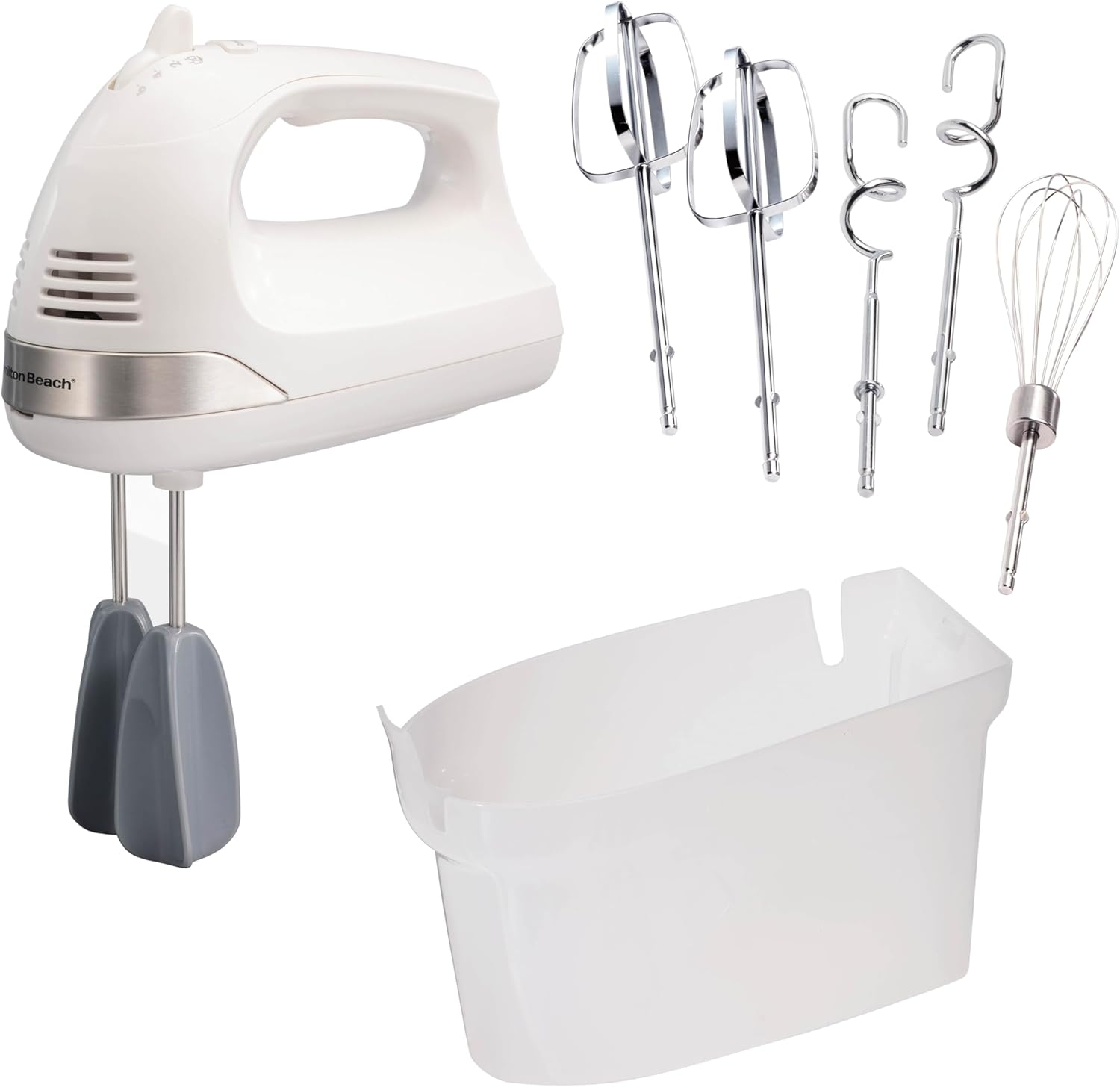
Hamilton Beach 6-Speed Electric Hand Mixer
It has 6 speeds with a QuickBurst button, 7 attachments including dough hooks and a whisk, and a snap-on storage case.
View on Amazon -

LILPARTNER Hand Mixer Electric
It has 7 speeds and 5 stainless steel attachments, including a whisk, 2 beaters and 2 dough hooks, with a 2-year warranty.
View on Amazon -

KitchenAid 5-Speed Ultra Power Hand Mixer
It has 5 speeds, stainless steel Turbo Beater accessories, a lockable swivel cord, and beaters that wash in the dishwasher.
View on Amazon
These come from our ranked list Best Mini Hand Mixer, which compares them spec by spec.
FAQ
Can a hand mixer knead bread dough?
A hand mixer with dough hooks can mix dough in small amounts, but the bowl and the beaters limit how much it handles at once. For larger amounts, a stand mixer holds the bowl while the dough hook works through it.
Do I need a whisk attachment?
A whisk suits whipping cream and beating egg whites, where air matters more than force. If you only mix batter and cookie dough, the standard beaters cover those jobs.
How do I clean a hand mixer?
Unplug the mixer, press the eject button to remove the beaters, and wash them as the maker's manual says. Wipe the motor body with a damp cloth and put the beaters away where they will not get lost.


