
How-to · Humidifiers
Humidifier or Dehumidifier in Winter?
 By Laura Benning · Updated · How we pick
Cold air holds little moisture, and heating dries indoor air further, so a humidifier adds moisture back. A dehumidifier fits only when a room stays damp in winter, such as a basement with wet walls or condensation that does not clear.
Check how dry the air feels
Start by looking at what the room tells you. Static shocks when you touch a door handle, and dry wood that shows gaps, both point to dry air. Fogged windows that stay wet and walls that feel damp point the other way, toward too much moisture. Match the fix to what you see, and only then think about a machine.
Match the machine to the room
A humidifier adds moisture to dry indoor air, and a dehumidifier pulls moisture out of damp air, so the two solve opposite problems. When the signs point to dry air, a humidifier is the right call. A dehumidifier fits a room that stays damp through the cold months, such as a basement with wet walls or windows that never clear. Pick the one that matches the room, not the season alone.
Set up the humidifier
Place the humidifier on a flat surface where mist can spread into the room, and keep it away from walls and soft furnishings. Fill the tank with water, fit the tank back on the base, and plug the unit into a 120V outlet. Set the mist level and the timer as the maker's manual says, and use the app or remote control where the model has one. Refill the tank when it runs low, and read the manual for where to place the unit.
When a dehumidifier fits instead
A dehumidifier fits when a room stays damp in winter even with the heat on. Look for windows that stay fogged, walls that feel damp, and a musty smell that does not clear when you air the room. Set the unit up as the maker's manual says, empty its tank when it fills, and keep the air intake clear. If the dampness comes from a leak, ask a licensed plumber to look at it before you run a dehumidifier.
Keep the tank and filter clean
Unplug the appliance before you clean it. Empty the tank and rinse it with water, using mild dish soap or white vinegar only if the manual allows it, and let every part dry fully before you put it back. A tank that smells or a filter that looks grey is a sign to clean it now rather than later. Follow the schedule in the maker's manual for filter changes and deeper cleaning.
What you need
As an Amazon Associate I earn from qualifying purchases. Product details come from each Amazon listing; we do not test products in person.
-

Levoit Humidifiers for Bedroom
Its 4.5 L tank runs 45 hr per fill and is rated for up to 430 sq ft by the maker, with warm and cool mist and app control.
View on Amazon -
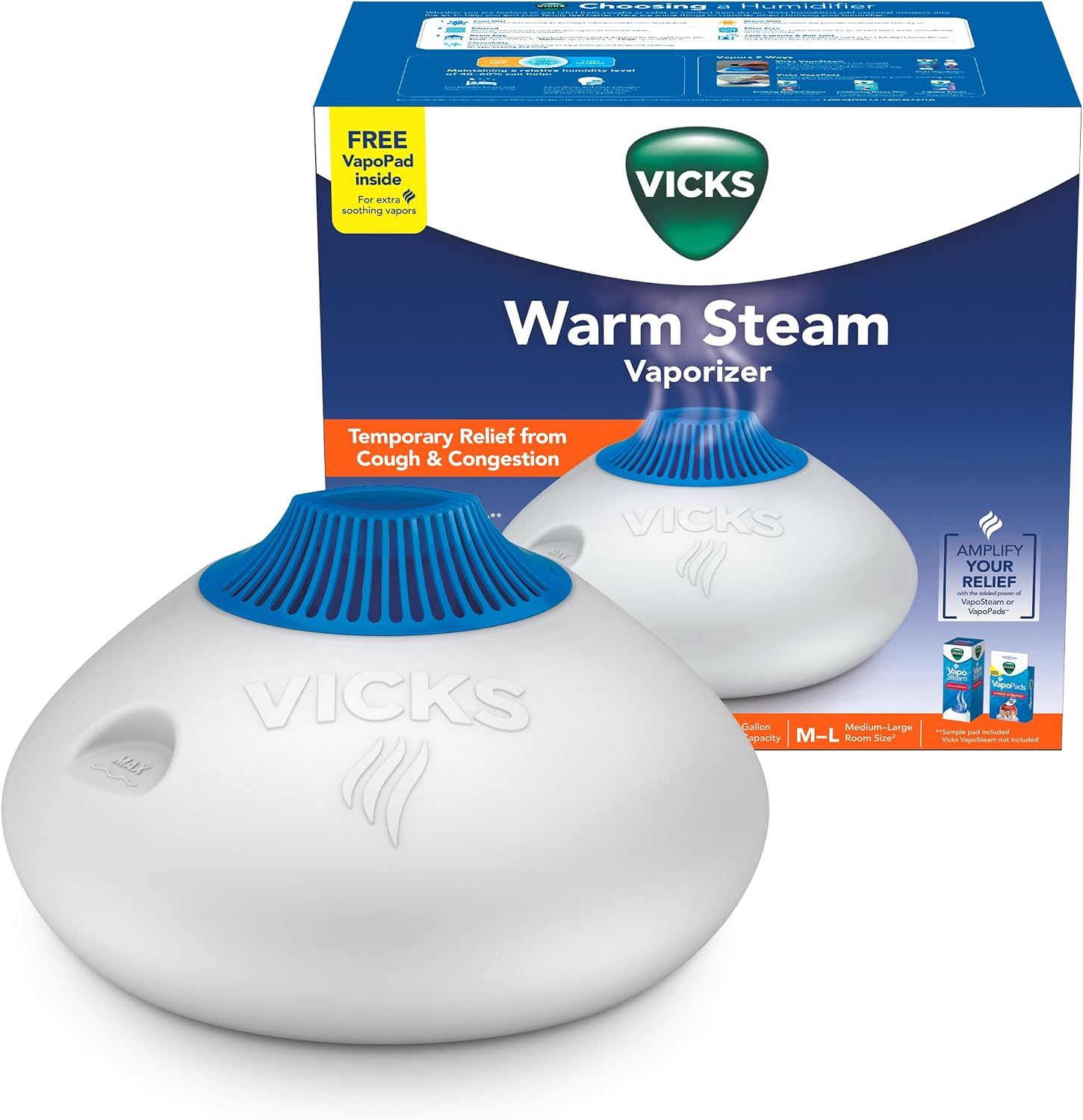
Vicks Warm Steam Vaporizer Humidifier for Medium
Its 5.68 L tank is rated for up to 600 sq ft by the maker, and it gives warm steam with a night light and auto shutoff.
View on Amazon -

KZF Humidifiers for Bedroom
Its 4 L tank runs 40 hr per fill and is rated for up to 300 sq ft by the maker, with a humidity display and an 8-hour timer.
View on Amazon
These come from our ranked list Best Humidifier for Bedroom, which compares them spec by spec.
FAQ
How do I know if my air is too dry in winter?
Look for static shocks, dry wood with gaps, and air that feels dry. Fogged windows and damp walls point the other way, toward too much moisture. Match the machine to what you see.
Can I run a humidifier through the whole winter?
Yes, run it while the air stays dry and refill the tank when it runs low. Clean the tank as the maker's manual says, and switch the unit off when the air no longer feels dry.
Do I need a dehumidifier in a damp basement in winter?
Yes, if the basement stays damp through the cold months, a dehumidifier fits. Empty its tank when it fills and follow the maker's manual. A leak needs a licensed plumber first.


