How-to · Evaporative Coolers
Evaporative Cooler vs AC: How They Differ
 By Laura Benning · Updated · How we pick
An evaporative cooler cools air by passing it through water-wetted pads, which adds moisture and suits dry air, while an AC uses a compressor and refrigerant to remove heat and moisture from the room. The cooler needs a filled water tank and fresh air flow, and the AC needs a vent and a closed room. Pick the cooler for dry heat and the AC for humid heat.
How an evaporative cooler works
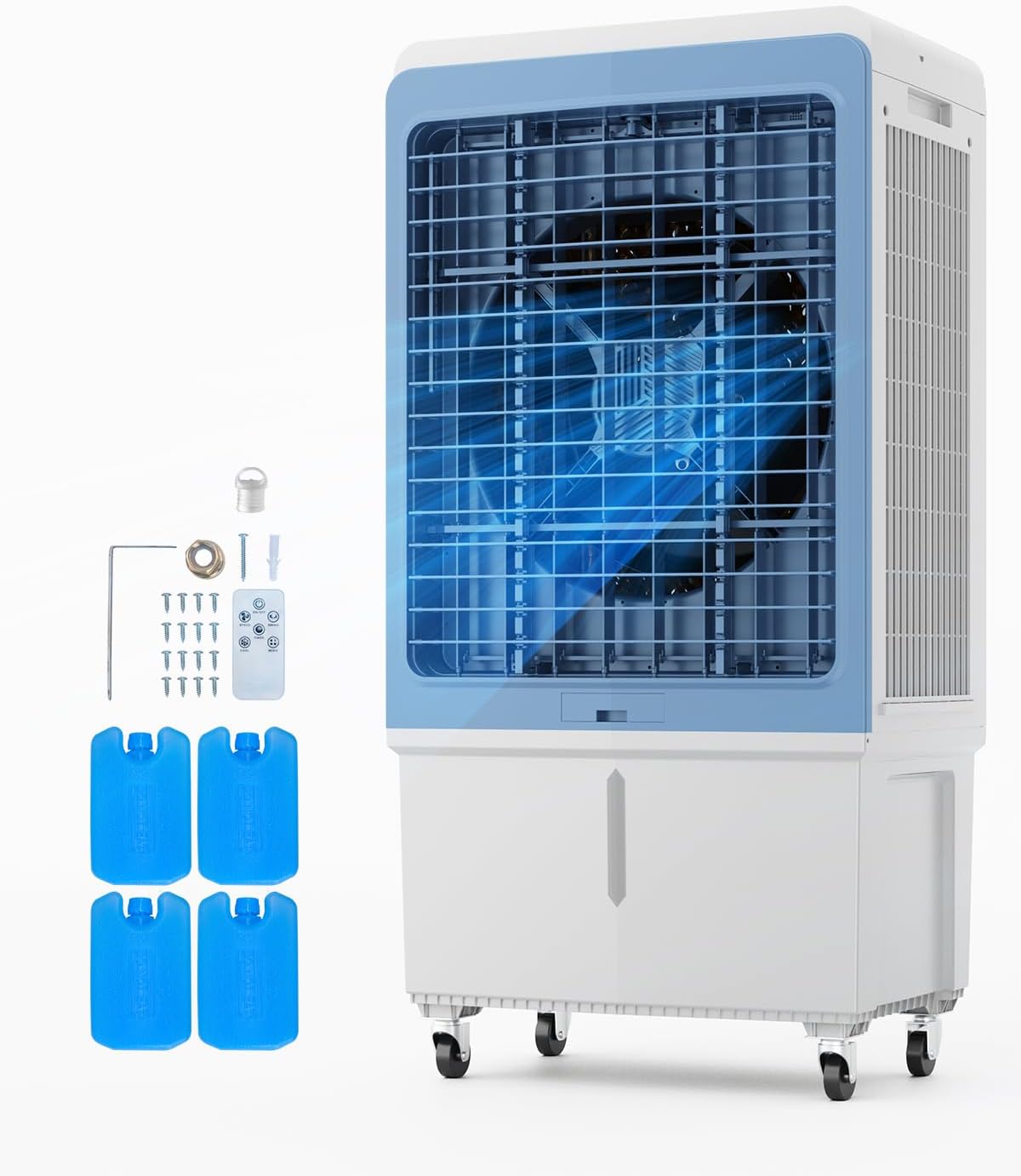
A fan pulls warm room air through pads soaked with water from the tank. As the water evaporates off the pads, the air leaving the cooler feels cooler and carries more moisture. Ice packs add colder air to the flow. The fan moves the cooled air into the room, and the tank needs refilling as the water evaporates.
How an AC works
An AC moves heat out of the room with a compressor and refrigerant, then sends the cooled air back inside. The same cycle pulls moisture out of the air, so the room feels drier as it cools. The heat has to go somewhere, so a window or portable AC vents hot air outside through a hose or a window kit. Keep the doors and windows closed while it runs, or warm air leaks back in and the unit keeps working against it.
Dry air versus humid air
Evaporation needs dry air to work. In a dry climate the water on the pads evaporates and the air leaving the cooler drops in temperature. In humid air the water evaporates slowly, so the cooler adds moisture without cooling the air much. An AC does not depend on evaporation, so it keeps removing heat and moisture even when the air outside is humid. Match the machine to the air: a cooler for dry heat, an AC for humid heat.
Water, venting and placement
A cooler only works while its tank holds water, so check the level before you switch it on and refill it as the level drops. The Uthfy cooler has a 10.6-gallon tank with top fill and a hose connection for automatic filling, and the SereneLife cooler has an 8-gallon tank. Leave a window or door open a crack so the moist air has somewhere to go. An AC needs the opposite setup: a vent for the hot air and closed windows and doors.
Which one fits your room
Compare the maker's own figures before you choose. The Uthfy cooler is rated for up to 1,200 sq ft by the maker with 4,800 CFM of airflow, and the SereneLife cooler lists 2,500 CFM of airflow. A larger rated area and higher airflow suit a larger room, while a smaller unit suits a single room. For an AC, compare the maker's rated square feet and the BTU figure with its standard, then pick the size that matches the room you want to cool.
What you need
As an Amazon Associate I earn from qualifying purchases. Product details come from each Amazon listing; we do not test products in person.
-

TABU Portable Tower Fan
Its 47-inch tower pairs evaporative cooling with a fan, 3 speeds, 360-degree upper oscillation and a remote, and it includes 4 ice packs.
View on Amazon -

Uthfy 41" Swamp Cooler
It moves 4,800 CFM of air for spaces rated up to 1,200 sq ft by the maker, with a 10.6-gallon tank, 3 speeds and side-to-side oscillation.
View on Amazon -

SereneLife Portable Swamp Cooler Air Conditioner
It moves 2,500 CFM of air with 360-degree oscillation, works as a cooler, fan or humidifier, and includes a remote and WiFi control.
View on Amazon
These come from our ranked list Best Home Swamp Cooler, which compares them spec by spec.
FAQ
Do evaporative coolers work in humid air?
They cool far less in humid air because the water on the pads evaporates slowly. In dry air the same cooler drops the temperature more. An AC keeps cooling in humid air because it removes moisture as well as heat.
Does an evaporative cooler need a window open?
Leave a window or door open a crack so the moist air can leave the room. A closed room traps the moisture and the cooling effect fades. An AC needs the opposite: closed windows and doors so the cooled air stays inside.
What do I fill an evaporative cooler with?
Fill the tank with water and add the ice packs that came with the cooler. The Uthfy cooler has a 10.6-gallon tank with top fill and a hose connection, and the SereneLife cooler has an 8-gallon tank. Check the level before each use and refill it as it drops.
Does an evaporative cooler use a compressor?
No. Water turning to vapor off the pads does the cooling, and a fan moves the cooled air into the room. The TABU tower cooler cools with water evaporation and a fan.