
How-to · Space Heaters
Infrared vs Ceramic vs Oil Heater Compared
 By Laura Benning · Updated · How we pick
Infrared heaters warm objects and people in their path, ceramic heaters warm air through a heated ceramic element and a fan, and oil-filled radiators warm oil inside sealed fins that then warms nearby air. Ceramic models suit quick warmth in a room you use for short periods, infrared models suit warming a spot you sit in, and oil-filled models suit steady warmth over a longer period.
How infrared heaters warm a room
An infrared heater sends warmth in a straight line to objects and people in front of it, rather than warming the air in the room first. You feel warmth when you sit in that path, and the warmth fades when you move out of it. That makes this type a match for warming a chair, a desk, or a reading corner while you stay in one place. Place the heater where its front faces you, with a clear path between the heater and your seat.
How ceramic heaters warm a room
A ceramic heater passes air over a heated ceramic element and moves that warmed air into the room with a fan. Warmth spreads through the air around the heater, so the room warms as the air moves. Heat settings on some models let you change between a lower and a higher output, and an adjustable thermostat lets you set a target temperature and let the heater hold it. Use this type when you want warmth across a room you move around in.
How oil-filled radiators warm a room
An oil-filled radiator heats oil sealed inside its fins, and the fins then give off warmth to the air around them. The fins give off warmth to the air around them, and the warm oil holds that warmth, since the heater maintains continuous heat storage without loss. A temperature knob on some models lets you set a level you want, and an ECO mode on some models adjusts the heat setting as the room reaches that level. Use this type when you want steady warmth in a room you stay in for a while.
Choose by how you use the room
Start with how you use the room. Pick an infrared heater for a fixed spot, a ceramic heater for warmth across a room, and an oil-filled radiator for steady warmth over a longer stay. Then compare the maker's rated coverage for the models you are looking at, and check the heat settings, thermostat, timer, and controls on the models you compare. Read the maker's manual for placement and use, and unplug the heater before cleaning it.
What you need
As an Amazon Associate I earn from qualifying purchases. Product details come from each Amazon listing; we do not test products in person.
-

Honeywell Slim Ceramic Tower Heater
Its two heat settings run at 1500 watts on high and 750 watts on low, with a programmable thermostat, oscillation, and a 1, 2, 4 or 8 hour timer.
View on Amazon -

DREO Smart Electric Wall Heater for Indoor
Its PTC heating system moves air at 11.5 ft/s, with a 28 dB rated noise level, remote control, app control, and an ECO mode with a digital thermostat.
View on Amazon -
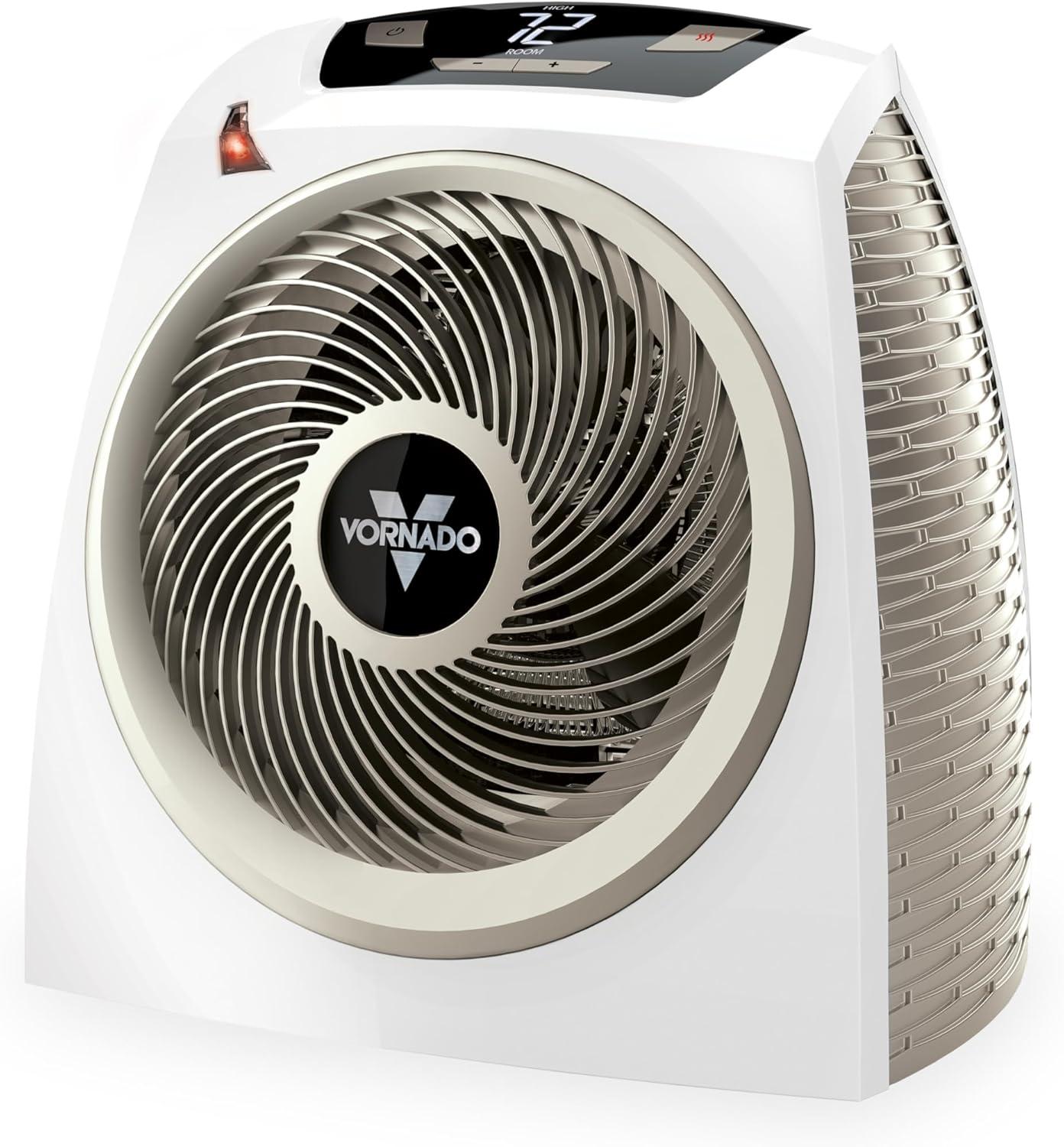
Vornado AVH10
Its Auto Climate control adjusts power and airflow to hold your preferred temperature, with 2 heat settings, a fan-only mode, and a 5-year warranty.
View on Amazon -

Tangkula 700W Portable Space Heater
Its seven oil-filled fins hold sealed oil, with a 700 W output, an adjustable thermostat, an ECO mode, and a rated noise level of 45 dB.
View on Amazon
These come from our ranked list Best Oil Space Heater, which compares them spec by spec.
FAQ
Which heater type suits a fixed seat?
An infrared heater suits a fixed seat, because its warmth travels to objects and people in its path. A ceramic heater suits warmth across a room, and an oil-filled radiator suits steady warmth over a longer stay.
What should I check before choosing a heater?
Compare the maker's rated coverage, heat settings, thermostat, timer, and controls for the models you are looking at. Read the maker's manual for placement and use, and unplug the heater before cleaning it.
Do ceramic heaters need a fan to work?
A ceramic heater passes air over a heated ceramic element and moves that warmed air into the room. Check the heat settings and thermostat on the model you choose, and follow the maker's manual for placement.


