
How-to · Space Heaters
Ceramic vs Oil-Filled Heater: Which Is Better
 By Laura Benning · Updated · How we pick
Neither is better for every room. A ceramic heater warms room air with a heating element and a fan, while an oil-filled radiator heats sealed oil inside its fins and gives off heat from the fins. Choose ceramic when you want heat from a fan-driven heater, and oil-filled when you want heat that keeps coming from warm fins.
How a ceramic heater works
A ceramic heater passes room air over a heated ceramic element and a fan moves the warmed air into the room. The Honeywell tower has two heat settings and a programmable thermostat, plus oscillation and a cool touch plastic housing. The DREO wall heater uses a PTC heating system with 11.5 ft/s airflow and 30-degree manual oscillation, and its digital thermostat sets the room temperature. Both plug into a 120 volt outlet.
How an oil-filled radiator works
An oil-filled radiator heats diathermic oil sealed inside its fins, and the warm fins give off heat by convection. The Tangkula has seven oil-filled fins that are permanently sealed and never need refilling, with a 700 watt heating element and an adjustable thermostat knob. It also has an ECO mode and a carry handle. The sealed oil holds heat, so the fins stay warm between heating cycles.
Match the heater to the room
Look at the coverage the maker gives: the DREO is a primary heat source for a 150 square foot area, or up to 750 square feet as a supplementary source. The Honeywell is made for small to medium rooms, and the Vornado for small to medium-sized spaces. The Tangkula is made for large and medium-sized rooms. A wall-mounted heater like the DREO needs wall mounting, while the Honeywell, Vornado and Tangkula stand on the floor.
Controls and shutoff features
A thermostat holds the temperature you set, and a timer switches the heater off after the time you pick. The Honeywell has a programmable thermostat and a 1, 2, 4 or 8 hour auto off timer. The DREO has a digital thermostat, ECO mode, a remote and app control. The Vornado has auto climate control and an adjustable thermostat. All four have overheat protection, and the Honeywell and Vornado also have tip-over shutoff.
What you need
As an Amazon Associate I earn from qualifying purchases. Product details come from each Amazon listing; we do not test products in person.
-

Honeywell Slim Ceramic Tower Heater
A slim ceramic tower with two heat settings, a programmable thermostat, oscillation and tip-over shutoff.
View on Amazon -

DREO Smart Electric Wall Heater for Indoor
A wall-mounted PTC heater with a digital thermostat, ECO mode, remote and app control, and 28 dB listed noise.
View on Amazon -
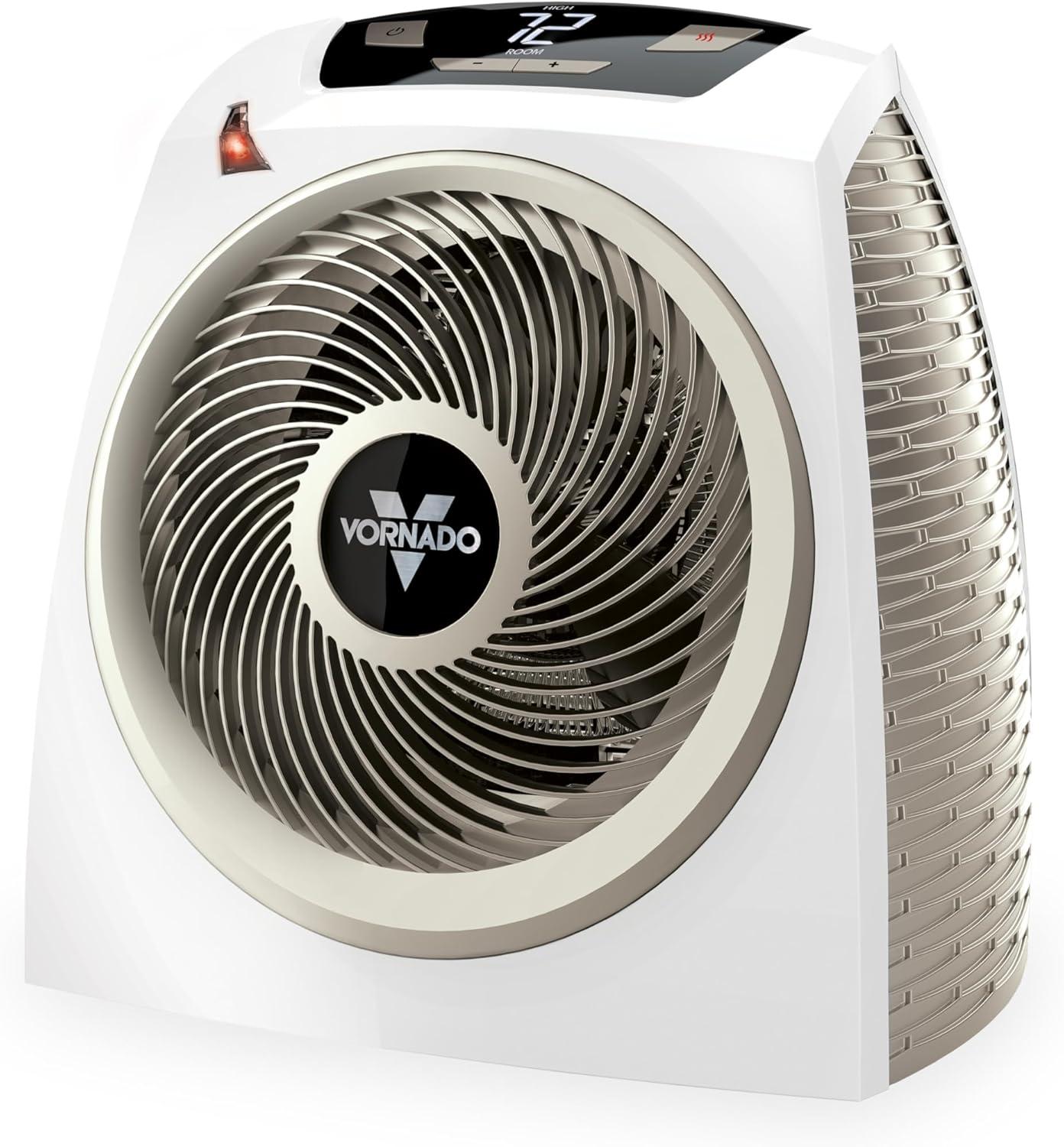
Vornado AVH10
A tabletop heater with auto climate control, 2 heat settings, a fan-only mode and a 5-year warranty.
View on Amazon -

Tangkula 700W Portable Space Heater
A 700 watt oil-filled radiator with seven sealed fins, an adjustable thermostat and ECO mode.
View on Amazon
These come from our ranked list Best Oil Space Heater, which compares them spec by spec.
FAQ
Is a ceramic heater better than an oil-filled heater?
It depends on the room and how you use it. A ceramic heater warms room air with a fan, while an oil-filled radiator gives off heat from warm fins. Pick the type that fits where the heater will sit and how long it will run.
Do oil-filled radiators need refilling?
No. The Tangkula fins are permanently sealed with diathermic oil and never need refilling. The heating element heats the oil, and the fins give off the heat.
Can I mount a space heater on the wall?
Only a heater made for wall mounting, like the DREO, which comes with a template for wall mounting. Follow the maker's installation guide. The Honeywell, Vornado and Tangkula stand on the floor.


