How-to · Tower Fans
Tower Fan vs Pedestal Fan: How They Differ
 By Laura Benning · Updated · How we pick
A tower fan is a tall, narrow unit that stands on the floor and pushes air through a vertical outlet, while a pedestal fan is a round fan head on a pole with a base. Tower fans cover a wide arc from a narrow footprint, while pedestal fans aim air at a height and tilt the head to change direction. Floor space and seating height decide which shape fits.
How a tower fan moves air
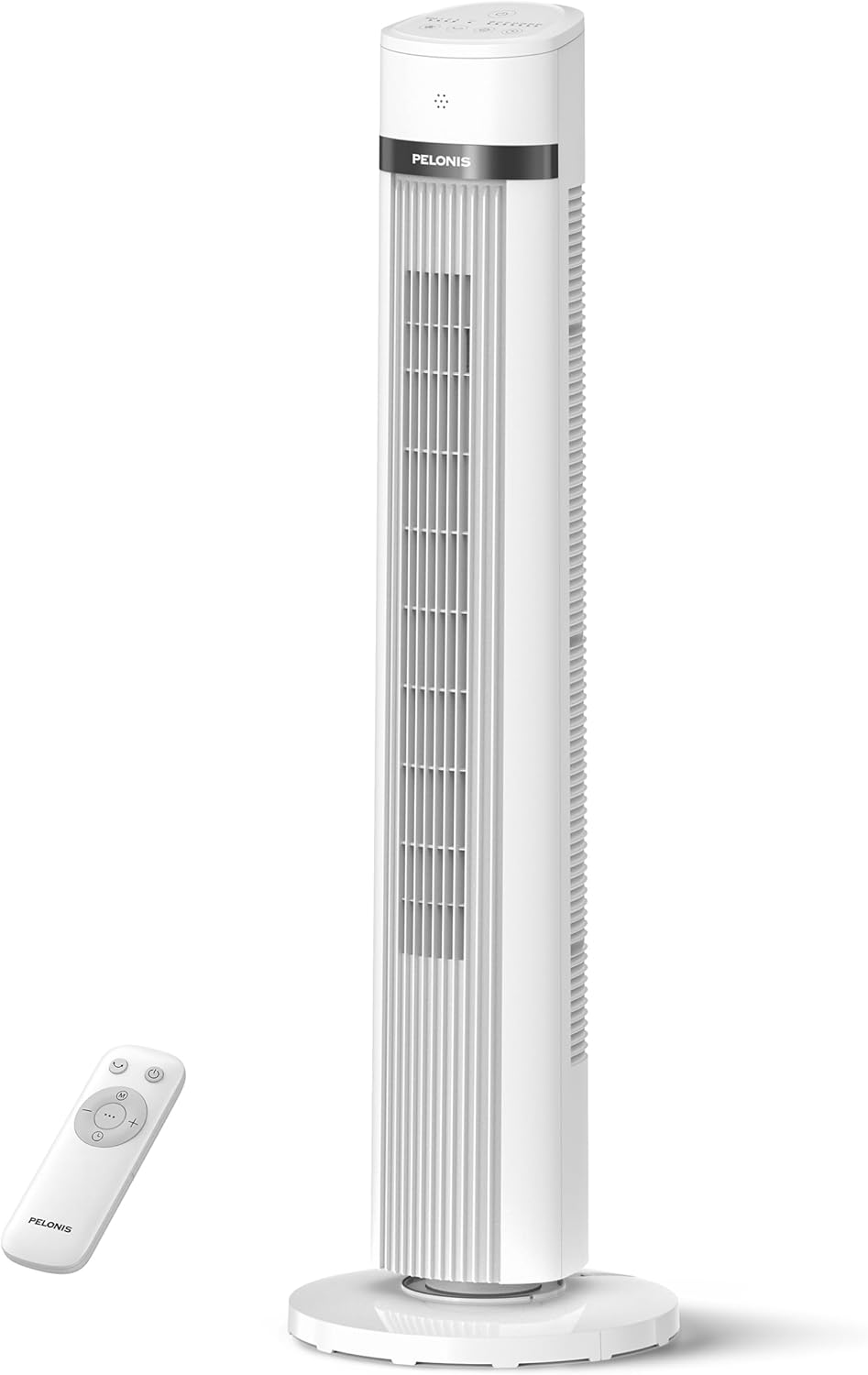
A tower fan pulls air in through its body and sends it out through a tall, narrow outlet that runs up the height of the unit. The outlet spreads air from near the floor to above seat height, so the flow reaches you sitting or standing. A fan that oscillates turns its body from side to side, so the air sweeps across the room instead of blowing in one fixed line. The slim shape fits against a wall or beside furniture, and the unit stays in one place while it runs.
How a pedestal fan moves air
A pedestal fan spins blades inside a round head mounted on a pole above a base. The head tilts up or down, and the pole slides to raise or lower the head, so you can aim the air at your face, your chest, or across the room. A head that oscillates turns from side to side to spread the air. Because the blades sit in one round head, the air comes from a single point, so the flow feels more focused than the tall outlet of a tower fan.
Floor space and placement
A tower fan rises straight up from a small base, so it fits a narrow gap against a wall, beside a bed, or next to a desk. A pedestal fan needs clear floor around its base and room for the head to turn without hitting furniture. Put either fan where the air reaches your seat without blowing straight at a wall. Leave space behind a tower fan so air can reach its intake, and keep the path of a pedestal head clear.
Controls and settings to compare
Tower and pedestal fans come with speed settings, modes, and timers, so compare those before you choose. A remote lets you change speed or mode without walking to the fan, and app control adds schedules and voice control on fans that offer it. Check the timer range, the modes on offer, and whether the fan shows the room temperature. A fan that runs through the night needs a sleep mode and a timer you can set before bed.
Cleaning and upkeep
Unplug the fan before you clean it. Wipe the outside with a soft cloth and water or mild dish soap if the manual allows it, and let parts dry fully before the fan runs again. Follow the schedule in the maker's manual for deeper cleaning, and contact the maker or a repair service for anything inside the appliance. A fan that runs in a dusty room needs wiping more often, so check the grille and the outlet when the flow seems weak.
What you need
As an Amazon Associate I earn from qualifying purchases. Product details come from each Amazon listing; we do not test products in person.
-

DREO Smart Tower Fan for Bedroom
Its 8 speeds and 4 modes run through the remote or the app, and its 90° oscillation moves air across the room on an 8-hour timer.
View on Amazon -

Levoit Tower Fan for Bedroom
Its 12 speeds and 4 modes run through the remote or the app, with a timer of up to 24 hours and a 42-inch body.
View on Amazon -

ZAFRO Smart Tower Fan for Bedroom
Its 12 speeds and 4 modes run through the remote or the app, and its 120° oscillation and built-in temperature sensor adjust the flow to the room.
View on Amazon -

Pureborne 42” Tower Fan for Home Bedroom
Its 4 speeds and 4 modes run through the remote or the app, and its 90° oscillation spreads air from a 42-inch body on a 12-hour timer.
View on Amazon
These come from our ranked list Best WiFi Tower Fan, which compares them spec by spec.
FAQ
Can a tower fan replace a pedestal fan?
It can if you want a narrow unit that stands against a wall and sweeps air across the room. A pedestal fan still suits a spot where you want to aim air at one height and tilt the head. Choose by floor space and where you sit.
Which fan shape fits a small room?
A tower fan fits a narrow gap against a wall or beside furniture, since its body rises straight up from a small base. A pedestal fan needs clear floor around its base and room for the head to turn. Measure the spot first, then check the height and the base size before you buy.
How do I aim the air where I sit?
On a tower fan, place the unit so the tall outlet faces your seat, and let oscillation sweep the air across the room. On a pedestal fan, raise or lower the pole and tilt the head until the air reaches you. Move the fan closer or farther away until the flow feels right.
What should I check before I buy a fan?
Check the speeds, modes, timer, and controls, and whether it comes with a remote or app control. Check the height, the footprint, and how the fan moves air across the room. Read the maker's manual for cleaning and care, and keep the warranty terms with your receipt.