How-to · Tower Fans
Tower Fan vs Traditional Fan
 By Laura Benning · Updated · How we pick
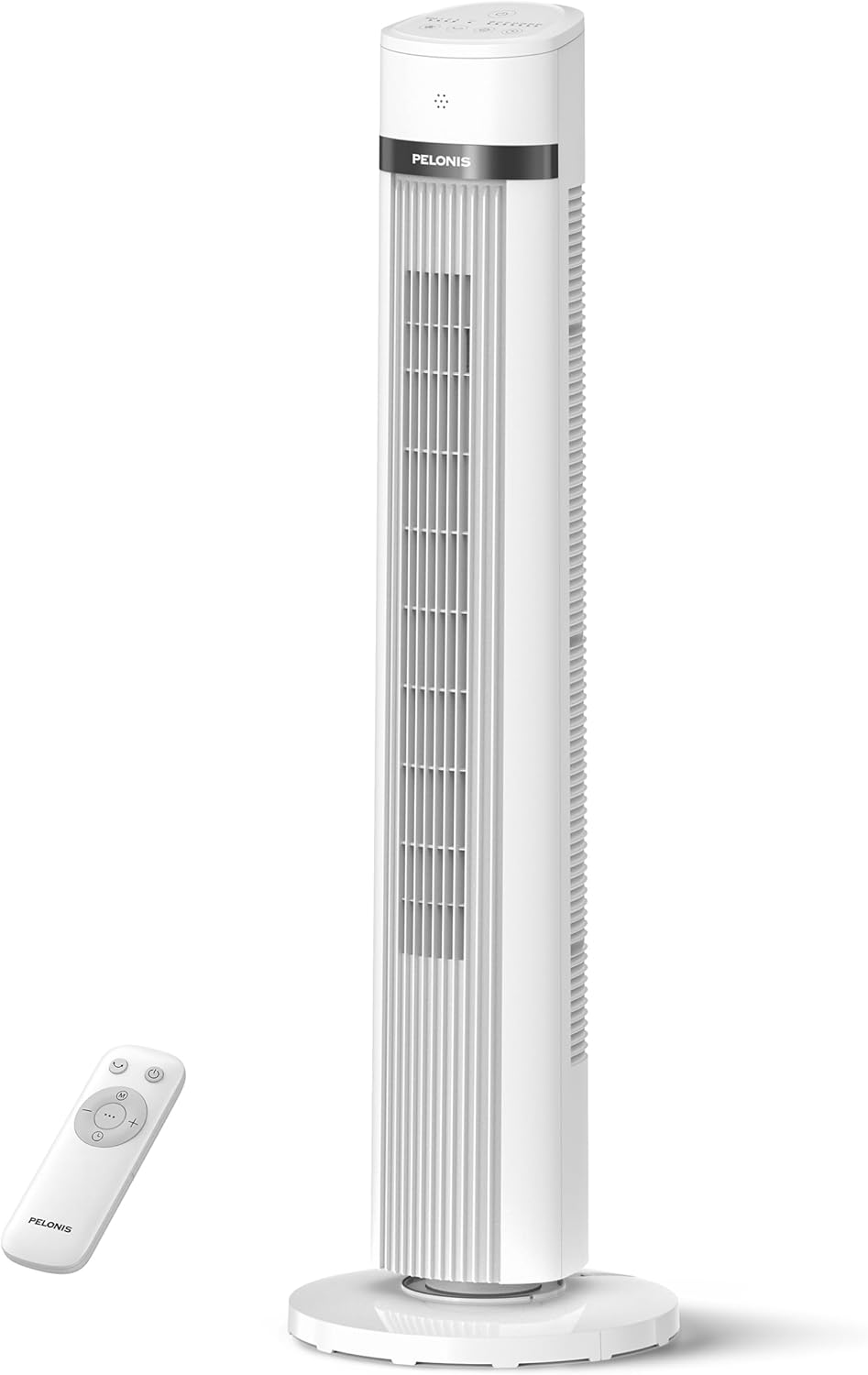
A tower fan stands on the floor and blows air through a tall, narrow outlet, while a traditional fan uses exposed blades on a stand or a table. The tower shape fits a narrow gap beside a bed or a desk, while a bladed fan aims its head where you point it. The right choice depends on the room, the space you have and the controls you want.
How a tower fan moves air
A tower fan pushes air out through a tall, narrow outlet in the column. The outlet spreads air across a room in a wide column instead of a single round stream. Oscillation turns the column from side to side, so the air reaches more of the room without moving the fan. A remote or an app changes speed and mode without walking over to the unit.
How a traditional fan moves air
A traditional fan spins exposed blades inside a round cage and pushes air straight ahead in a cone. The head tilts and turns on its stand, so you aim the stream at a spot or sweep it across a room. Speeds change on a dial or a pull chain on the unit itself, and the cage comes off for blade cleaning. The round head moves a focused stream, so it suits a chair or a side of a bed.
Space, placement and cleaning
A tower fan stands in a narrow footprint beside a bed, a desk or a door, and models with oscillation turn the column from side to side while the base stays put. A traditional fan needs room for the cage to turn and tilt, and the stand takes floor space the tower shape avoids. For cleaning, some tower fans let you remove the grille or the wheel, while a bladed fan needs the cage opened to reach the blades. Check the maker's manual for which parts come off and how to wash them.
Controls, timers and modes
Tower fans add remote control, timers and app control, with modes that change the airflow pattern through the day. A timer switches the fan off after a set period, and a sleep mode lowers the speed overnight. A traditional fan changes speed on the unit itself, with a dial and fewer modes. If you want to change settings from bed or from another room, the remote or the app decides the choice.
What you need
As an Amazon Associate I earn from qualifying purchases. Product details come from each Amazon listing; we do not test products in person.
-

DREO Smart Tower Fan for Bedroom
8 speeds and 4 modes with 90° oscillation, WiFi voice control, an 8-hour timer and a 12-month warranty.
View on Amazon -

Levoit Tower Fan for Bedroom
12 speeds and 4 modes with a 26 ft/s airflow, app and voice control, and a 24-hour timer.
View on Amazon -

ZAFRO Smart Tower Fan for Bedroom
12 speeds and 4 modes with 120° oscillation, over 43 ft reach, app and voice control, and a 12-hour timer.
View on Amazon -

Pureborne 42” Tower Fan for Home Bedroom
4 speeds and 4 modes with 90° oscillation, 25 ft/s airflow, app and voice control, and a 12-hour timer.
View on Amazon
These come from our ranked list Best WiFi Tower Fan, which compares them spec by spec.
FAQ
Do tower fans cool a room better than traditional fans?
Neither type changes the room temperature on its own; both move air across the room. A tower fan spreads air in a wide column, and models with oscillation turn the column from side to side, while a traditional fan aims a focused stream. Pick the shape that fits the space and the spot you sit in.
Which fan is easier to clean?
Some tower fans let you remove the grille or the wheel for cleaning. A traditional fan needs the cage opened to reach the blades. Check the maker's manual for which parts come off.
What should I check before buying a tower fan?
Check the speeds, the oscillation range, the timer length and the controls. The DREO lists 8 speeds, the Levoit and the ZAFRO list 12 speeds, and the Pureborne lists 4 speeds. Match the figures to the room and the controls you want.