
How-to · Water Leak Detectors
How a Water Leak Sensor Works
 By Laura Benning · Updated · How we pick
A water leak sensor watches for water where it should not be. Most models sit on the floor near a sink, toilet, water heater or washing machine, and two metal contacts on the base react when water touches them. The sensor then sounds an alarm, and connected models send an alert to your phone. Whole-home models watch the water flow instead and can shut the water off.
Water touches the sensor contacts
Most leak sensors use two metal contacts or prongs on the base. When water touches both contacts at once, it closes an electrical circuit inside the sensor. That closed circuit is the signal that water is present. The Flood Buzz units use this design, with the prongs set flat on the floor in the path a leak would take, such as behind a toilet or under a supply line.
The sensor sounds an alarm
Once the contacts react, the sensor sounds an alarm at the leak so you hear it in the room. The GoveeLife and YoLink models sound a 105 dB alarm, while the Flood Buzz units sound an alarm of up to 95 dB. The alarm keeps sounding until the water is gone and the contacts are dry, unless you silence it first. On the GoveeLife model you can adjust the volume in the app and silence the alarm with a tap.
Alerts reach your phone
Connected sensors also send an alert away from the room. The GoveeLife sensors send SMS, email and app push alerts through a gateway, and the YoLink sensors send app, email and SMS alerts through a hub. The GoveeLife gateway uses 2.4G Wi-Fi, and its sensors hold a signal over up to 1804 feet. The YoLink hub uses LoRa and reaches up to 2034 feet in open air.
Whole-home monitors watch the flow
The Moen Flo Shutoff works in a different way. It installs on the main water line and monitors flow, pressure and temperature, and it runs daily MicroLeak checks that look for small leaks. When it finds a leak, it sends an alert through the Moen Flo App and can shut off the water on its own. Follow the maker's installation manual, and hire a licensed plumber where the manual says so.
Place sensors where leaks start
Put each sensor on the floor at the low point where water would collect, close to the connection it watches. Good spots are under a sink, behind a toilet, beside a water heater, under a dishwasher or near a washing machine. Keep the contacts flat on the floor and clear of rugs so water reaches them first. A sensor in a cabinet or an enclosed space sounds close to the leak.
What you need
As an Amazon Associate I earn from qualifying purchases. Product details come from each Amazon listing; we do not test products in person.
-
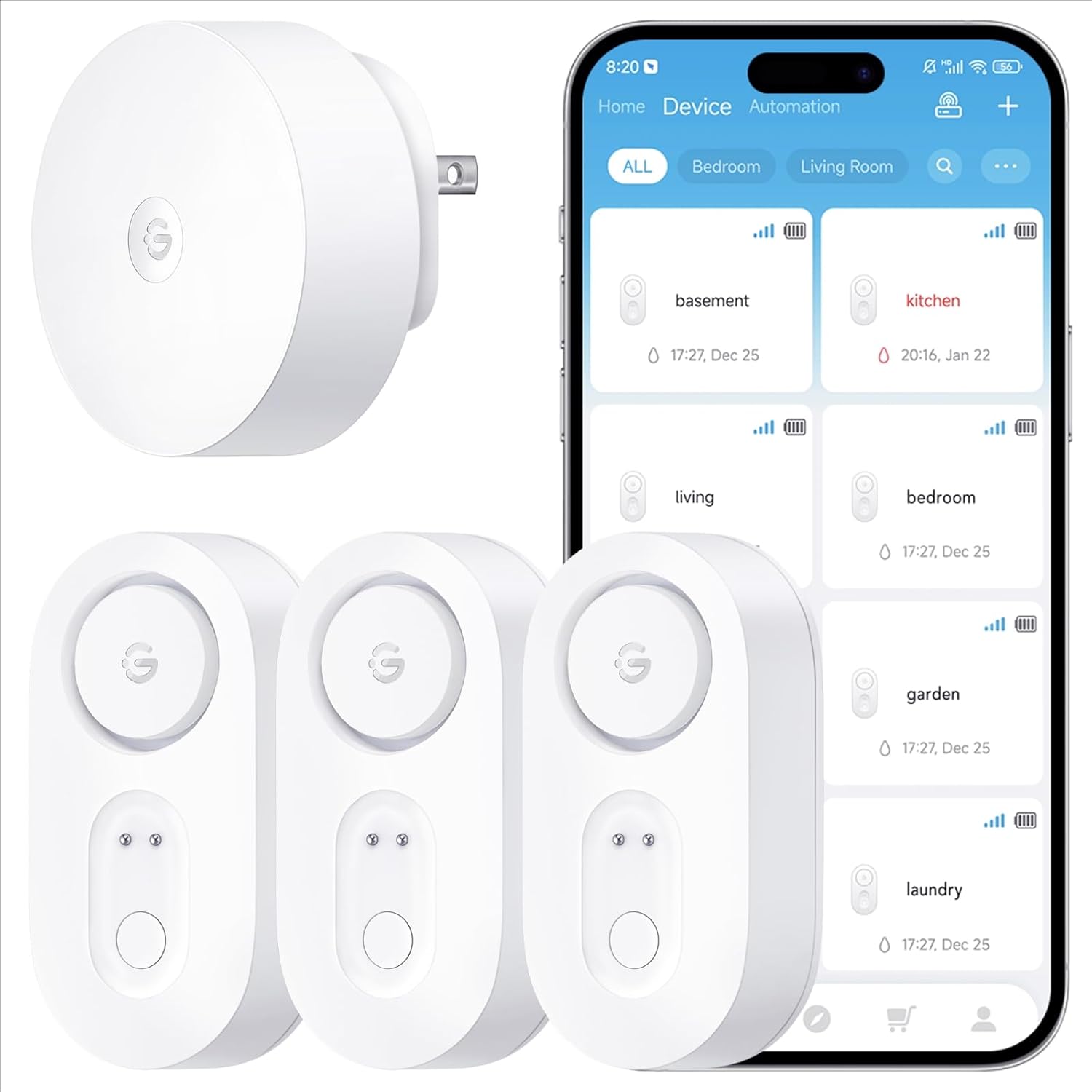
GoveeLife Upgraded Smart Water Leak Detector 1s
This 3-pack sends SMS, email and app push alerts, sounds a 105 dB alarm, and runs for up to 5 years on its battery.
View on Amazon -

YoLink Water Leak Sensor 4 105 dB
This 6-pack with a hub sends app, email and SMS alerts over LoRa up to 2034 feet, with a 105 dB alarm and a 5-year battery.
View on Amazon -

Flood Buzz Water Leak Alarms for Homes
This 6-pack needs no setup: place each unit on the floor and its prongs sound a 95 dB alarm at the first drip.
View on Amazon -

Moen Flo Shutoff
This 3/4 inch shutoff monitors flow, pressure and temperature, runs daily MicroLeak checks and shuts off the water when it finds a leak.
View on Amazon
These come from our ranked list Best Water Leak Detector, which compares them spec by spec.
FAQ
Do leak sensors need Wi-Fi to work?
Not all of them. The Flood Buzz units sound an alarm on the spot with no app and no setup. The GoveeLife and YoLink models use a gateway or hub to send alerts to your phone.
Where should I put a water leak sensor?
On the floor near a water connection, such as under a sink, behind a toilet or beside a water heater. Set the contacts flat on the floor at the low point where water would collect first.
How long does a leak sensor battery last?
It depends on the model. The GoveeLife and YoLink sensors run for up to 5 years on their batteries, while the Flood Buzz units use a sealed battery with up to 3 years of active life.


