
How-to · Dehumidifiers
Dehumidifier Types Explained
 By Laura Benning · Updated · How we pick
A dehumidifier removes moisture from the air. The types are refrigerant, desiccant and whole-home units: a refrigerant unit cools the air so moisture condenses, a desiccant unit pulls moisture into a drying material, and a whole-home unit ties into the home's ducts. Pick by the space, the pints per day with its DOE year, and how the water drains.
Refrigerant dehumidifiers
A refrigerant dehumidifier cools the air so moisture condenses on cold coils, then collects the water in a tank or sends it out through a drain hose. It suits basements and large rooms. It needs power from an outlet, and the tank needs emptying unless a hose carries the water away.
Desiccant dehumidifiers
A desiccant dehumidifier pulls moisture into a drying material instead of cooling the air. It keeps working in cold spaces where a refrigerant unit would frost, since it dries the air without cooling it. It still collects water, so it needs a tank or a drain hose, and it needs power from an outlet.
Whole-home dehumidifiers
A whole-home dehumidifier ties into the home's ductwork and dries the air for the whole house. It drains on its own through a hose or drain line. It connects to the ducts and the drain, so follow the maker's installation manual and hire a licensed professional where the manual says so.
What the pints figure measures
Pints per day is the moisture a dehumidifier removes in a day. The DOE standard behind the figure matters, so compare figures that carry the same DOE year: a figure under the 2012 DOE standard is not the same as a figure under the 2019 DOE standard. The Midea Cube is rated at 30 pints per day under the 2012 DOE standard.
How to pick a type
Match the type to the space and the water. A portable room unit suits a basement or a large room, and a whole-home unit suits the whole house. Compare the maker's rated coverage in square feet and the pints per day with its DOE year, then check how the water leaves the unit: a tank you empty or a hose that drains it away. Read the maker's manual for placement and emptying. The Waykar is rated for up to 2,000 sq ft by the maker, the Midea Cube for 1,500 sq ft, the DREO for up to 4,500 sq ft and the KNKA for 2,500 sq ft.
What you need
As an Amazon Associate I earn from qualifying purchases. Product details come from each Amazon listing; we do not test products in person.
-
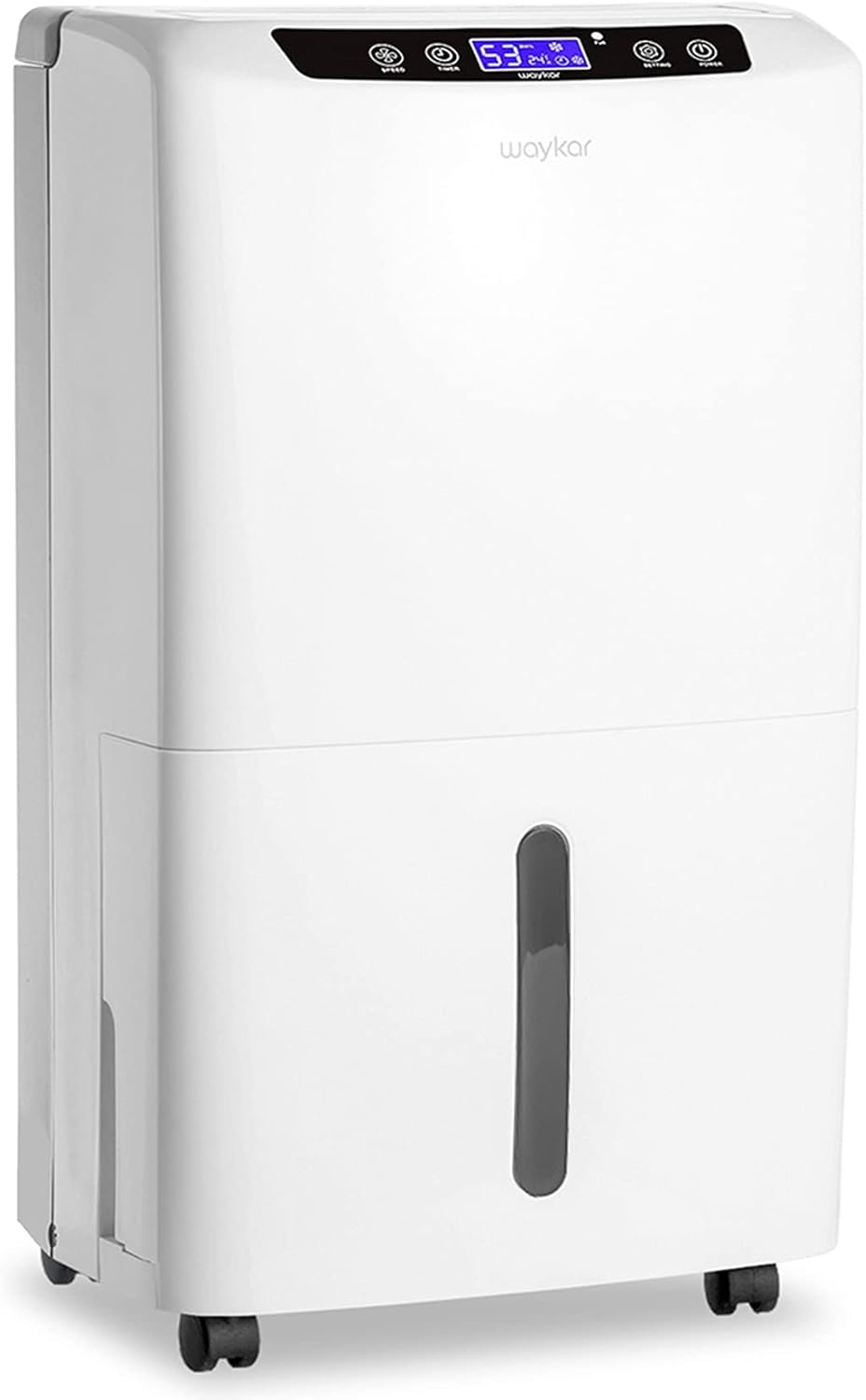
Waykar 34 Pints 2000 Sq. Ft.
It removes up to 34 pints per day and is rated for up to 2,000 sq ft by the maker, with a 0.66-gallon tank and an included drain hose.
View on Amazon -

Midea Cube 20 Pint Dehumidifier for Basement
It is rated at 30 pints per day under the 2012 DOE standard, rated for up to 1,500 sq ft by the maker, with phone app and voice control.
View on Amazon -

DREO Energy Star 2025 Smart Dehumidifier
It removes up to 75 pints per day, is rated for up to 4,500 sq ft by the maker, and runs from its phone app with 3 fan speeds.
View on Amazon -

KNKA 2500 Ft² Max 34 Pints Dehumidifier
It removes up to 34 pints per day, is rated for up to 2,500 sq ft by the maker, and offers 3 modes with a drain hose.
View on Amazon
These come from our ranked list Best Dehumidifier, which compares them spec by spec.
FAQ
Do dehumidifiers need a drain hose?
No. A tank collects the water, and you empty it when it fills. A drain hose lets the water run away on its own, so the tank stays empty. The Waykar, Midea, DREO and KNKA units here all include a drain hose.
Where should I put a dehumidifier?
Put it in the room where the air feels damp, with space around it for air to move and near an outlet for power.
How often should I empty the tank?
Empty it when the tank fills. A drain hose removes the job entirely, since the water runs away on its own. The Waykar, DREO and KNKA units stop and alert you when the tank fills.
Can a dehumidifier run all the time?
Yes, if it drains through a hose or the tank is emptied when it fills. The Waykar, Midea Cube and KNKA units offer a continuous mode for steady running.


