How-to · Dehumidifiers
Dehumidifier vs Portable AC
 By Laura Benning · Updated · How we pick
A dehumidifier removes moisture from the air and collects it as water, while a portable AC cools the air and removes some moisture as it does. Choose a dehumidifier when the room feels damp but the temperature is fine, and a portable AC when the room is hot. The four dehumidifiers here cover 1,500 to 4,500 sq ft.
What a dehumidifier does
A dehumidifier pulls moisture out of the air and collects it as water in a tank, or sends it out through a drain hose. The Midea, Kesnos, Waykar and DREO dehumidifiers here remove 22, 30, 34 and 75 pints of moisture per day, and each one can drain through a hose or into its own tank. A dehumidifier does not cool the room. It suits a damp basement, bathroom or bedroom where the air feels heavy but the temperature is fine.
What a portable AC does
A portable AC cools the air in the room and blows the heat outside through a vent hose. It also removes some moisture from the air as it cools, but cooling is its main job. A portable AC suits a room that is hot, and it needs a window or opening for the vent hose. No portable AC is among the products here, so the choice below uses the dehumidifiers' own figures.
When damp air is the problem
When the room feels damp and smells musty but the temperature is fine, a dehumidifier is the pick. Check the pints per day too, since a larger number means more moisture removed. A drain hose keeps the unit running without emptying the tank.
When hot air is the problem
When the room is hot, a portable AC is the pick, because a dehumidifier does not cool the air. A dehumidifier can still help in a hot, damp room by lowering the moisture, but it will not drop the temperature. If the room is both hot and damp, cool it first with the portable AC, then use a dehumidifier to keep the air dry.
How to choose between them
Start with the problem: damp air points to a dehumidifier, hot air points to a portable AC. Then match the dehumidifier to the room by coverage and pints per day, and check the tank size or drain hose so it fits how you will empty it. The Kesnos tank holds 0.39 gallons and the DREO tank holds 1.85 gallons, and each of the four can drain through a hose. Also check the noise rating if the unit will run in a bedroom: the Kesnos is rated at 36 dB and the Midea at 47 dB.
What you need
As an Amazon Associate I earn from qualifying purchases. Product details come from each Amazon listing; we do not test products in person.
-

Midea 22 Pint Dehumidifier for Basement
A 22-pint dehumidifier for rooms to 1,500 sq ft, with Wi-Fi control, a 0.8-gallon tank and a noise rating of 47 dB.
View on Amazon -

Kesnos 2,500 Sq. Ft. Energy Star Dehumidifier
A 30-pint dehumidifier for rooms to 2,500 sq ft, with a 0.39-gallon tank, a 3.3 ft drain hose and a noise rating of 36 dB.
View on Amazon -

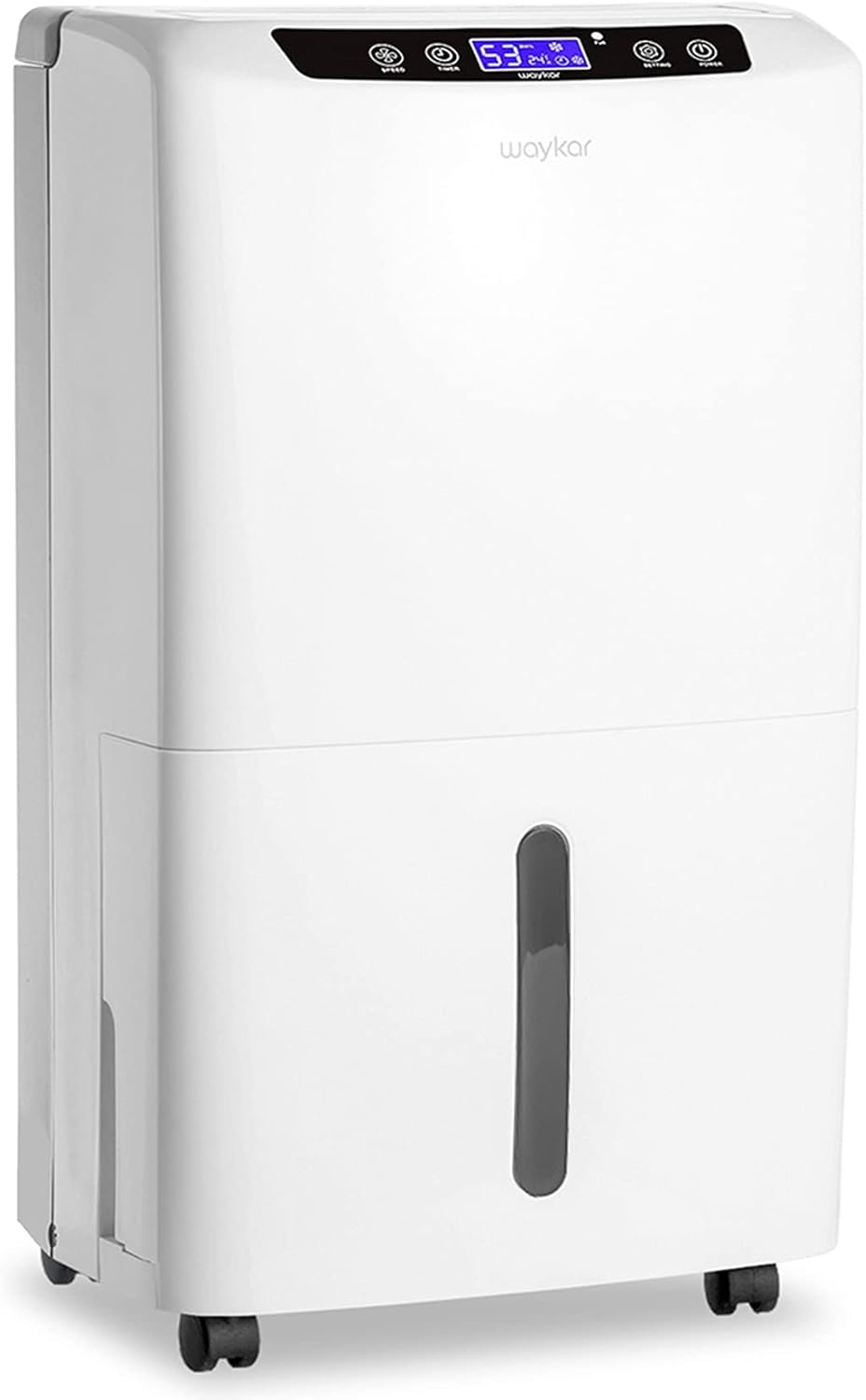
Waykar 34 Pints 2025 Most Efficient Energy
A 34-pint dehumidifier for rooms to 2,000 sq ft, with a 0.62-gallon tank, a 3.3 ft drain hose and a noise rating of 38 dB.
View on Amazon -

DREO 4500 Sq Ft Smart Dehumidifier
A 75-pint dehumidifier for rooms to 4,500 sq ft, with a 1.85-gallon tank, app control and a noise rating of 41 dB.
View on Amazon
These come from our ranked list Best Portable Dehumidifier, which compares them spec by spec.
FAQ
Can a dehumidifier cool a room?
No. A dehumidifier removes moisture from the air but does not cool it. When the room is hot, a portable AC is the pick.
Does a portable AC remove moisture?
Yes, some moisture comes out as it cools the air. A dehumidifier is built for moisture removal, and the four here remove 22 to 75 pints per day.
What coverage do the dehumidifiers here offer?
The Midea is rated for up to 1,500 sq ft by the maker, the Waykar for up to 2,000 sq ft, the Kesnos for up to 2,500 sq ft and the DREO for up to 4,500 sq ft. Match the coverage to the size of the room.
Do these dehumidifiers need a hose?
No. Each one has a water tank you can empty, and each one can also drain through a hose. The Kesnos and Waykar include a 3.3 ft drain hose.