
How-to · Dehumidifiers
How Desiccant Dehumidifiers Work
 By Laura Benning · Updated · How we pick
A desiccant dehumidifier pulls moisture from room air into a dry absorbent material, then warms that material so the trapped moisture releases as water. The water collects in a tank or drains away through a hose, and the dried material turns back to face the room air again. Unlike a compressor model, which cools air to condense moisture, a desiccant model dries the air by absorption and heat.
The absorbent wheel takes in moisture
Room air flows through a slowly turning wheel of dry absorbent material. The material draws water vapor out of the air, so the air leaving the wheel holds less moisture. The wheel keeps turning, so a fresh dry section always faces the incoming room air while the damp section moves on to be dried out. Nothing here needs a cold coil, so the process does not depend on chilling the air first.
Heat dries the wheel out again
A heater warms a stream of air and sends it through the damp section of the wheel. The warm air releases the trapped moisture from the absorbent material, so that section comes out dry and turns back to face the room air. The moisture carried off by the warm air then condenses and runs to the tank or the drain hose. This heat step is what sets a desiccant model apart from a compressor model, which cools air instead.
Where the water goes
Water from a desiccant model collects in a removable tank, just as on the models shown here. The Waykar tank holds 0.66 gallons, the Midea tank holds 12 L, the DREO tank holds 7 L and the KNKA tank holds 3 L. Each of the four also includes a drain hose, so the water can drain away on its own instead of waiting for the tank to fill. Empty the tank when the full-tank alert or the auto shut-off tells you it is full.
Humidity settings and running the unit
A desiccant model lets you set a target humidity level and runs until the room air reaches it. The Waykar offers 30% to 80% humidity control with 2 fan speeds and a 24-hour timer. The KNKA offers AUTO, DRY and SETTING modes, with SETTING covering 30% to 80%. The Midea adjusts humidity from 35% to 85% and answers to the SmartHome app, Alexa and Google Assistant. The DREO gives 3 fan speeds, a timer and app control.
How a desiccant model differs from a compressor model
A compressor model cools room air so moisture condenses on a cold coil, then runs a defrost cycle when frost forms. The Waykar and the KNKA both name a compressor. A desiccant model keeps working in cold air, where a compressor model must pause to defrost.
Empty the tank and wash the filter
Switch the unit off and unplug it before you clean it. Empty the removable tank and rinse it with water, then let it dry before it goes back. The Waykar, Midea, DREO and KNKA each have a washable filter, so rinse the filter with water only if the maker's manual says it is washable, and let it dry fully before it goes back in. Follow the schedule in the maker's manual for filter care.
What you need
As an Amazon Associate I earn from qualifying purchases. Product details come from each Amazon listing; we do not test products in person.
-
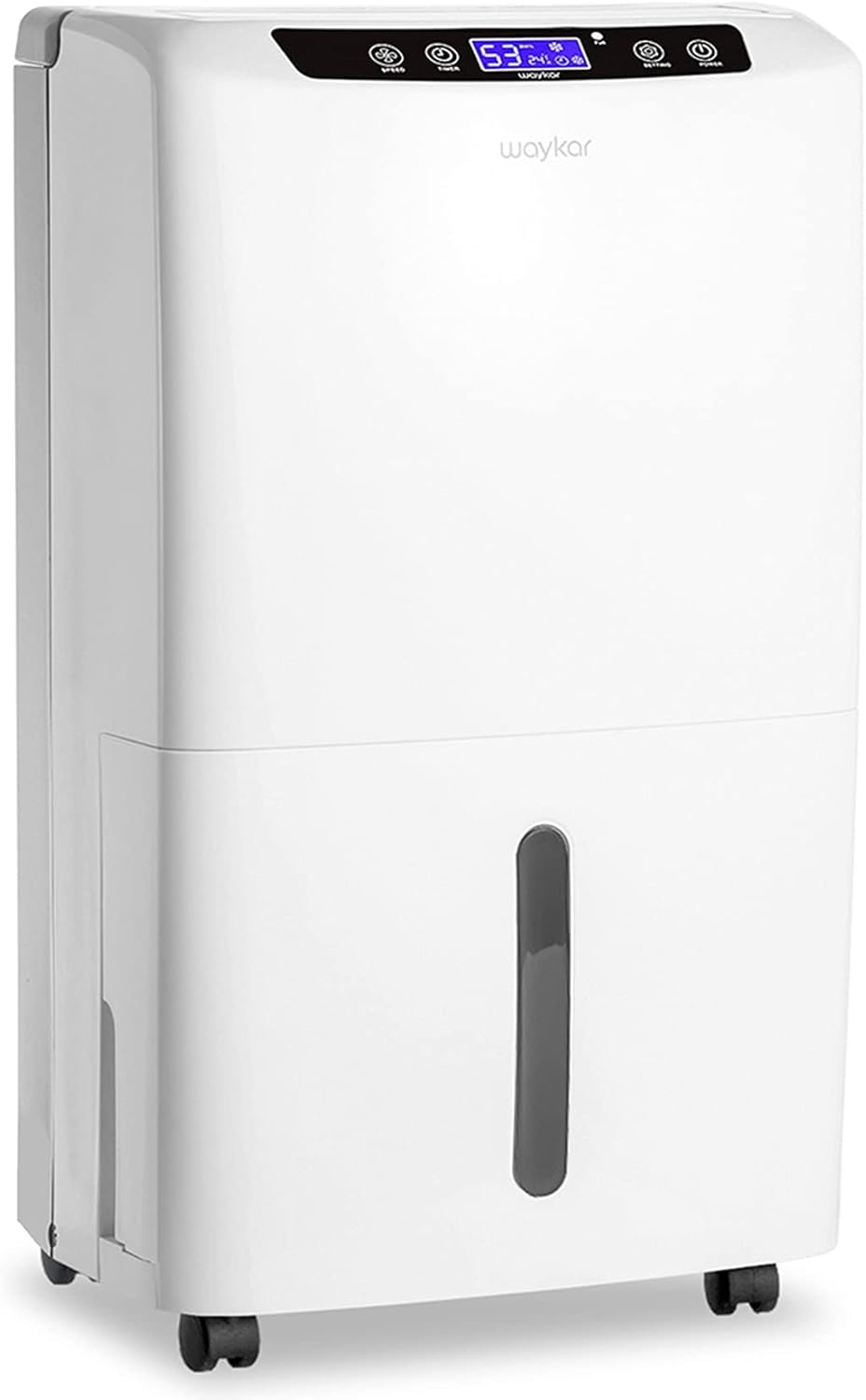
Waykar 34 Pints 2000 Sq. Ft.
Rated at 34 pints per day for up to 2,000 sq ft, with 30% to 80% humidity control, a 0.66 gallon tank and a drain hose for continuous drainage.
View on Amazon -

Midea Cube 20 Pint Dehumidifier for Basement
Rated at 20 pints per day, or 30 pints under the 2012 DOE standard, for up to 1,500 sq ft, with a 12 L tank and Wi-Fi control.
View on Amazon -

DREO Energy Star 2025 Smart Dehumidifier
Rated at 75 pints per day for up to 4,500 sq ft, with a 7 L tank, 3 fan speeds, a timer and app control.
View on Amazon -

KNKA 2500 Ft² Max 34 Pints Dehumidifier
Rated at 34 pints per day for up to 2,500 sq ft, with AUTO, DRY and SETTING modes, a 3 L tank and a 24-hour timer.
View on Amazon
These come from our ranked list Best Dehumidifier, which compares them spec by spec.
FAQ
Do desiccant dehumidifiers need a drain hose?
No. The water can collect in the removable tank, and you empty the tank when it fills. A drain hose is an option on the four models shown here: each includes one, so the water can drain away on its own for longer runs without emptying.
Why does a desiccant dehumidifier use a heater?
The heater warms air that passes through the damp part of the absorbent wheel. The warm air releases the trapped moisture, so that part of the wheel comes out dry and turns back to face the room air. Without the heat step, the wheel would stay damp and stop taking in moisture.
Can a desiccant dehumidifier run in a cold room?
Yes. A compressor model cools air to condense moisture and must run a defrost cycle when frost forms.
What do the pints and square feet figures mean?
Pints per day is how much moisture the maker says the unit removes in a day, and square feet is the area the maker rates it to cover. The Midea is rated at 20 pints per day, or 30 pints under the 2012 DOE standard, for up to 1,500 sq ft. Keep the DOE year with the pints figure when you compare units.


