
How-to · Dehumidifiers
Do You Need a Dehumidifier?
 By Laura Benning · Updated · How we pick
You need a dehumidifier when the air in a room stays damp: windows fog, walls feel wet, a musty smell lingers, or the floor in a basement stays damp after rain. A dehumidifier pulls moisture from the air and collects it in a tank or sends it out through a drain hose. If the signs point to damp air, the sections below show how to check.
Check the signs of damp air
Look for water on windows, damp patches on walls, a musty smell, or a floor that stays wet in a basement. Check the rooms that stay damp after rain or after a shower, and look inside closets and behind furniture where air moves less. If the signs show up again after you air the room out, the air itself holds the moisture.
Match the pints figure to the room
The pints figure states how much moisture the unit removes in a day. Compare the maker's rated square feet with the size of the room: the Waykar is rated for up to 2,000 sq ft by the maker, the Midea Cube for 1,500 sq ft, the KNKA for 2,500 sq ft, and the DREO for up to 4,500 sq ft. A higher pints figure suits a larger room, and the drain hose or tank decides how often you empty it.
Set it up and let it run
Place the unit where the damp air collects, with space around it for air to move, and plug it into a 120V outlet. Empty the tank when the full-tank light or alert shows, or connect the drain hose so the water runs out on its own. Set the humidity level the maker allows, then leave the unit to run and check the tank when the full-tank alert shows.
Empty the tank and wash the filter
Switch the unit off and unplug it before you clean it. Empty the tank and rinse it with water, and wash the filter with water and mild dish soap if the manual allows it. Let the filter dry fully before it goes back in, and follow the schedule in the maker's manual for filter care.
What you need
As an Amazon Associate I earn from qualifying purchases. Product details come from each Amazon listing; we do not test products in person.
-
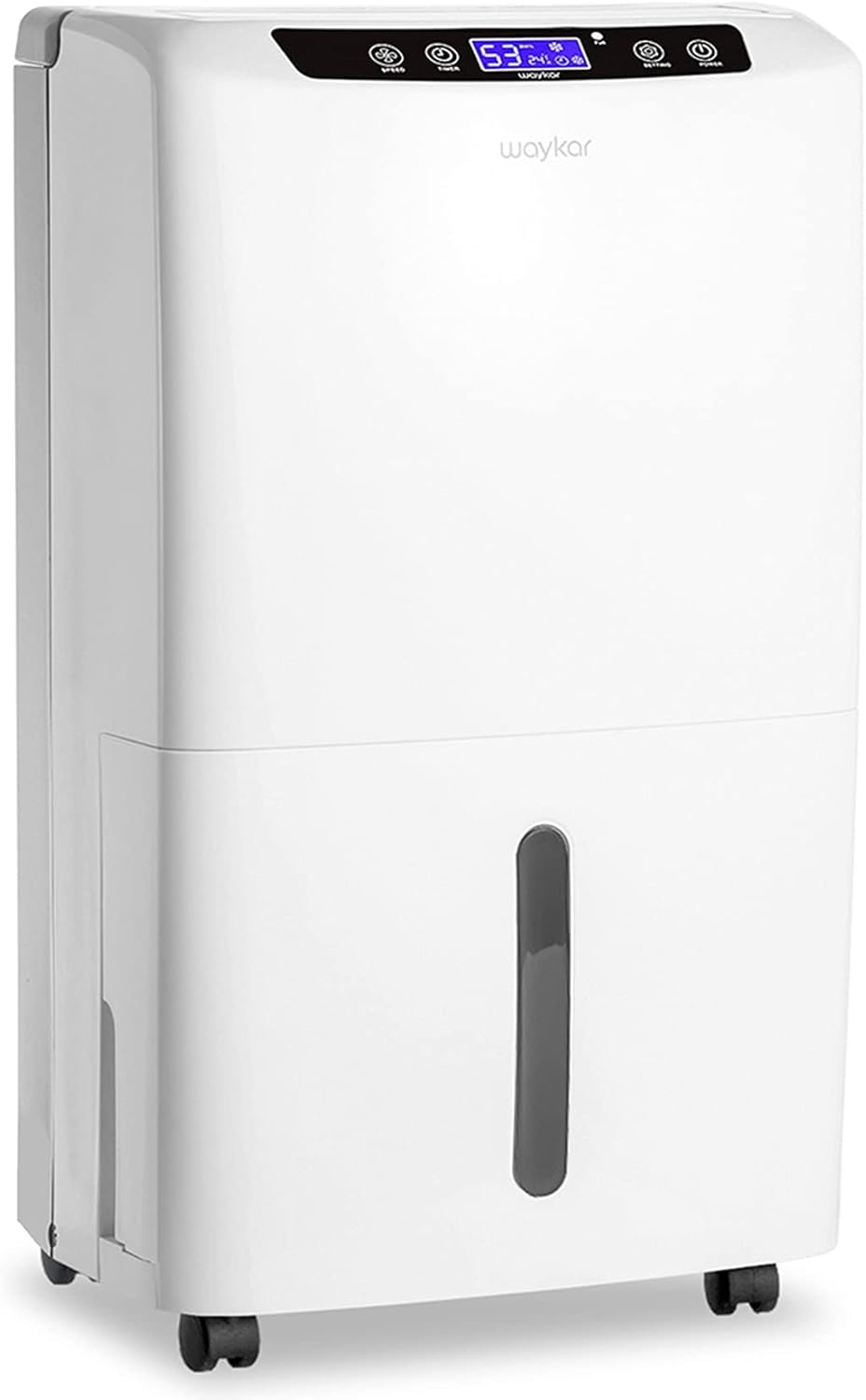
Waykar 34 Pints 2000 Sq. Ft.
Removes 34 pints per day with 30%–80% humidity control, a 0.66-gallon tank, and a drain hose included.
View on Amazon -

Midea Cube 20 Pint Dehumidifier for Basement
Rated for 1,500 sq ft by the maker, with a 12 L tank, a drain hose, and Wi-Fi control through the SmartHome app.
View on Amazon -

DREO Energy Star 2025 Smart Dehumidifier
Removes 75 pints per day, rated for up to 4,500 sq ft by the maker, with a 7 L tank and a drain hose included.
View on Amazon -

KNKA 2500 Ft² Max 34 Pints Dehumidifier
Removes 34 pints per day, rated for 2,500 sq ft by the maker, with a 3 L tank, a drain hose, and 3 modes.
View on Amazon
These come from our ranked list Best Dehumidifier, which compares them spec by spec.
FAQ
Do I need a dehumidifier in a basement?
Yes, if the basement stays damp after rain or the walls feel wet. A basement holds damp air because it sits below ground, so a dehumidifier with a drain hose suits it well.
What size dehumidifier do I need?
Compare the maker's rated square feet with the size of the room, and read the pints figure with its DOE year when the listing gives one. The Waykar is rated for up to 2,000 sq ft by the maker, and the DREO for up to 4,500 sq ft.
Can a dehumidifier run all the time?
Yes, if the drain hose is connected so the water runs out on its own, or if you empty the tank when the full-tank alert shows. Set the humidity level the maker allows and let the unit run.


