How-to · Dehumidifiers
Humidifier or Dehumidifier for a Basement?
 By Laura Benning · Updated · How we pick
A basement needs a dehumidifier, not a humidifier, when the air in it stays damp. A dehumidifier removes moisture from the air, while a humidifier adds moisture to it. If condensation shows on the walls or windows, or the air feels damp, use a dehumidifier; a humidifier fits only a basement that stays dry.
How to tell which one you need
Look for condensation on walls and windows, air that feels damp, and stored items that feel damp to the touch. Those signs point to too much moisture, and a dehumidifier removes it. A humidifier adds moisture, so it fits only a basement that stays dry and shows no condensation. Check the signs first, then pick the appliance that matches what the basement air does.
What a dehumidifier does in a basement
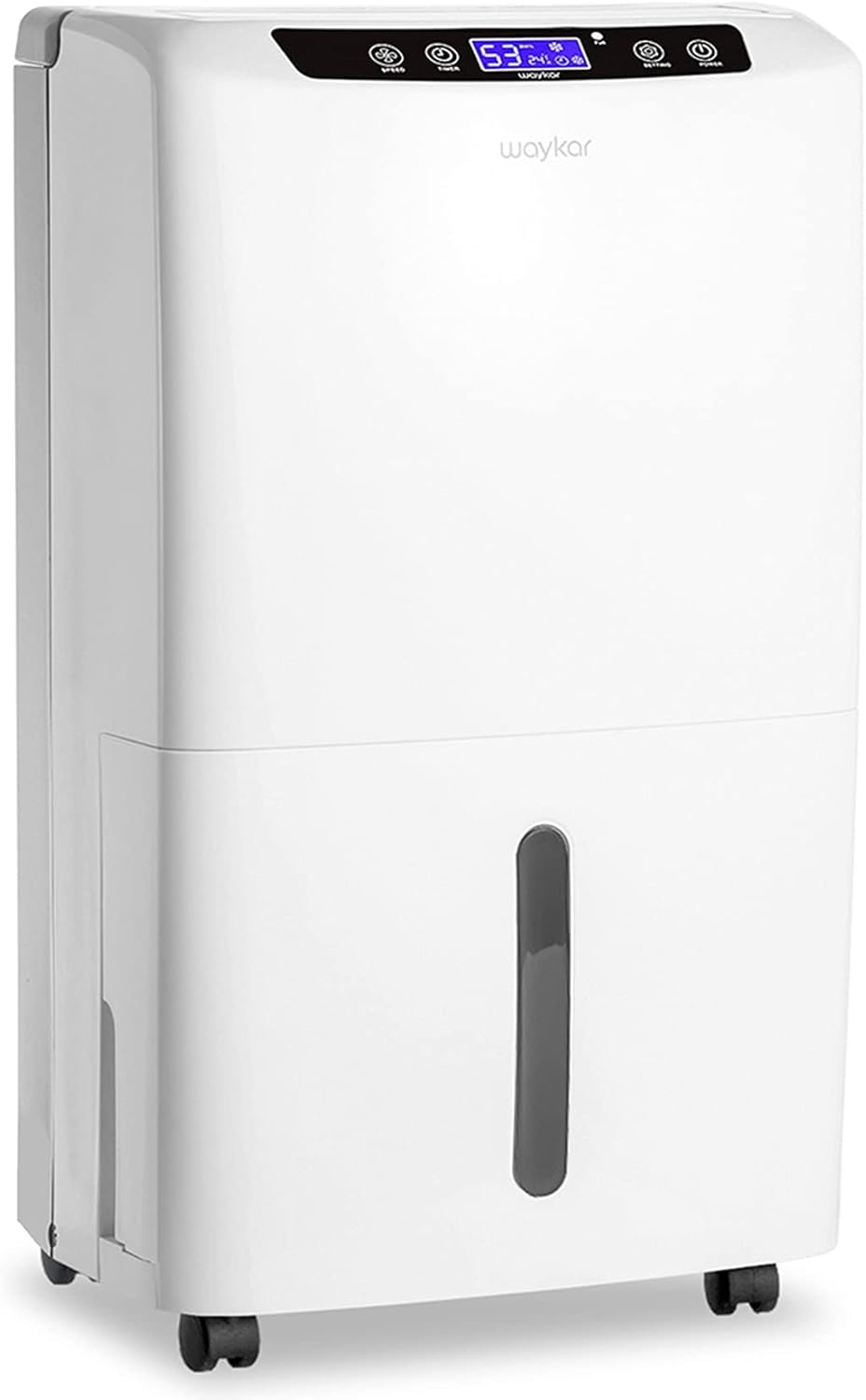
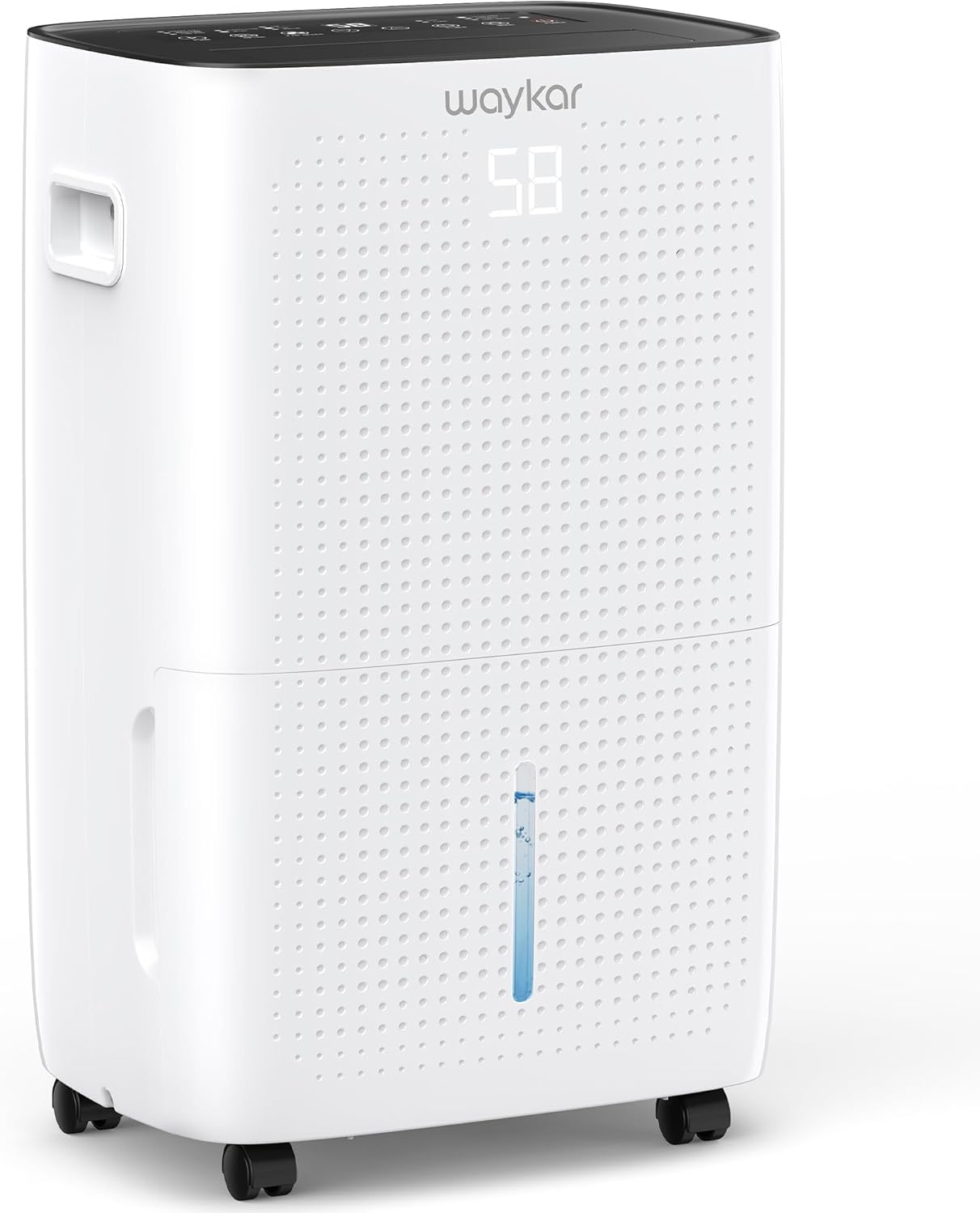
A dehumidifier pulls moisture from the air and collects it in a tank or sends it out through a drain hose. Pints per day says how much water the unit removes in a day: the Waykar is rated 120 pints, the Midea 50 pints, the KNKA 34 pints and the HUMILABS 30 pints. Square feet is the maker's rated coverage: the Waykar is rated for up to 6,000 sq ft, the Midea for 4,500 sq ft, the KNKA for 2,500 sq ft and the HUMILABS for 2,000 sq ft. Compare both figures against the basement, not one alone.
Set the humidity level and the drain
Set the humidity level on the controls: the Waykar adjusts from 30% to 80%, the Midea from 35% to 85%, and the KNKA AUTO mode defaults to 50% RH with a SETTING mode from 30% to 80%. A timer lets you set run times in advance.
Empty the tank and keep it running
Empty the tank over a sink when it fills, then put it back. The HUMILABS tank full indicator lights up when the tank reaches its maximum capacity, and the unit stops until the tank is emptied. The KNKA has auto shut-off and full-tank alerts on its internal and external tanks. For longer runs, fit the drain hose and run it to a floor drain or a sink, which keeps the tank empty. Rinse the washable filter only if the manual says it is washable, and let it dry fully before it goes back in. Unplug the unit before cleaning it, and follow the schedule in the maker's manual.
What you need
As an Amazon Associate I earn from qualifying purchases. Product details come from each Amazon listing; we do not test products in person.
-

Waykar 120 Pints 6000 Sq. Ft
Its 120 pints per day for up to 6,000 sq ft, 30% to 80% humidity control and 1.14 gallon tank with a drain hose cover a large basement.
View on Amazon -

Midea Cube 50 Pint Dehumidifier
Its 50 pints per day for 4,500 sq ft, SmartHome app control with Alexa, and built-in pump with a 16 foot drain tube cut down on emptying.
View on Amazon -

HUMILABS 2000 Sq.Ft Dehumidifier for Basement Home Bedroom
Its 30 pints per day for 2,000 sq ft, 3 modes, 36 dB running sound and 0.528 gallon tank with a drain hose fit a basement bedroom.
View on Amazon -

KNKA 2500 Ft² Max 34 Pints Dehumidifier
Its 34 pints per day for 2,500 sq ft, 3 modes, 24-hour timer and 360° wheels and handle make moving it from room to room simple.
View on Amazon
These come from our ranked list Best Dehumidifier for Basement, which compares them spec by spec.
FAQ
Do I need a humidifier in a basement?
Only if the basement air stays dry. A humidifier adds moisture, so it fits a dry basement, while a damp basement needs a dehumidifier that removes moisture. Check for condensation on the walls and windows first.
How do I know if my basement is damp?
Look for condensation on walls and windows, air that feels damp, and stored items that feel damp to the touch. Those signs point to too much moisture in the air. A dehumidifier removes the moisture; a humidifier would add more.
What size dehumidifier do I need for a basement?
Compare the maker's rated square feet and pints per day against the basement. The Waykar is rated for up to 6,000 sq ft at 120 pints, the Midea for 4,500 sq ft at 50 pints, the KNKA for 2,500 sq ft at 34 pints and the HUMILABS for 2,000 sq ft at 30 pints.