
How-to · Dehumidifiers
Do You Need a Dehumidifier in Winter?
 By Laura Benning · Updated · How we pick
Yes, you can need one in winter when indoor air stays damp, even while the air outside feels dry. Cooking, showers, and drying clothes indoors add moisture, and a basement or a room with condensation on the windows can stay damp through the cold months. A dehumidifier helps only when damp air is the problem, so check the room first.
When winter air stays damp indoors
Cold air outside does not mean the air inside is dry. Showers, cooking, and drying clothes indoors add moisture to the air, and a basement can hold damp air through winter. Look for condensation on windows, damp walls, or a room that feels damp to the touch. If you see those signs, a dehumidifier is worth considering. If the air feels dry and no damp signs appear, you do not need one.
Check the room before you buy
Walk through the room and look at the windows, walls, and floor for damp patches or condensation. Note which rooms feel damp and whether the dampness comes and goes with cooking, showers, or laundry. A dehumidifier works on damp air in the room where it runs, so place it in the room with the problem. Follow the maker's manual for placement and for how to empty the tank or connect a drain hose.
What the pints figure measures
Pints per day is the amount of moisture a dehumidifier removes in a day under the maker's test conditions. The Waykar removes up to 34 pints per day, the Midea removes 20 pints per day and 30 pints per day under the 2012 DOE standard, the DREO removes up to 75 pints per day, and the KNKA removes up to 34 pints per day. Compare figures that use the same DOE standard, and read the maker's coverage figure beside the pints figure.
Match coverage and drainage to the room
Coverage is the maker's own figure for the floor area a unit is rated for. The Waykar is rated for up to 2,000 sq ft by the maker, the Midea for up to 1,500 sq ft, the DREO for up to 4,500 sq ft, and the KNKA for up to 2,500 sq ft. Check the tank size too: the Waykar tank holds 0.66 gallons, the Midea tank holds 12 L, the DREO tank holds 7 L, and the KNKA tank holds 3 L. Each unit in this list includes a drain hose for continuous drainage.
Run it in cold rooms with care
In a cold basement, frost can form inside a dehumidifier, so look for automatic defrost. The Waykar, Midea, DREO, and KNKA each have automatic defrost. Set the humidity level with the controls on the unit or, where the unit has one, the phone app, and empty the tank when it fills. Unplug the unit before you clean the washable filter, and follow the maker's manual for cleaning and storage.
What you need
As an Amazon Associate I earn from qualifying purchases. Product details come from each Amazon listing; we do not test products in person.
-
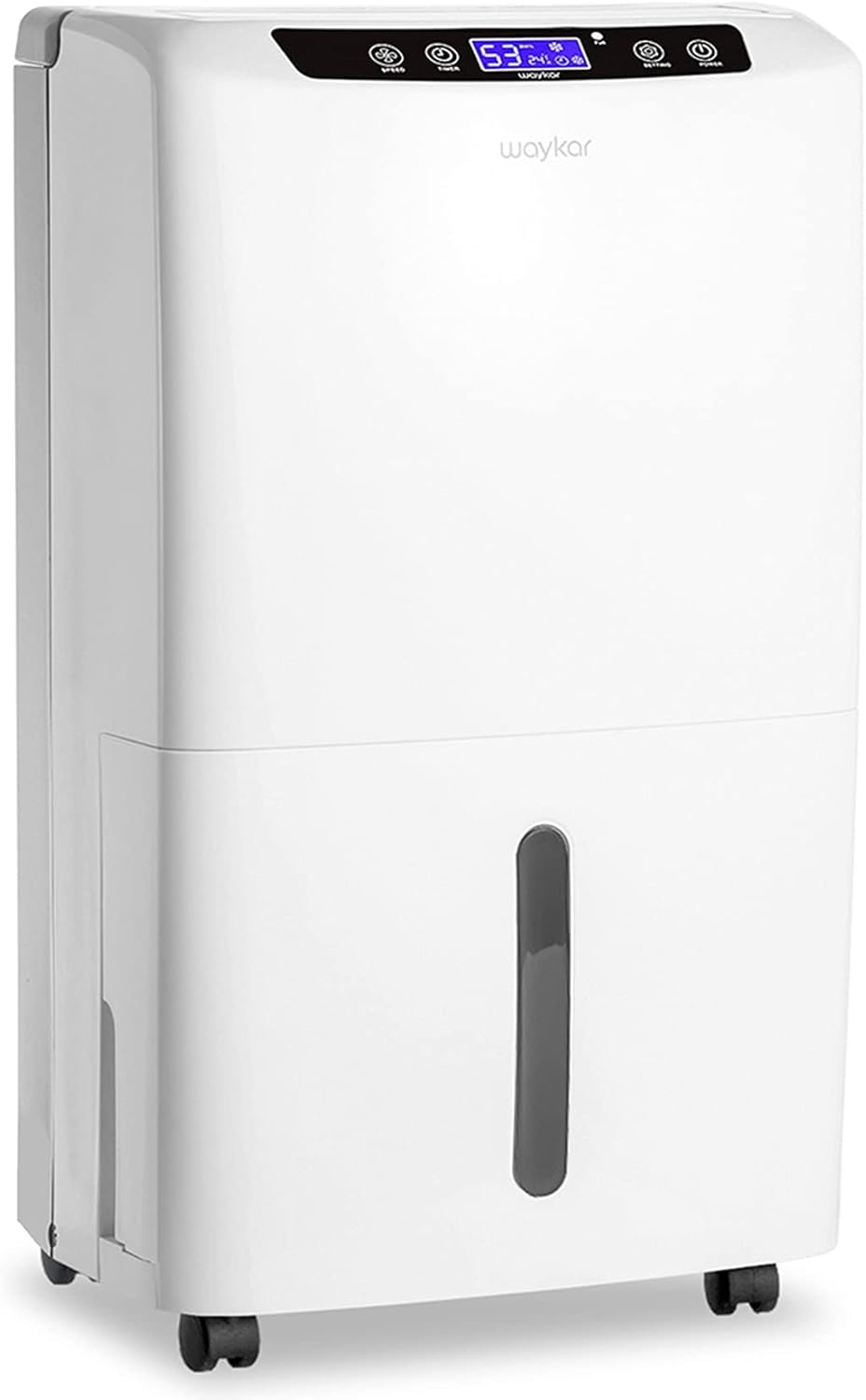
Waykar 34 Pints 2000 Sq. Ft.
It removes up to 34 pints per day, is rated for up to 2,000 sq ft by the maker, and has 30% to 80% humidity control with automatic defrost.
View on Amazon -

Midea Cube 20 Pint Dehumidifier for Basement
It removes 20 pints per day, is rated for up to 1,500 sq ft by the maker, and has Wi-Fi control through the SmartHome app.
View on Amazon -

DREO Energy Star 2025 Smart Dehumidifier
It removes 75 pints per day, is rated for up to 4,500 sq ft by the maker, and has a 7 L tank, 3 fan speeds, and a timer.
View on Amazon -

KNKA 2500 Ft² Max 34 Pints Dehumidifier
It removes up to 34 pints per day, is rated for up to 2,500 sq ft by the maker, and has AUTO, DRY, and SETTING modes.
View on Amazon
These come from our ranked list Best Dehumidifier, which compares them spec by spec.
FAQ
Do I need a dehumidifier in winter if windows fog up?
Condensation on windows is a sign of damp indoor air. Check the room for other damp signs, then run a dehumidifier in that room and follow the maker's manual for placement.
Will a dehumidifier work in a cold basement in winter?
Look for automatic defrost, which the Waykar, Midea, DREO, and KNKA each have. Place the unit in the basement, connect the drain hose for continuous drainage if you want, and empty the tank when it fills.
How do I choose a dehumidifier size for winter?
Compare the pints per day and the maker's coverage figure, using the same DOE standard for pints. The DREO removes up to 75 pints per day and is rated for up to 4,500 sq ft by the maker.


