
How-to · Dehumidifiers
How a Charcoal Dehumidifier Works
 By Laura Benning · Updated · How we pick
A charcoal dehumidifier is a container of activated charcoal that pulls moisture from the air into the pores of the charcoal, with no fan, cord or tank to empty. It works on its own in a closed space, and you dry or replace the charcoal when it stops taking in moisture. The four electric dehumidifiers below remove moisture a different way, collecting water in a tank or a drain hose.
How charcoal pulls moisture from air
Activated charcoal is full of tiny pores, and moisture in the air collects in those pores when air passes over the charcoal. The charcoal needs no fan to move the air and no power cord, so it works in silence in a closed space. As the pores fill, the charcoal takes in less moisture, and the air in the space stops feeling drier. That is the point to dry the charcoal out or swap it for fresh charcoal, following the instructions that came with it.
Charcoal bags and electric models
A charcoal bag and an electric dehumidifier both take moisture from the air, but they do it in different ways. The charcoal bag is passive: it sits in place and takes in moisture with no fan, no cord and no tank to empty. An electric model runs a fan, collects the water in a tank, and lets you fit a drain hose for continuous drainage. The electric models below also let you set a target humidity level, and the Waykar, DREO and KNKA models add a timer.
Where to place a charcoal dehumidifier
Put the charcoal where damp air gathers: inside a closet, beside the bathroom door, or in a corner of the basement that smells damp. Leave space around it so air can reach the charcoal from all sides, and keep it away from standing water. A charcoal bag will not dry a large open room, so save it for closed spaces and use an electric model for the open areas.
When the charcoal stops working
The charcoal stops taking in moisture when its pores fill up. You can tell by touch: the charcoal feels damp, and the air in the space feels damp again after a while. Dry the charcoal in the sun or replace it with fresh charcoal, and follow the instructions that came with the bag. A bag that stays damp after drying has reached the end of its life, so replace it.
Emptying a tank or fitting a drain hose
Each electric model here has a tank and a drain hose in the box. Empty the tank when it fills, or fit the hose and let the water drain away on its own. The hose suits a basement with a floor drain nearby, while the tank suits a room where you can empty it by hand. Check the manual for where the hose connects on your model.
What you need
As an Amazon Associate I earn from qualifying purchases. Product details come from each Amazon listing; we do not test products in person.
-
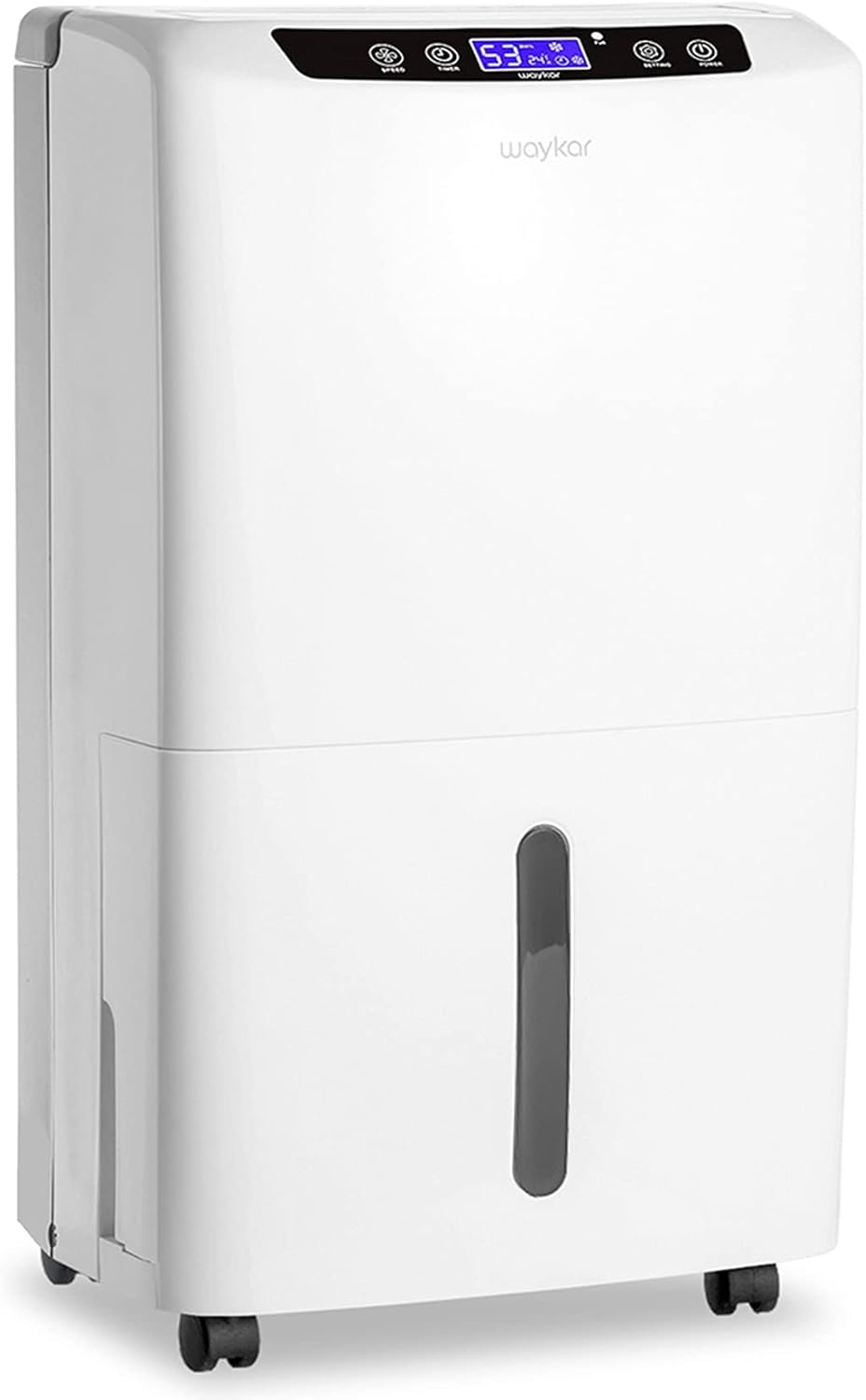
Waykar 34 Pints 2000 Sq. Ft.
Removes up to 34 pints of moisture a day for up to 2,000 sq ft, with a 0.66-gallon tank, a drain hose and a 24-hour timer.
View on Amazon -

Midea Cube 20 Pint Dehumidifier for Basement
Collects 20 pints a day for 1,500 sq ft, with a 12L tank, a drain hose and Wi-Fi control through an app.
View on Amazon -

DREO Energy Star 2025 Smart Dehumidifier
Removes up to 75 pints a day for up to 4,500 sq ft, with a 7L tank, a drain hose and a 41dB rated noise level.
View on Amazon -

KNKA 2500 Ft² Max 34 Pints Dehumidifier
Removes up to 34 pints a day for up to 2,500 sq ft, with a 3L tank, a drain hose and three modes.
View on Amazon
These come from our ranked list Best Dehumidifier, which compares them spec by spec.
FAQ
Does a charcoal dehumidifier need power?
No. It pulls moisture from the air on its own, and you dry or replace the charcoal when it stops taking in moisture.
Can a charcoal dehumidifier dry a whole basement?
No. Charcoal works slowly in a small closed space such as a closet. For a basement or a large room, an electric dehumidifier with a tank or a drain hose fits the job.
How do I know the charcoal is spent?
The charcoal feels damp to the touch, and the air in the space feels damp again. Dry the charcoal in the sun or replace it, following the instructions that came with it.
Do electric dehumidifiers need a drain hose?
No. Each of the four models here has a tank you empty by hand, and each includes a drain hose for continuous drainage when you want it.


