
How-to · Dehumidifiers
How a Dehumidifier Rod Works
 By Laura Benning · Updated · How we pick
A dehumidifier rod is a slim heating rod that warms the air inside an enclosed space such as a closet or cabinet. Warm air holds more moisture than cool air, so warming the air lowers its relative humidity and keeps moisture from settling on surfaces. The warm air rises and circulates, and the moisture leaves through the gaps and vents of the enclosure.
What the rod warms
The rod sits low in the enclosed space and warms the air around it. Warm air rises toward the top of the enclosure, and cooler air moves down to take its place, so the air keeps moving in a slow loop. It works by changing the air inside the enclosure, not by pulling moisture out of a room.
Why warm air stays drier
Relative humidity measures how much moisture the air holds compared with what it could hold at that temperature. Warm air can hold more moisture than cool air, so warming the same air lowers its relative humidity without removing any water. That is why surfaces in the enclosure stay dry while the rod runs. The moisture stays in the air and leaves the enclosure through its gaps and vents.
Where a rod fits
A rod suits a small enclosed space with a door that closes, such as a closet, a cabinet or a storage chest. Place it low in the space so the warm air can rise through the whole enclosure, and keep it clear of fabric, paper and other stored items. Leave the vents or gaps of the enclosure open so the moist air has a way out. Follow the maker's manual for placement and spacing.
Rod or room dehumidifier
A rod warms the air in one enclosed space, while a room dehumidifier pulls moisture from the air of a whole room and collects it in a tank or a drain hose. Pick the rod for a closet or cabinet that stays closed, and pick a dehumidifier for a room where you want the moisture collected and removed. Read the pints per day and the coverage figure the maker gives when you compare dehumidifiers.
What you need
As an Amazon Associate I earn from qualifying purchases. Product details come from each Amazon listing; we do not test products in person.
-
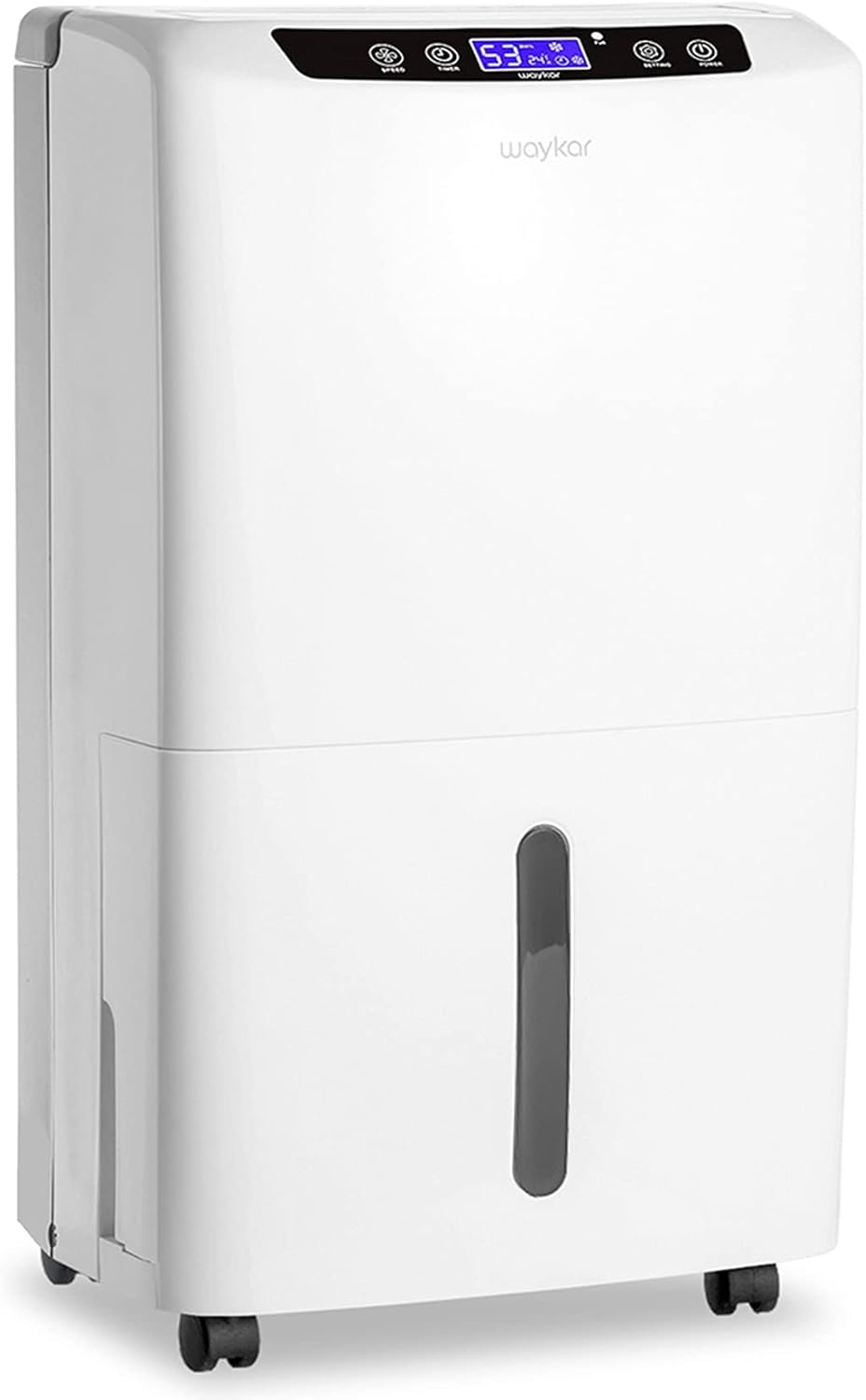
Waykar 34 Pints 2000 Sq. Ft.
It removes 34 pints per day across 2,000 sq ft, with a 0.66-gallon tank, a drain hose, and 2 fan speeds.
View on Amazon -

Midea Cube 20 Pint Dehumidifier for Basement
It collects 20 pints per day, rated 30 pints under the 2012 DOE standard, across 1,500 sq ft, with a 12 L tank and a drain hose.
View on Amazon -

DREO Energy Star 2025 Smart Dehumidifier
It removes 75 pints per day across 4,500 sq ft, with a 7 L tank, 3 fan speeds, a timer, and a drain hose.
View on Amazon -

KNKA 2500 Ft² Max 34 Pints Dehumidifier
It removes 34 pints per day across 2,500 sq ft, with a 3 L tank, a drain hose, and 3 modes for humidity control.
View on Amazon
These come from our ranked list Best Dehumidifier, which compares them spec by spec.
FAQ
Does a dehumidifier rod remove water from the air?
No. It warms the air, which lowers relative humidity and keeps moisture from settling on surfaces. The moisture stays in the air and leaves the enclosure through its gaps and vents.
Where do I put the rod?
Place it low in the enclosed space so warm air rises through the whole enclosure. Keep it clear of stored items and follow the spacing in the maker's manual.
Do I need a dehumidifier as well?
A rod covers one enclosed space, while a dehumidifier collects moisture from a whole room. Use a dehumidifier for a room and a rod for a closet or cabinet that stays closed.


