
How-to · Dehumidifiers
Moisture Absorber vs Dehumidifier
 By Laura Benning · Updated · How we pick
A moisture absorber is a passive container that pulls moisture from the air in a small space, with no power and no drain. A dehumidifier is a powered appliance that pulls moisture from the air across a room, collects the water in a tank or drains it through a hose, and lets you set a humidity level. The absorber fits a small space, and the dehumidifier fits a room.
How a moisture absorber works
It sits in a small enclosed space and pulls moisture from the air into a container, so the air in that space holds less water. When the container is full or the material inside is spent, you empty it or replace it as the maker says. It needs no drain and no tank to empty.
How a dehumidifier works
A dehumidifier runs on power and uses a fan to pull room air across a cold surface, so water collects in a tank or drains out through a hose. You set a target humidity level, and the unit runs until the air reaches it, then stops and starts again as the level changes. When the tank fills, the unit shuts off and signals you to empty it.
Read the pints and coverage figures
Pints per day is the moisture the unit removes in a day, and the coverage figure is the room size the maker rates it for. The Waykar removes 34 pints per day and is rated for up to 2,000 sq ft by the maker. The Midea removes 20 pints per day, or 30 pints under the 2012 DOE standard, and is rated for up to 1,500 sq ft. The DREO removes 75 pints per day and is rated for up to 4,500 sq ft, and the KNKA removes 34 pints per day and is rated for up to 2,500 sq ft.
Match the tank and drain to the room
A larger tank means fewer trips to empty it, and a drain hose means the water leaves on its own. The Waykar tank holds 0.66 gallons, the Midea tank holds 12 L, the DREO tank holds 7 L and the KNKA tank holds 3 L. Each of the four models here includes a drain hose, so you can set the unit over a floor drain or a sink and let it run without emptying a tank.
When to pick each one
Pick a moisture absorber for a small enclosed space where a power cord and a drain would get in the way, and where the damp air stays in one place. Pick a dehumidifier for a room or basement where you want to set a humidity level and keep the air at it through the day. If the space is large, compare the coverage figures the makers give and pick the unit rated for that room.
What you need
As an Amazon Associate I earn from qualifying purchases. Product details come from each Amazon listing; we do not test products in person.
-
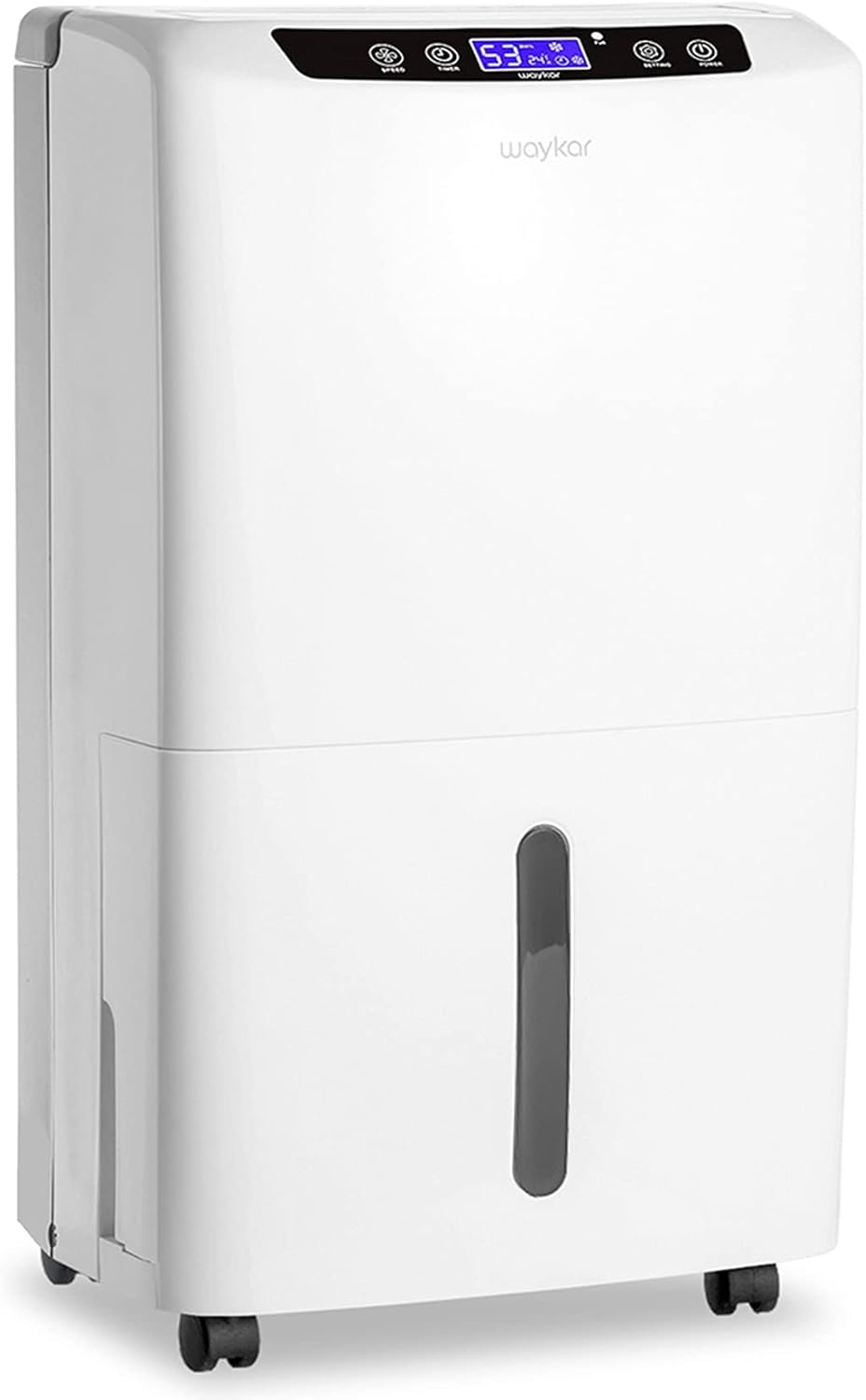
Waykar 34 Pints 2000 Sq. Ft.
34 pints per day, rated for up to 2,000 sq ft by the maker, with 30% to 80% humidity control, a 0.66 gallon tank and a drain hose.
View on Amazon -

Midea Cube 20 Pint Dehumidifier for Basement
20 pints per day (30 pints, 2012 DOE), rated for up to 1,500 sq ft by the maker, with a 12 L tank, drain hose and Wi-Fi app control.
View on Amazon -

DREO Energy Star 2025 Smart Dehumidifier
75 pints per day, rated for up to 4,500 sq ft by the maker, with a 7 L tank, drain hose, app control and 3 fan speeds.
View on Amazon -

KNKA 2500 Ft² Max 34 Pints Dehumidifier
34 pints per day, rated for up to 2,500 sq ft by the maker, with a 3 L tank, drain hose, 3 modes and a 24-hour timer.
View on Amazon
These come from our ranked list Best Dehumidifier, which compares them spec by spec.
FAQ
Can a moisture absorber replace a dehumidifier?
No. An absorber works in a small enclosed space with no power and no drain, while a dehumidifier covers a room, sets a humidity level and drains through a hose or into a tank.
Do dehumidifiers need a drain hose?
No. You can empty the tank when it fills, and the unit shuts off when the tank is full. The Waykar, Midea, DREO and KNKA models here each include a drain hose if you want the water to leave on its own.
What does pints per day mean?
It is the moisture a dehumidifier removes in one day. The Midea removes 20 pints per day, or 30 pints under the 2012 DOE standard, the Waykar and KNKA remove 34 pints per day, and the DREO removes 75 pints per day.


