
How-to · Dehumidifiers
Where to Put a Dehumidifier
 By Laura Benning · Updated · How we pick
Put a dehumidifier in the dampest room, where its air reaches the damp area and where the drain hose can reach a sink or floor drain. Basements and crawlspaces are the rooms named in these listings. Set the humidity level you want, close the doors and windows, and let it run.
Pick the dampest room
Start with the room that feels damp: basements and crawlspaces are named in these listings, along with laundry rooms, bathrooms and garages. The unit draws in the air around it, so it works on the room it sits in, not on rooms down the hall. Keep the doors and windows closed while the unit runs, so it works on the air in the room. If two rooms feel damp, start with the room that stays damp longest and move the unit later.
Give it air and keep it upright
Set the unit upright and point the airflow toward the damp area. The Waykar model has a 90° airflow adjustment that directs dry air where you point it. The KNKA model has wheels and a handle, so you can move it to the room that needs it.
Set the humidity level
Set a target humidity level on the controls: the Waykar and KNKA models offer a 30% to 80% range, and the Midea model offers 35% to 85%. The KNKA model has an AUTO mode that holds 50% RH and a DRY mode for clothes drying. The unit runs until the air reaches the level you set, then it holds that level.
Plan the drainage
Empty the water tank when it fills, or connect the drain hose for continuous drainage. The Midea model lets you place the unit above a sink with the included hose, or over a floor drain, near a window or door. The Waykar model has a 0.66 gallon tank, the Midea model a 12 liter tank, the DREO model a 7 liter tank, and the KNKA model a 3 liter tank.
Match the coverage to the room
Compare the maker's rated coverage in square feet with the room you want to dry. The Waykar model is rated for up to 2,000 sq ft by the maker, the Midea model for 1,500 sq ft, the DREO model for 4,500 sq ft, and the KNKA model for 2,500 sq ft. Read the figure as the maker's figure, not as a promise about your room.
What you need
As an Amazon Associate I earn from qualifying purchases. Product details come from each Amazon listing; we do not test products in person.
-
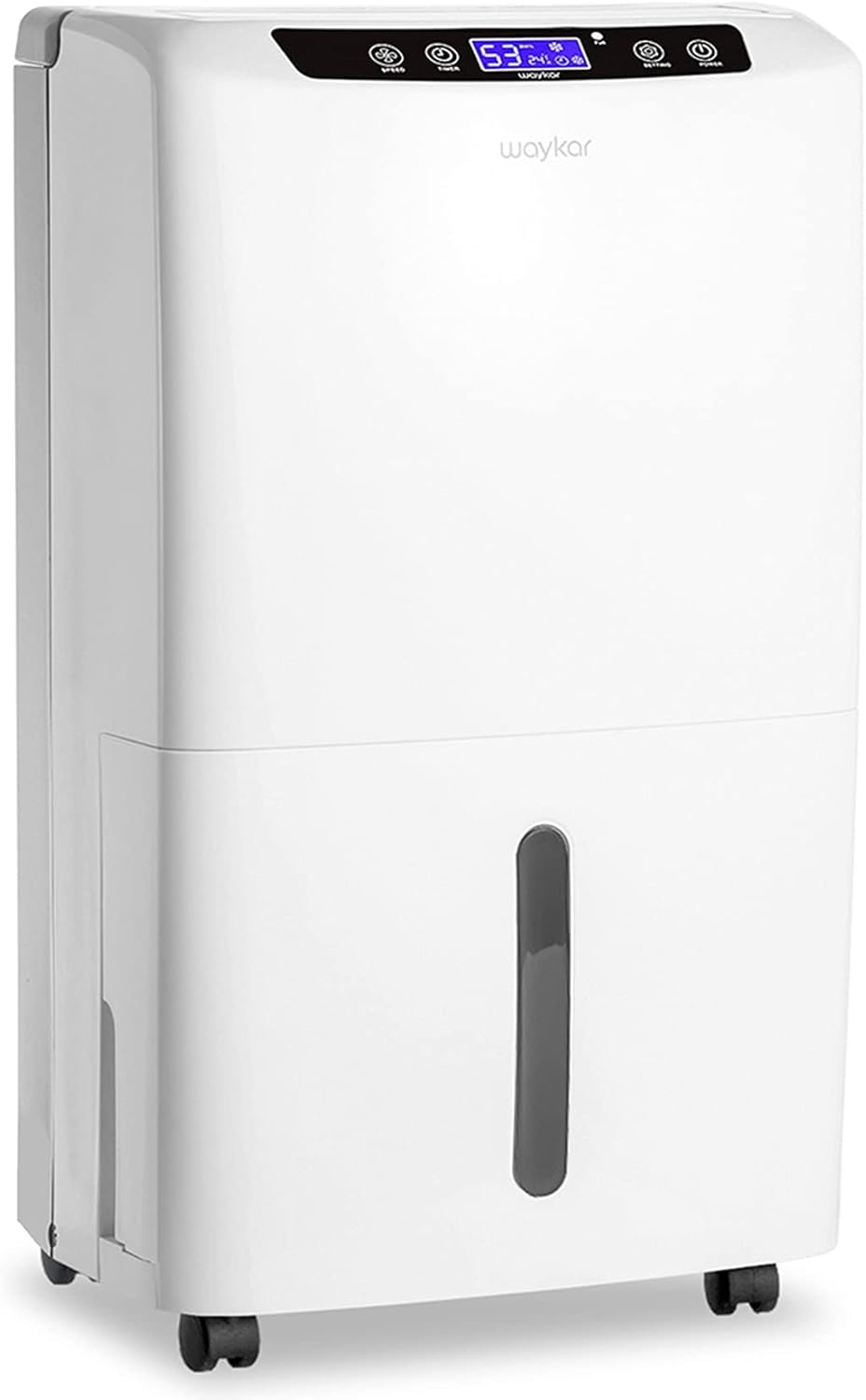
Waykar 34 Pints 2000 Sq. Ft.
A 34 pint dehumidifier rated for up to 2,000 sq ft by the maker, with a 0.66 gallon tank, a drain hose and a 24-hour timer.
View on Amazon -

Midea Cube 20 Pint Dehumidifier for Basement
A 20 pint dehumidifier (30 pints, 2012 DOE) rated for 1,500 sq ft by the maker, with a 12 liter tank, a drain hose and Wi-Fi app control.
View on Amazon -

DREO Energy Star 2025 Smart Dehumidifier
A 75 pint dehumidifier rated for up to 4,500 sq ft by the maker, with a 7 liter tank, a drain hose, 3 fan speeds and app control.
View on Amazon -

KNKA 2500 Ft² Max 34 Pints Dehumidifier
A 34 pint dehumidifier rated for up to 2,500 sq ft by the maker, with a 3 liter tank, a drain hose, 3 modes and wheels for moving it.
View on Amazon
These come from our ranked list Best Dehumidifier, which compares them spec by spec.
FAQ
What room should a dehumidifier go in?
The dampest room: basements and crawlspaces are named in these listings, along with laundry rooms, bathrooms and garages. Put it where the damp air is, and move it when that room dries.
Does a dehumidifier need a drain?
No, it can run on its tank, but the tank needs emptying when it fills. Each model here includes a drain hose for continuous drainage, and the Midea model can sit above a sink or over a floor drain.
Should doors and windows stay closed?
Yes, while the unit runs. Keep the doors and windows closed, so the unit works on the air in the room instead of air from outside.
Can a dehumidifier run all the time?
Yes. The Waykar model runs continuously in humid seasons, and the Midea and KNKA models have a continuous mode. Empty the tank or connect the drain hose so it can keep running.


