
How-to · Espresso Machines
How Do Espresso Machines Work
 By Laura Benning · Updated · How we pick
An espresso machine heats water, then pushes it through a puck of finely ground coffee under pressure. The pressure forces water through the grounds in a short time, which pulls out oils and flavor and leaves a layer of crema on top. A steam wand heats and textures milk for drinks like lattes and cappuccinos.
Heat the water
Fill the tank with fresh water and switch the machine on. The boiler heats the water to brewing temperature, so wait until it is fully heated before you brew, since water that is still heating gives a weak, sour shot. Keep the tank filled between drinks so you have water ready for the next shot.
Grind and dose the coffee
Espresso needs coffee ground much finer than drip coffee, almost like powdered sugar. Grind whole beans just before brewing so the aroma stays in the cup, and dose the grounds into the portafilter basket. A single basket holds one shot and a double basket holds two, so pick the basket that matches the drink you want. Level the grounds across the basket so water passes through them evenly.
Tamp the grounds into a puck
Tamping presses the loose grounds into a firm, level puck so water cannot find a quick path through. Press straight down with even force, then check that the surface looks flat and level. A puck with cracks or a low side lets water rush past the coffee instead of through it, which gives a thin, uneven shot. Wipe stray grounds off the rim so the portafilter seals against the group head.
Brew the shot under pressure
Lock the portafilter into the group head and start the brew. The pump pushes hot water through the puck, and the pressure extracts oils and flavor in a short time. Watch the stream: it should pour like warm honey and turn from dark to a lighter brown as the shot finishes. Stop the brew when the cup holds the amount you want, then remove the portafilter and knock the puck out.
Steam milk for milk drinks
Pour cold milk into a jug and lower the steam wand just under the surface. Open the steam and keep the wand near the surface so air mixes in and the milk turns silky with fine bubbles. Stop when the jug feels hot to hold, then tap it on the counter and swirl it to smooth the foam. Pour the milk slowly into the espresso, tilting the cup so the foam folds into the coffee.
Clean up after brewing
Empty the puck from the portafilter and rinse the basket and the portafilter with water. Wipe the steam wand with a damp cloth right after steaming so dried milk does not build up on it. Run water through the group head to flush out leftover grounds, and empty the drip tray when it fills. Follow the schedule in the maker's manual for descaling and for changing any filter.
What you need
As an Amazon Associate I earn from qualifying purchases. Product details come from each Amazon listing; we do not test products in person.
-

Ninja Luxe Café Premier 3-in-1 Espresso Machine
Its built-in conical burr grinder has 25 settings, and its Barista Assist Technology guides grinding, dosing and tamping as you make a drink.
View on Amazon -
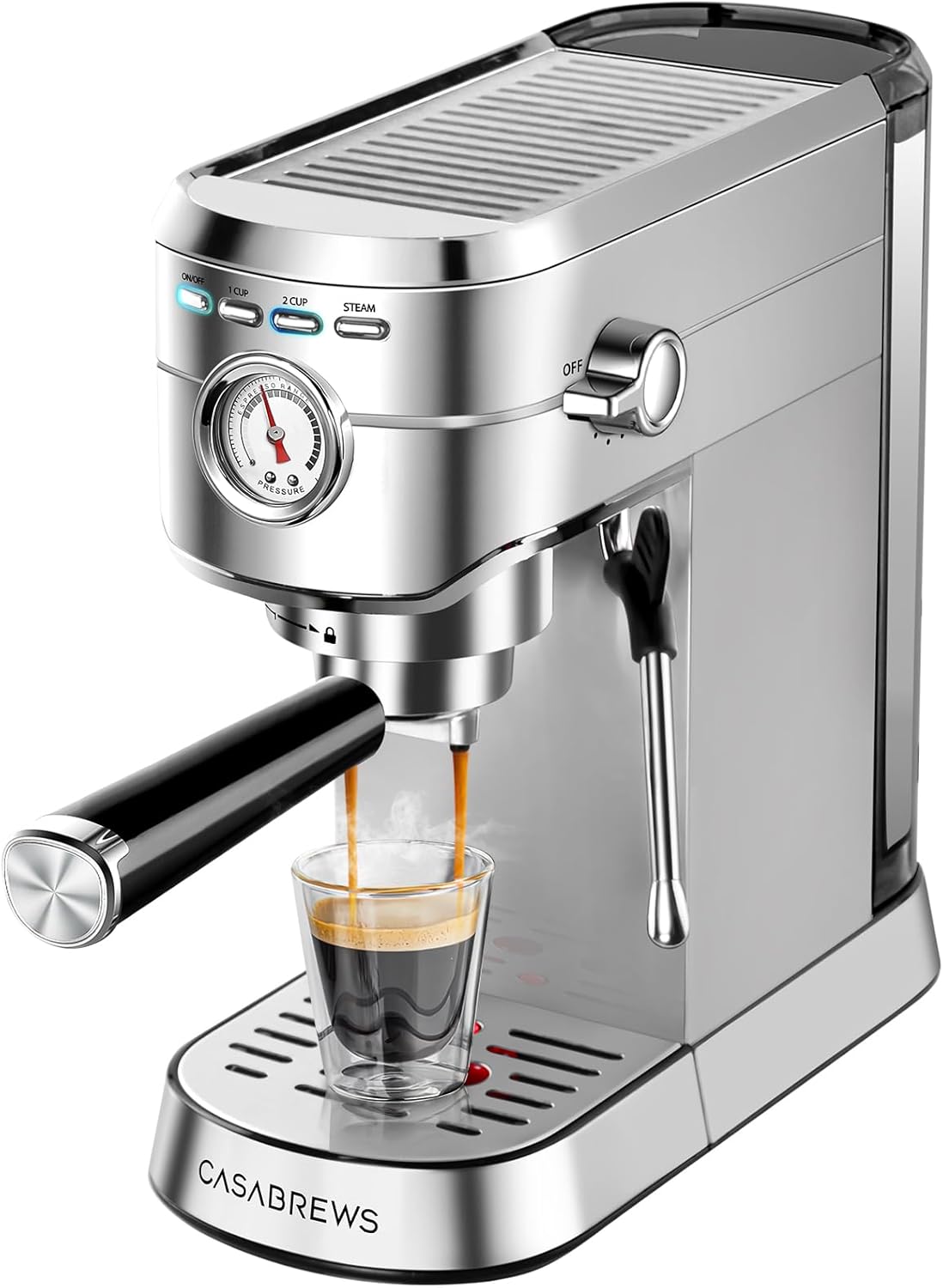
CASABREWS CM5418 Compact Espresso Machine with Milk
Its 20-bar pump and built-in pressure gauge help you watch the pressure, and its steam wand textures milk for lattes and cappuccinos.
View on Amazon -

CHULUX Slim Espresso Machine with Milk Frother
Its 20-bar pump and pressure gauge show the pressure as you brew, and its 40 oz water tank holds enough water for several cups without refilling.
View on Amazon -

Maestri House Compact Espresso Machine
Its 20-bar ULKA pump and built-in flowmeter keep water flowing evenly through the grounds, and its 1.3L detachable tank lifts out for refilling.
View on Amazon
These come from our ranked list Best Espresso Machine, which compares them spec by spec.
FAQ
Do I need a grinder for espresso at home?
No, you can buy coffee already ground for espresso and dose it straight into the portafilter. A grinder gives you fresher grounds and lets you adjust the fineness when a shot pours too fast or too slow.
Why does my espresso taste sour or bitter?
A sour shot often means the water passed through too fast, so grind finer or tamp the puck more evenly. A bitter shot often means the water stayed in contact too long, so grind coarser or stop the brew sooner.
Can I make espresso without a steam wand?
Yes, the machine still brews espresso without steaming milk. You can drink the shot as it is, add hot water for an Americano, or heat milk on the stove and pour it into the cup.


