How-to · Under-Sink Water Filters
What Is a Sediment Water Filter
 By Laura Benning · Updated · How we pick
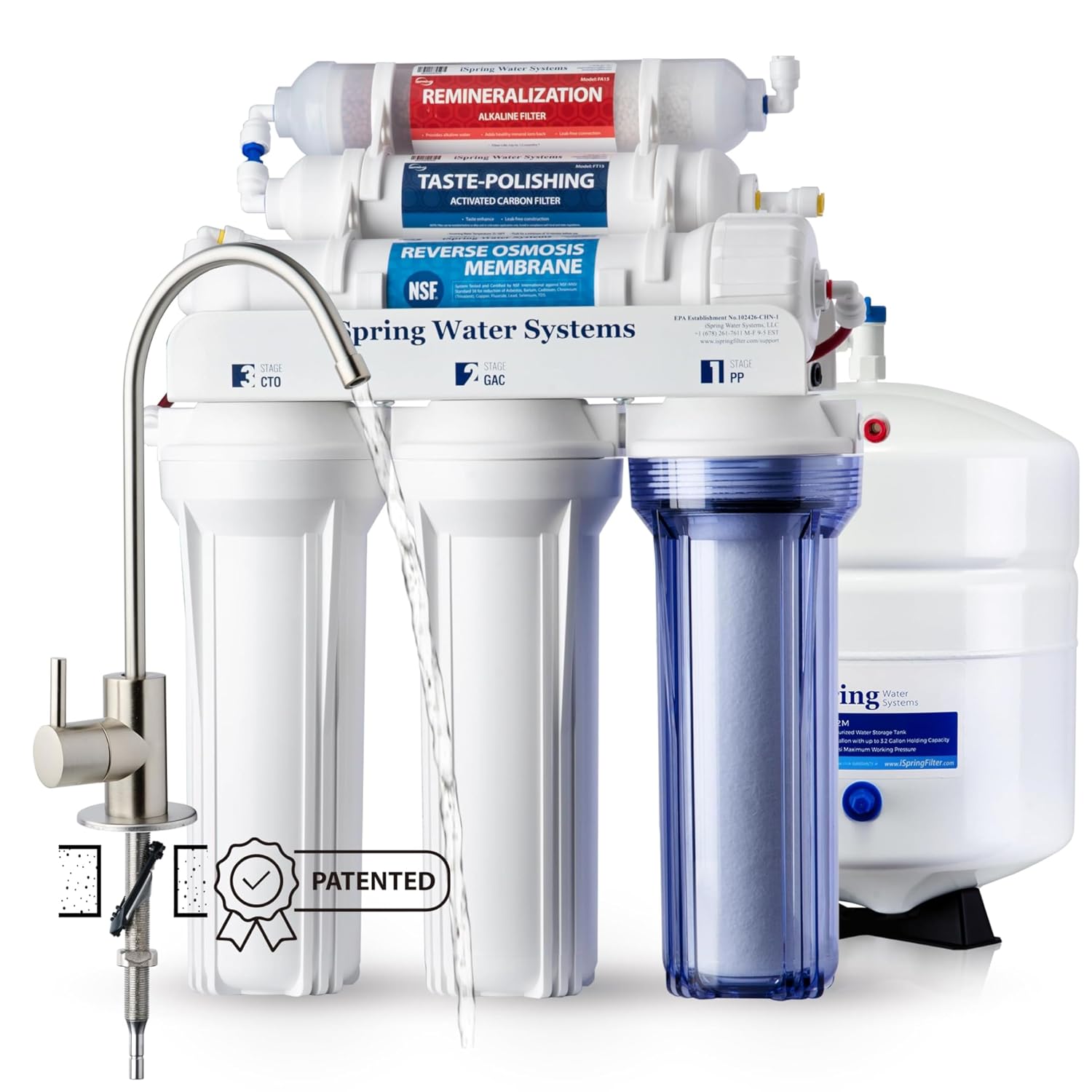
A sediment water filter catches solid particles carried in the water before they reach the tap. Water passes through a membrane or a carbon filter with small openings, and particles larger than the openings stay behind while the water flows through. It catches the solid particles, and the carbon and reverse osmosis stages in these systems filter what passes through.
What sediment is
Sediment is solid matter carried in the water. A sediment filter stops those particles before they reach the tap or the stages downstream. The Electrolux system reduces large particles through its filtration. Catching those particles first keeps them out of the carbon and reverse osmosis stages that follow.
How the filter catches particles
Water flows through a membrane or a carbon filter, and particles larger than the openings in the material stay behind. The CuZn system uses Micro Sediment Membranes with KDF-55 and coconut shell carbon, and the ICEPURE outer layer is 0.5 micron. A smaller micron figure means smaller openings, so the layer stops smaller particles. Check the micron figure on the filter you pick, and match it to the particles in your water.
Where it sits in a system
A sediment filter works as one stage among several. The Electrolux system has 12-stage filtration in a single all-in-one RO filter, and the CuZn system has 3 stages. The Waterdrop and ICEPURE systems use activated carbon. The Waterdrop system is certified to NSF/ANSI 42, and the ICEPURE system is certified to NSF/ANSI 42 and 372. Look at the stage count and the certifications on the system you pick, and read what each stage is stated to do.
Match flow, size and filter life
Check the flow rate, the size and the filter life before you pick. The Electrolux system flows at 0.85 GPM, the Waterdrop at 0.75 gpm at 60 psi with a 1.33 GPM outlet, and the ICEPURE at 2.5 gpm at 60 psi. Filter life runs 24 months for the Electrolux, 11,000 gallons or 12 months for the Waterdrop, 22,000 gallons or 3 years for the ICEPURE, and 5 years for the CuZn. The Waterdrop and ICEPURE systems connect to 3/8-inch and 1/2-inch cold water lines, and both are for cold water only. Follow the maker's installation manual, and hire a licensed plumber where the manual says so.
What you need
As an Amazon Associate I earn from qualifying purchases. Product details come from each Amazon listing; we do not test products in person.
-

Electrolux PureOne 1200GPD Tankless Reverse Osmosis Under
A tankless reverse osmosis system with 12-stage filtration, a 1200 GPD flow and a 0.85 GPM rate, with a filter life of 24 months.
View on Amazon -

Waterdrop 10UA Under Sink Water Filter System
An under-sink system certified to NSF/ANSI 42, with a filter life of 11,000 gallons or 12 months and a 0.75 gpm flow at 60 psi.
View on Amazon -

ICEPURE Under Sink Water Filter System
An under-sink system certified to NSF/ANSI 42 and 372, with a filter life of 22,000 gallons or 3 years and a 0.5 micron outer layer.
View on Amazon -

CuZn UC-200 Under Sink Water Filter
A 3-stage under-sink filter with Micro Sediment Membranes, KDF-55 and coconut shell carbon, certified to NSF/ANSI 42 and 372, with a 5-year filter life.
View on Amazon
These come from our ranked list Best Under Sink Water Filter, which compares them spec by spec.
FAQ
Does a sediment filter remove chlorine?
Not on its own. The sediment stage catches solid particles, and the carbon stages in the Waterdrop, ICEPURE and CuZn systems are the parts stated to reduce chlorine.
How often should a sediment filter be changed?
Follow the schedule in the maker's manual, and watch for reduced flow. The Waterdrop filter life is 11,000 gallons or 12 months, the ICEPURE is 22,000 gallons or 3 years, and the CuZn filter life is 5 years.
Do I need a plumber to install one?
Follow the maker's installation manual, and hire a licensed plumber where the manual says so. The Waterdrop and ICEPURE systems connect directly to the faucet feed line, and the CuZn connects inline with its included hose.