
How-to · Reverse Osmosis Systems
Water Softener and Reverse Osmosis: Both?
 By Laura Benning · Updated · How we pick
You need both only when you have two separate jobs: hard water through the house and filtered water at one tap. A water softener treats the water that feeds the whole house, while a reverse osmosis system filters water at a single kitchen tap. If you have only one of those needs, one system is enough.
What a water softener does
A water softener treats the water that enters the house, so every tap and appliance gets the same treated water. It is the answer to hard water, which leaves scale on taps, showerheads and heating elements. A softener works on the whole house at once, treating the water at every tap rather than at a single tap. Check the signs of hard water in your home before you decide.
What reverse osmosis does
A reverse osmosis system sits under the sink and filters the water at one tap, for drinking and cooking. The water passes through filter stages before it reaches the tap, and the four systems shown here differ in how many stages they have and how much water they put out each day. The Electrolux system is rated at 1,200 GPD with 12 stages, while the APEC system is rated at 50 GPD with 5 stages. A system with a tank stores filtered water, while a tankless system filters it as you draw it.
Decide whether you need one or both
Start with what you see at home. Scale on taps and showerheads and spots on dishes point to hard water, which is a softener's job. If you want filtered water at the kitchen tap, that is the reverse osmosis system's job. When both are true, the two systems work side by side: the softener for the whole house and the RO system for the one tap. When only one is true, buy only that system.
What to check before you buy
Check the space under the sink and the maker's installation manual before you buy, and hire a licensed plumber where the manual says so. Compare the output in gallons per day with the water your household draws at the tap, and compare the number of filter stages. Check the NSF/ANSI numbers where the maker lists them: the iSpring system is certified to NSF/ANSI 58, and the Waterdrop and APEC systems are certified to NSF/ANSI 58 and 372. Follow the filter schedule in the maker's manual.
What you need
As an Amazon Associate I earn from qualifying purchases. Product details come from each Amazon listing; we do not test products in person.
-

Electrolux PureOne 1200GPD Tankless Reverse Osmosis Under
A tankless system with 12 stages of filtration rated at 1,200 GPD, with app monitoring and a smart faucet.
View on Amazon -
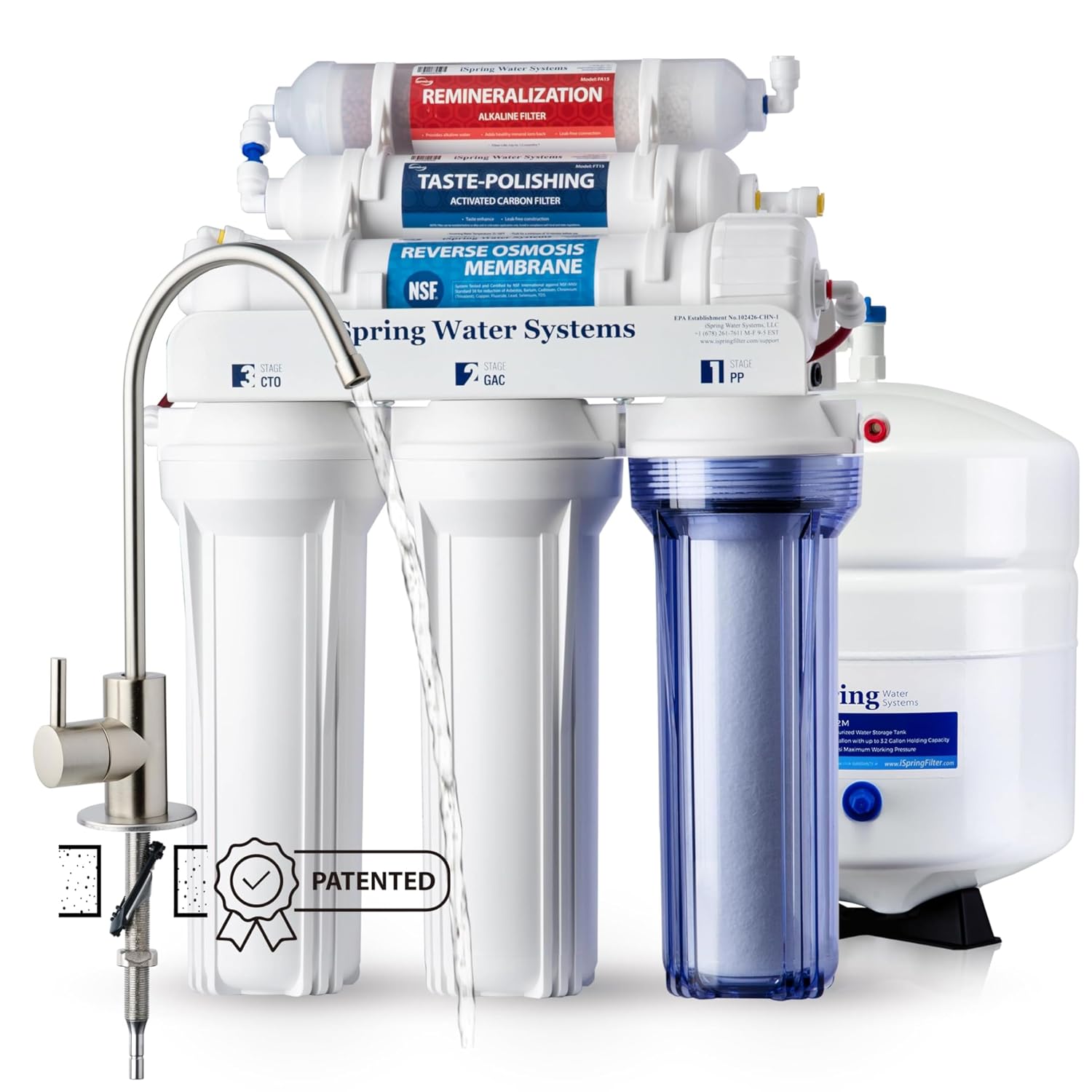
iSpring RCC7AK-BN NSF Certified
A 6-stage system rated at 75 GPD with remineralization, certified to NSF/ANSI 58, with a top-mounted faucet.
View on Amazon -

Waterdrop G5P500A Reverse Osmosis System
An 8-stage tankless system rated at 500 GPD with remineralization, certified to NSF/ANSI 58 and 372.
View on Amazon -

APEC Water ROES-50
A 5-stage system rated at 50 GPD, certified to NSF/ANSI 58 and 372, with a storage tank and a brushed nickel faucet.
View on Amazon
These come from our ranked list Best Reverse Osmosis, which compares them spec by spec.
FAQ
Do I need a softener if I have reverse osmosis?
No, not for the water at that tap. The RO system filters the water at its own tap, while a softener treats the water for the whole house. Add a softener only when hard water is a problem through the house.
Can reverse osmosis replace a water softener?
No. A reverse osmosis system filters water at one tap, and a softener treats the water that feeds the whole house. They do different jobs, so one does not take the place of the other.
How do I pick a reverse osmosis system?
Compare the output in gallons per day and the number of filter stages, and check the NSF/ANSI numbers where the maker lists them. The Electrolux system is rated at 1,200 GPD with 12 stages. The iSpring system is rated at 75 GPD with 6 stages and remineralization.


