
How-to · Reverse Osmosis Systems
What Is a Reverse Osmosis System
 By Laura Benning · Updated · How we pick
A reverse osmosis system is an under-sink filter system that pushes tap water through a series of filters and a reverse osmosis membrane, then sends the filtered water to its own faucet. A storage tank holds the filtered water, or a tankless design passes it straight to the tap. Check the maker's stage count, daily output, pure-to-drain ratio and filter schedule before you choose one.
What the membrane does
The reverse osmosis membrane is the fine filter at the center of the system. Tap water passes through pre-filters first, then pressure pushes it through the membrane, which holds back dissolved solids and other matter the maker lists while the filtered water passes through to the faucet. The water the membrane holds back goes to the drain, and the pure-to-drain ratio states how much filtered water comes out for each part that goes to the drain.
Tank or tankless
A system with a storage tank fills the tank after the membrane, and the faucet draws from the tank. A tankless system passes filtered water straight to the faucet with no tank under the sink, which frees cabinet space. A tank gives you filtered water on tap even when the system is not running, while a tankless system makes filtered water as you open the faucet.
What the GPD figure means
GPD is the maker's gallons-per-day output figure, the amount of filtered water the system can make in a day. Match it to how much filtered water your household uses in a day for drinking and cooking, and read it as the maker's figure rather than a promise for every home. A higher GPD figure means the system can keep up with a larger daily draw, and a lower one suits a smaller daily draw.
Filter stages and what they do
Each stage is one filter in the chain, and the stages work in order. Early stages catch larger particles, carbon stages take on chlorine and taste and odor matter, and the membrane is the fine stage that follows them. Some systems add a final stage that puts minerals back into the water after the membrane. Count the stages the maker lists, and read what each stage is for in the maker's own description.
Filter changes and upkeep
Filters wear out, and the system needs new ones on the maker's schedule. Watch for signs the maker names, such as a filter that looks grey, a change in taste or flow, or a light or app alert that asks for a change. Follow the schedule in the maker's manual, and use the maker's own replacement filters. For anything inside the unit, contact the maker or a repair service.
What you need
As an Amazon Associate I earn from qualifying purchases. Product details come from each Amazon listing; we do not test products in person.
-

Electrolux PureOne 1200GPD Tankless Reverse Osmosis Under
Its single all-in-one filter runs 12 stages at 1200 GPD in a tankless design, with app monitoring, automatic membrane flushing and a 3:1 pure-to-drain ratio.
View on Amazon -
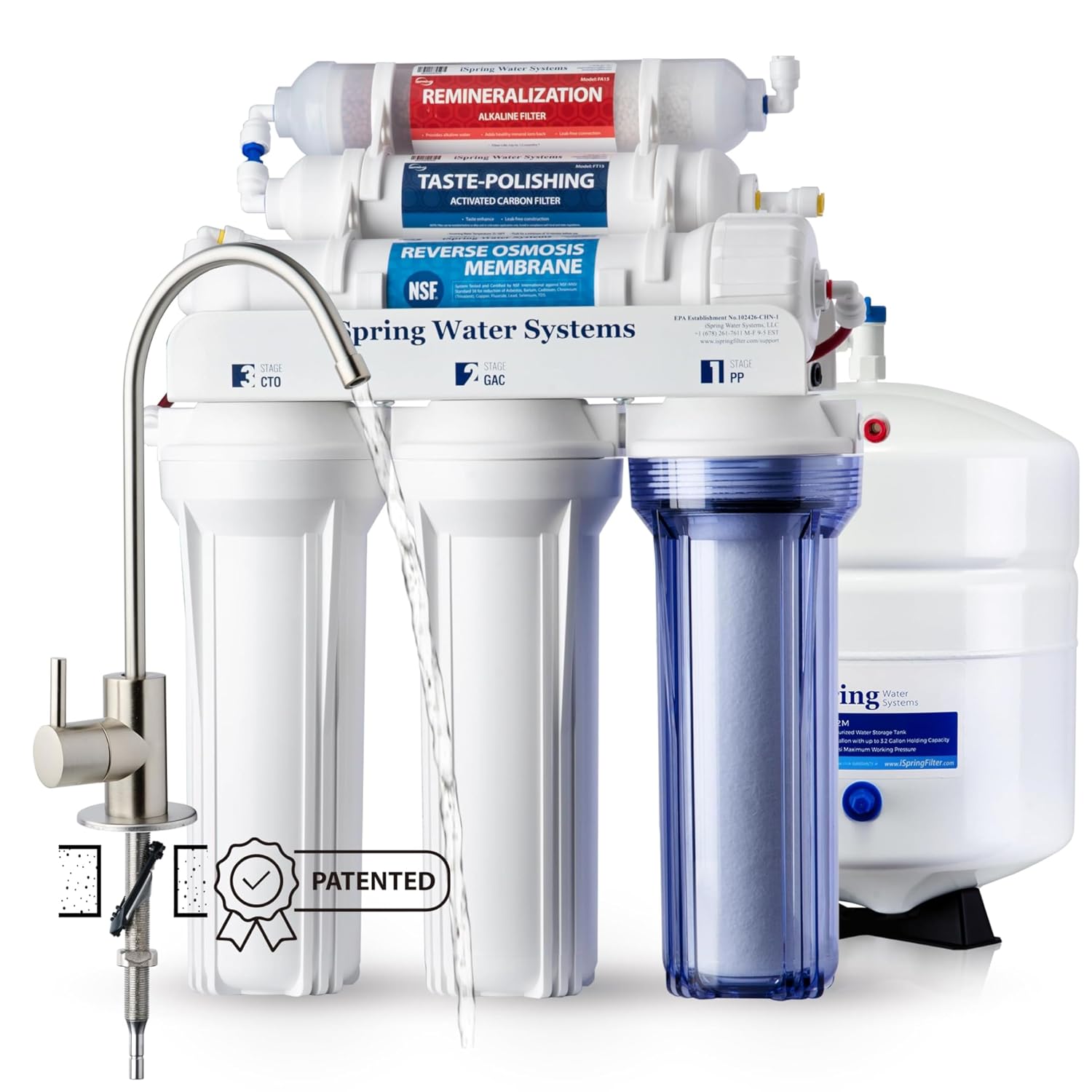
iSpring RCC7AK-BN NSF Certified
Its 6-stage system is NSF/ANSI 58 certified, adds minerals back with its alkaline stage, and needs no power, with a storage tank and a top-mounted faucet.
View on Amazon -

Waterdrop G5P500A Reverse Osmosis System
Its 8-stage tankless system is NSF/ANSI 58 and 372 certified, makes 500 GPD at a 2:1 pure-to-drain ratio, and adds minerals back with its alkaline stage.
View on Amazon -

APEC Water ROES-50
Its 5-stage system is NSF/ANSI 58 and 372 certified, makes 50 GPD, and comes with a storage tank, a brushed nickel faucet and quick connection fittings.
View on Amazon
These come from our ranked list Best Reverse Osmosis, which compares them spec by spec.
FAQ
Does a reverse osmosis system need a storage tank?
Not always. Tankless systems pass filtered water straight to the faucet, while systems with a tank hold filtered water so the faucet can draw from it. Check whether the system you are looking at is tankless or comes with a tank.
What does GPD mean on a reverse osmosis system?
GPD is the maker's gallons-per-day output figure. It states how much filtered water the system can make in a day, so match it to how much filtered water your household uses in a day for drinking and cooking.
How do I know when to change the filters?
Watch for the signs the maker names, such as a filter that looks grey, a change in taste or flow, or a light or app alert. Follow the schedule in the maker's manual and use the maker's own replacement filters.
Do I need a plumber to install one?
Follow the maker's installation manual. Where the manual calls for plumbing work, hire a licensed plumber rather than making the connections yourself.


