How-to · Reverse Osmosis Systems
How Reverse Osmosis Works
 By Laura Benning · Updated · How we pick
Reverse osmosis pushes tap water through a membrane with pores so small that water passes and dissolved solids stay behind. Pressure drives the water through, the filtered water goes to a faucet or tank, and the rest leaves as drain water. The systems here add pre-filters before the membrane and, on some models, a stage that adds minerals back.
Pressure pushes water through the membrane
A reverse osmosis system puts tap water under pressure and pushes it against a membrane. The membrane lets water through and holds back dissolved solids. The water that passes through is the filtered water, and the water that stays behind leaves as drain water.
Stages before and after the membrane
The systems here filter in stages. Pre-filters catch sediment and chlorine before the water reaches the membrane, and the membrane does the fine work. The iSpring RCC7AK-BN has an alkaline stage and the Waterdrop G5P500A adds alkaline minerals after the membrane. These systems have 5, 6, 8 and 12 stages.
Pure water, drain water and the ratio
Not all the water that enters becomes filtered water. Part of it leaves as drain water. The pure-to-drain ratio is how much filtered water comes out for each part of drain water: the Electrolux PureOne has a 3:1 ratio, and the Waterdrop G5P500A has a 2:1 ratio. A tankless system sends filtered water straight to the faucet, while a system with a tank stores filtered water for later.
What the output in gallons per day means
Gallons per day, or GPD, is how much filtered water a system can make in a day. The Electrolux PureOne is rated at 1200 GPD, the Waterdrop G5P500A at 500 GPD, the iSpring RCC7AK-BN at 75 GPD and the APEC ROES-50 at 50 GPD. Match the figure to how much filtered water your household uses in a day, and check the flow rate the maker gives for the faucet.
Installation under the sink
These systems install under the sink, so check the space under yours before you order. The iSpring RCC7AK-BN faucet mounts from above the countertop, and the APEC ROES-50 has quick connection fittings and colored tubing. Follow the maker's installation manual, and hire a licensed plumber where the manual says so.
When to change the filters
Filters wear out, so follow the schedule in the maker's manual. The Electrolux PureOne filter lasts up to 2 years, and the iSpring RCC7AK-BN has replacement sets for 6 months, 1 year, 2 years and 3 years. A filter that looks grey or a tank that smells are signs to check the manual, and the Electrolux app can schedule automatic filter flushing.
What you need
As an Amazon Associate I earn from qualifying purchases. Product details come from each Amazon listing; we do not test products in person.
-

Electrolux PureOne 1200GPD Tankless Reverse Osmosis Under
A tankless under-sink system with 12-stage filtration and 1200 GPD output, a 3:1 pure-to-drain ratio and a smart faucet with app monitoring.
View on Amazon -
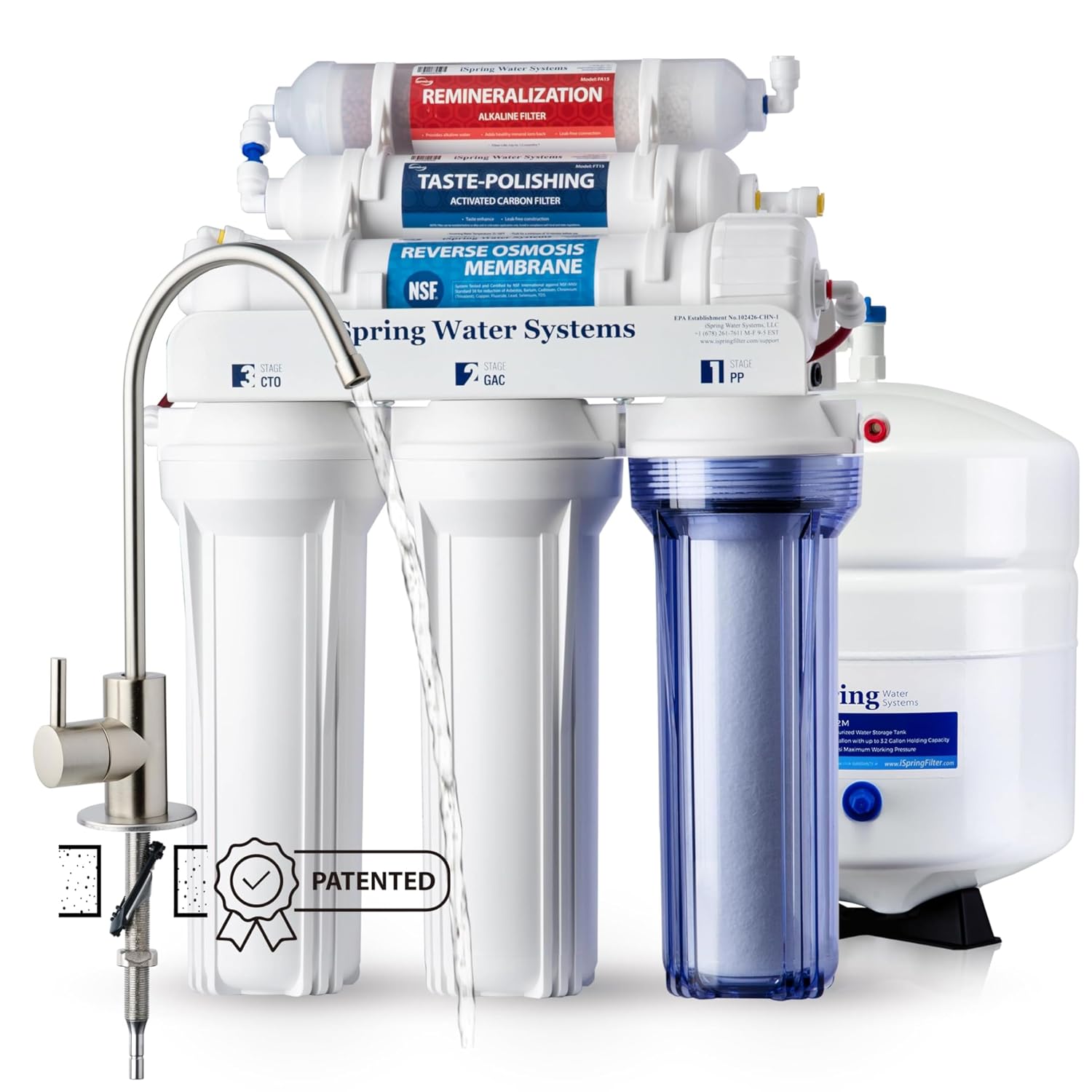
iSpring RCC7AK-BN NSF Certified
A 6-stage under-sink system with 75 GPD output, NSF/ANSI 58 certification, an alkaline stage and a 1-year manufacturer limited warranty.
View on Amazon -

Waterdrop G5P500A Reverse Osmosis System
A tankless under-sink system with 8-stage filtration and 500 GPD output, a 2:1 pure-to-drain ratio, alkaline minerals and NSF/ANSI 58 and 372 certification.
View on Amazon -

APEC Water ROES-50
A 5-stage under-sink system with 50 GPD output, NSF 372 and 58 certification, a storage tank and a brushed nickel faucet.
View on Amazon
These come from our ranked list Best Reverse Osmosis, which compares them spec by spec.
FAQ
Does reverse osmosis remove minerals from water?
Yes. The membrane holds back dissolved solids, and the iSpring RCC7AK-BN and Waterdrop G5P500A add minerals back with an alkaline stage after the membrane.
Do I need a tank with a reverse osmosis system?
No. The Electrolux PureOne and Waterdrop G5P500A are tankless, so filtered water goes straight to the faucet. The iSpring RCC7AK-BN and APEC ROES-50 include a storage tank.
How much water does reverse osmosis waste?
Part of the water leaves as drain water. The Electrolux PureOne has a 3:1 pure-to-drain ratio, and the Waterdrop G5P500A has a 2:1 pure-to-drain ratio.
What does GPD mean on a reverse osmosis system?
GPD is gallons per day, or how much filtered water a system can make in a day. The systems here are rated at 1200, 500, 75 and 50 GPD.