
How-to · Reverse Osmosis Systems
How a Reverse Osmosis System Works
 By Laura Benning · Updated · How we pick
A reverse osmosis system pushes tap water through a series of filters and then through a membrane with very fine pores. The membrane lets water molecules pass while holding back dissolved solids and other particles, which go to the drain. The filtered water then passes through a final stage and flows to a separate faucet at your sink.
Water enters the pre-filters
Tap water first flows through one or more pre-filters, such as sediment and carbon stages, that catch sand, rust and other large particles before they reach the membrane. These stages also take out chlorine, which can damage the membrane over time. The number of stages varies by system: the systems shown here run from 5 to 12 stages. Follow the schedule in the maker's manual for changing the pre-filters, and watch for a drop in flow or a change in taste.
Pressure pushes water through the membrane
The heart of the system is the RO membrane, a sheet with pores so small that only water molecules pass through it. Household water pressure pushes the water against the membrane, and the dissolved solids and particles that cannot pass are carried away to the drain. The Waterdrop system in this article uses a membrane rated at 0.0001 μm. The split between filtered water and drain water is called the pure-to-drain ratio, and it differs by model.
A final stage polishes the water
After the membrane, the water passes through a post-filter that improves taste and odor before it reaches the faucet. Some systems add a remineralization stage that puts minerals back into the water after filtration. The iSpring and Waterdrop systems in this article include that stage, and the Waterdrop system adds calcium, magnesium, sodium and potassium. Read the maker's manual for which stages your system has and what each one does.
Filtered water is stored or made on demand
On a system with a tank, the filtered water collects in a storage tank under the sink until you open the faucet. Tankless systems skip the tank and filter water as you draw it, which frees cabinet space. The Electrolux and Waterdrop systems in this article are tankless, while the iSpring and APEC systems include a storage tank. Output is measured in gallons per day, and the systems shown here range from 50 to 1,200 GPD.
What you need
As an Amazon Associate I earn from qualifying purchases. Product details come from each Amazon listing; we do not test products in person.
-

Electrolux PureOne 1200GPD Tankless Reverse Osmosis Under
Its single all-in-one filter runs 12 stages and delivers 1,200 GPD, and its app shows filter status and schedules automatic membrane flushing.
View on Amazon -
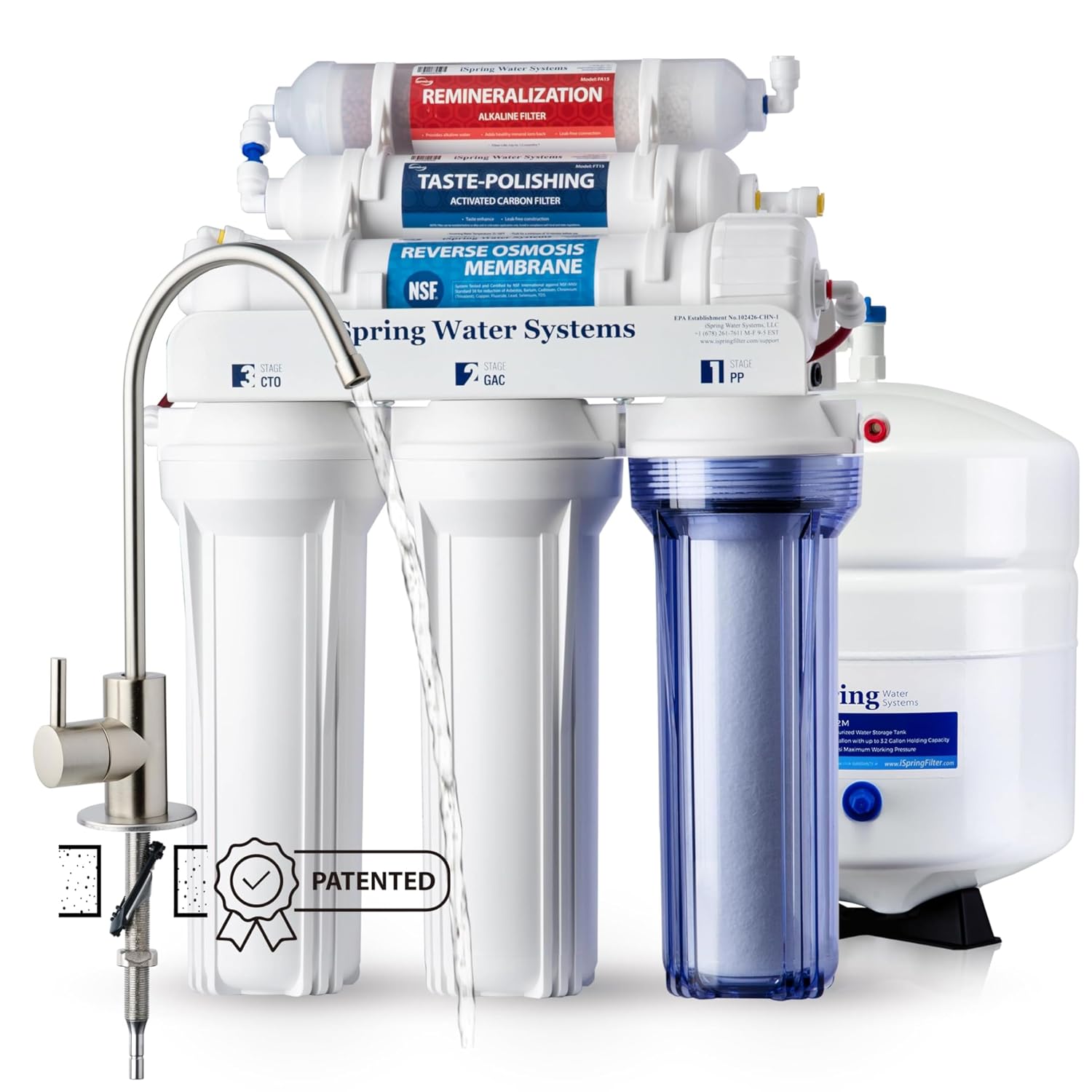
iSpring RCC7AK-BN NSF Certified
Its 6-stage system is certified to NSF/ANSI 58, delivers 75 GPD, and adds minerals back through its AK stage.
View on Amazon -

Waterdrop G5P500A Reverse Osmosis System
Its 8-stage tankless system delivers 500 GPD at a 2:1 pure-to-drain ratio and is certified to NSF/ANSI 58 and 372.
View on Amazon -

APEC Water ROES-50
Its 5-stage system delivers 50 GPD, is certified to NSF/ANSI 58 and 372, and includes a storage tank and a brushed nickel faucet.
View on Amazon
These come from our ranked list Best Reverse Osmosis, which compares them spec by spec.
FAQ
Does a reverse osmosis system remove minerals from water?
Yes, the membrane holds back dissolved solids, which include minerals. Some systems add a remineralization stage that puts minerals back in after filtration. The iSpring and Waterdrop systems in this article include that stage.
Why does a reverse osmosis system send water to the drain?
The membrane separates the water that passes through from the dissolved solids and particles left behind. That rejected water has to go somewhere, so the system sends it to the drain. The pure-to-drain ratio shows how much filtered water a system makes for each part sent to the drain.
How much water can a reverse osmosis system make each day?
Output is rated in gallons per day, or GPD, and it differs by model. The systems in this article are rated from 50 to 1,200 GPD. Check the maker's figure for the system you are looking at and match it to the amount of filtered water your household draws in a day.


