How-to · Reverse Osmosis Systems
How a Reverse Osmosis Tank Works
 By Laura Benning · Updated · How we pick
A reverse osmosis tank stores filtered water under pressure, so the faucet can run fast even though the system makes water slowly. When you open the tap, the pressure in the tank pushes the stored water out, and the system refills the tank behind it. The iSpring and APEC systems here include a storage tank, while the Electrolux and Waterdrop systems are tankless.
What the tank holds
The tank holds filtered water after it passes through the filter stages and the membrane. The system makes water slowly, so the tank stores it until you need it. When you open the faucet, you draw from the tank, not from the membrane.
How pressure moves the water
Air pressure inside the tank pushes the stored water toward the faucet. Opening the tap lets that pressure out, so water flows to the glass. As the tank empties, the pressure drops, and the system starts making more water to fill it again. The tank and the system work together: the tank gives you water at once, and the system refills it over time.
Why the flow slows when the tank runs low
When the tank runs low, the faucet can only deliver what the system makes at that moment, so a glass fills slowly. The iSpring system makes 75 gallons per day and the APEC system makes 50 gallons per day, so each tank takes time to refill. Close the tap and let the tank refill before you draw a large amount again, and draw small amounts while it refills.
Tank and tankless systems
Not every system here uses a tank. The iSpring system and the APEC system each include a storage tank under the sink, so the faucet draws from stored water. The Electrolux system and the Waterdrop system are tankless, so the faucet draws from the system directly. The Electrolux system delivers up to 1200 gallons per day, while the Waterdrop system delivers 500 gallons per day.
What you need
As an Amazon Associate I earn from qualifying purchases. Product details come from each Amazon listing; we do not test products in person.
-

Electrolux PureOne 1200GPD Tankless Reverse Osmosis Under
A tankless under-sink system with 12-stage filtration and up to 1200 gallons per day, with Wi-Fi control and app monitoring.
View on Amazon -
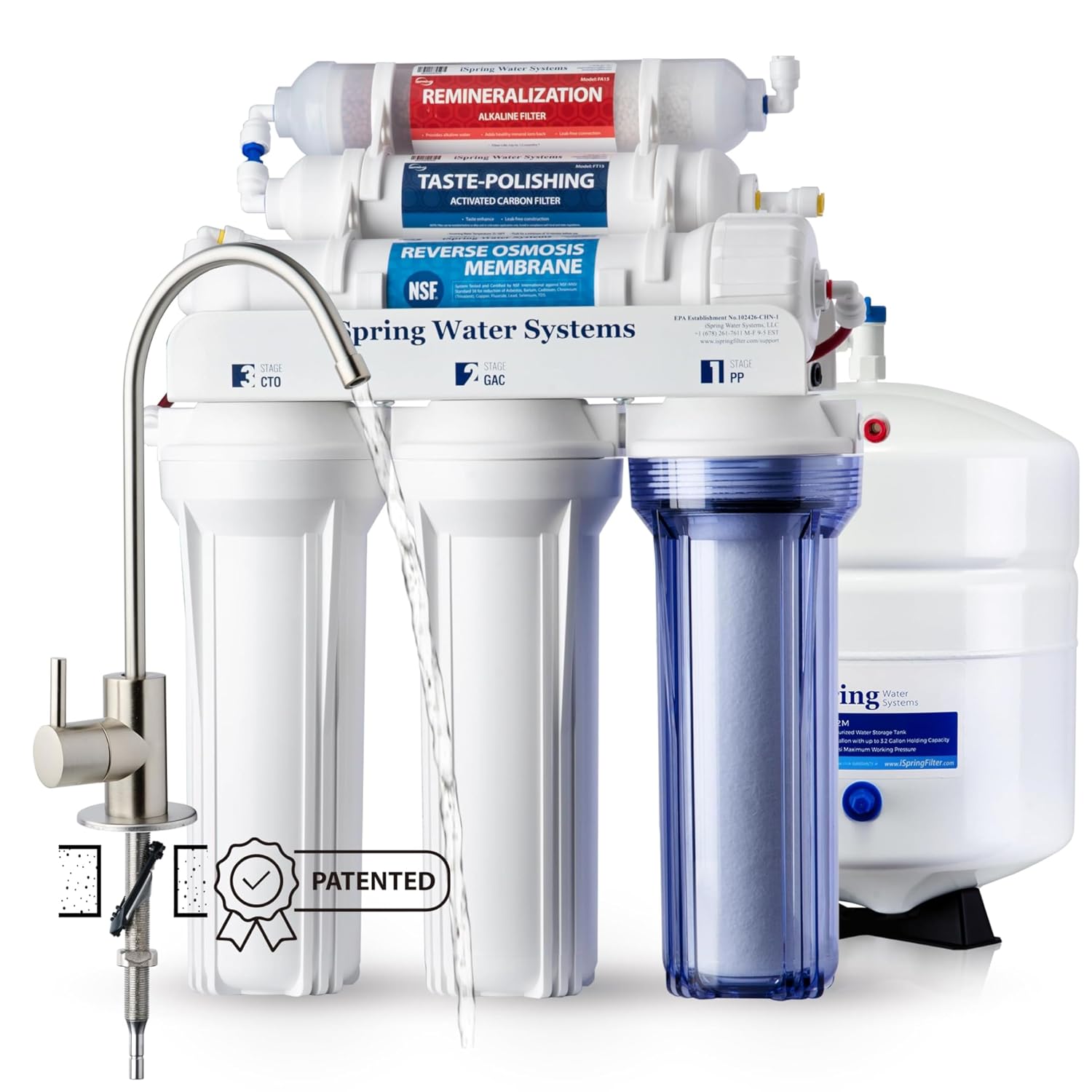
iSpring RCC7AK-BN NSF Certified
A 6-stage under-sink system with a storage tank, 75 gallons per day, remineralization and NSF/ANSI 58 certification.
View on Amazon -

Waterdrop G5P500A Reverse Osmosis System
A tankless under-sink system with 8-stage filtration, 500 gallons per day, a 2:1 pure to drain ratio and NSF/ANSI 58 and 372 certification.
View on Amazon -

APEC Water ROES-50
A 5-stage under-sink system with a water tank, 50 gallons per day and NSF/ANSI 58 and 372 certification.
View on Amazon
These come from our ranked list Best Reverse Osmosis, which compares them spec by spec.
FAQ
Why does my faucet run slow after a few glasses?
The tank has run low, so the faucet only gets what the system makes at that moment. Close the tap and let the tank refill, then draw again. If the flow stays slow, check the filters and follow the schedule in the maker's manual.
Do all reverse osmosis systems have a tank?
No. The Electrolux and Waterdrop systems here are tankless, while the iSpring and APEC systems each include a storage tank. Check the system you buy for a tank if you want stored water on hand.
Where does the tank sit in the system?
The tank sits under the sink with the rest of the system, between the filter stages and the faucet. Filtered water flows into the tank for storage, and the faucet draws from the tank. Follow the maker's installation manual for the placement of your system.