
How-to · Reverse Osmosis Systems
How to Choose a Reverse Osmosis System
 By Laura Benning · Updated · How we pick
Start with how much filtered water you need each day, then match the system output to it. Compare the number of filtration stages, the tank or tankless design, the NSF/ANSI standard, and whether the system adds minerals back. The four systems here range from 50 to 1,200 gallons per day, so the right one depends on your daily use.
Match output to daily use
Check the gallons-per-day figure, the maker's figure for how much water the system makes in a day. The Electrolux system is rated 1,200 gallons per day, the Waterdrop 500, the iSpring 75 and the APEC 50. A higher figure suits a household that draws a lot of water for drinking and cooking, while a lower figure fits a household that draws less. Compare the figures side by side before you choose.
Compare stages and mineral filters
Count the filtration stages and check whether the system adds minerals back. The Electrolux system has 12 stages in one cartridge, the Waterdrop 8 stages, the iSpring 6 stages with an alkaline mineral stage, and the APEC 5 stages. The iSpring has a pH+ remineralization stage and the Waterdrop has an alkaline mineral pH+ stage. The Electrolux cartridge lasts up to 2 years, and the APEC filters are replaced every 6 to 24 months based on incoming water quality.
Choose tank or tankless
The Electrolux and Waterdrop systems are tankless, so they make water as you use it. The iSpring and APEC systems include a storage tank, so filtered water is stored and drawn from the tank. The Electrolux system measures 17.1 by 7.1 by 10.3 inches, so check the space under your sink before you choose. Follow the maker's installation manual for the connections.
Check the drain ratio and certification
Check the pure-to-drain ratio, which tells you how much water goes to the drain for the filtered water you get. The Electrolux system has a 3:1 pure-to-drain ratio, about 1 cup of wastewater for every 3 cups of filtered water, and the Waterdrop has a 2:1 ratio. Check the NSF/ANSI standard too: the iSpring is certified to NSF/ANSI 58, and the Waterdrop and APEC are certified to NSF/ANSI 58 and 372.
What you need
As an Amazon Associate I earn from qualifying purchases. Product details come from each Amazon listing; we do not test products in person.
-

Electrolux PureOne 1200GPD Tankless Reverse Osmosis Under
A tankless 1,200 GPD system with 12 stages in one cartridge, a 3:1 pure-to-drain ratio and a smart faucet with app monitoring.
View on Amazon -
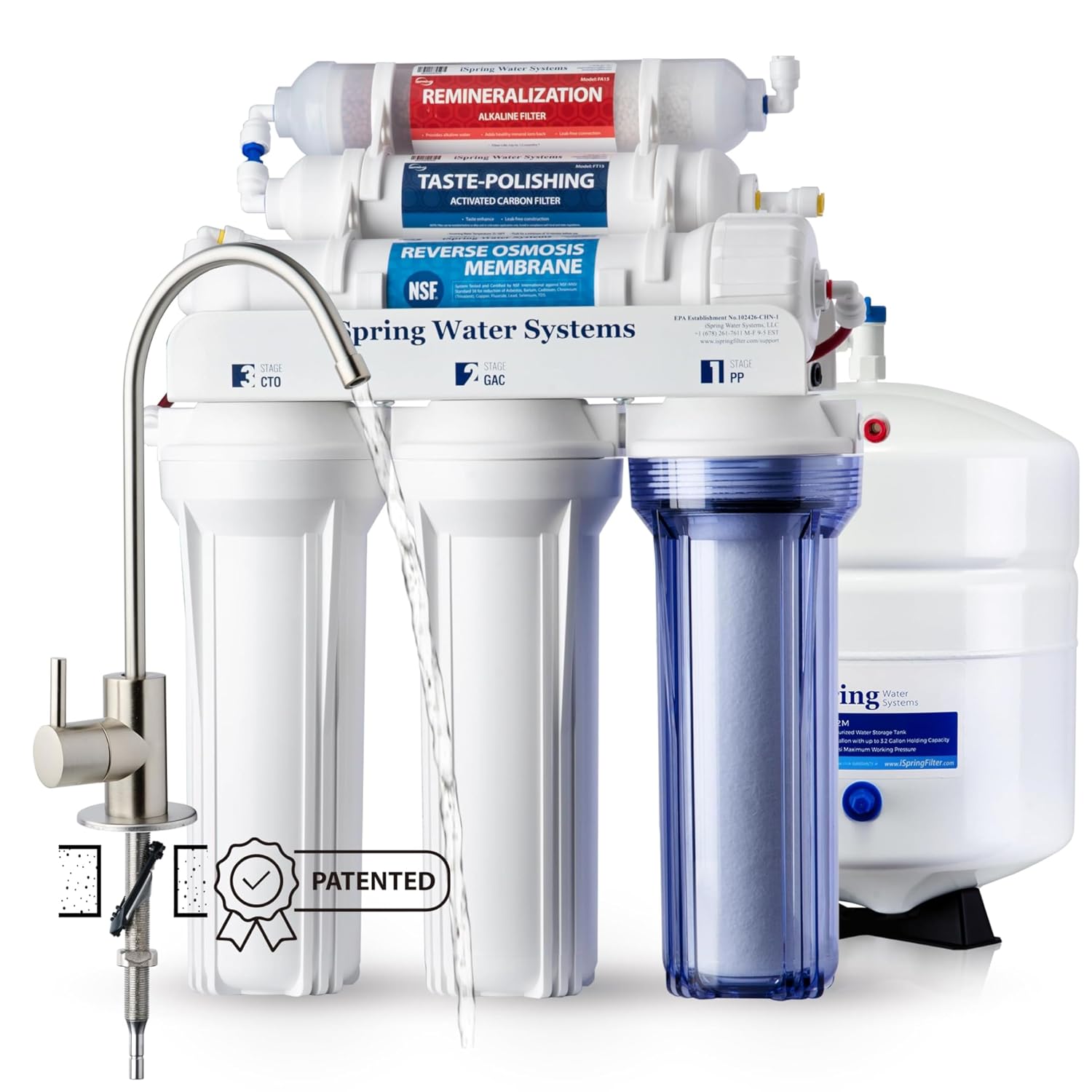
iSpring RCC7AK-BN NSF Certified
A 75 GPD, 6-stage system with pH+ remineralization, NSF/ANSI 58 certification and a top-mounted faucet for installation from above.
View on Amazon -

Waterdrop G5P500A Reverse Osmosis System
A tankless 500 GPD system with 8 stages, alkaline mineral pH+, NSF/ANSI 58 and 372 certification and a 2:1 pure-to-drain ratio.
View on Amazon -

APEC Water ROES-50
A 50 GPD, 5-stage system with NSF/ANSI 58 and 372 certification, quick-connection fittings and colored tubing for setup.
View on Amazon
These come from our ranked list Best Reverse Osmosis, which compares them spec by spec.
FAQ
How many gallons per day do I need?
Match the gallons-per-day figure to how much water your household draws for drinking and cooking. The systems here are rated from 50 to 1,200 gallons per day, so compare the figures before you choose.
What does tankless mean for a reverse osmosis system?
A tankless system makes water as you use it, while a tank system stores filtered water and draws from the tank. Check the space under your sink before you choose.
Do I need a plumber to install a reverse osmosis system?
Follow the maker's installation manual, and hire a licensed plumber where the manual says so. The APEC system is made for DIY installation with quick-connection fittings and colored tubing.


