How-to · Water Softeners
What a Water Conditioner Does
 By Laura Benning · Updated · How we pick
A water conditioner, also called a water softener, treats hard water by removing calcium and magnesium minerals from it. The minerals pass through resin beads that catch them through ion exchange, so the water that reaches your taps carries less hardness. The result is water that leaves less scale on plumbing, fixtures and appliances.
What hard water is
Hard water carries dissolved calcium and magnesium minerals. You can see the effect as white scale on taps, shower heads and the inside of a kettle, and as spots on dishes and glass. The minerals also build up inside pipes, water heaters, dishwashers and washing machines, where the coating narrows the flow and coats heating parts. A water conditioner, or softener, is built to take those minerals out of the water before it reaches your taps.
How the softener treats the water
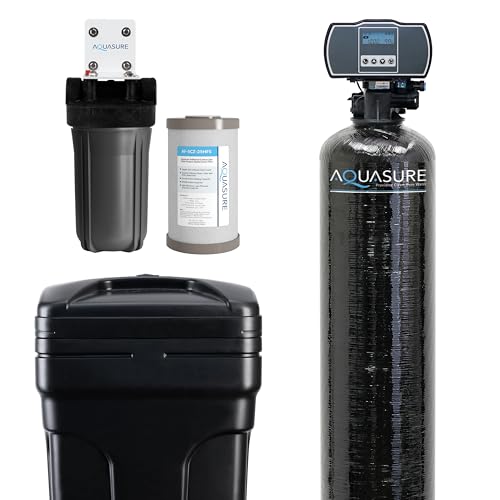
Water from the main line passes through a tank filled with resin beads. The beads catch calcium and magnesium through ion exchange and hold them, while the treated water flows on to the home. When the resin is full, the system runs a regeneration cycle that flushes the trapped minerals away and restores the resin, using salt from the brine tank. A metered control head tracks how much water the home uses and starts regeneration only when it is needed.
What changes in your home
With less hardness in the water, scale builds up more slowly on taps, fixtures and appliances. Dishes and glass show fewer spots, and soap rinses away with less residue. The softener protects the parts of the home the water touches, from the water heater to the dishwasher and the washing machine. The change is gradual: scale that is already there does not vanish at once, and the system needs salt and care to keep working.
What the grain figure means
Grain capacity is the figure makers use to rate a softener, and it tells you how much hardness the resin can hold between regenerations. The Aquasure Harmony Series and the Tier1 system are each rated at 32,000 grains, and the H&G Lifestyles system is rated at 24,000 grains. Makers also link size to the home: the Aquasure system is listed for 1-2 bathrooms, and the Tier1 system is listed for 3-4 bathroom homes. Match the grain figure and the bathroom figure to your home, and check the manual for the maker's sizing guidance.
Keeping the system running
A softener needs salt in the brine tank and regeneration cycles to keep treating the water. Check the salt level and the control head display as the manual describes, and follow the schedule in the maker's manual for cleaning and care. Signs that the system needs attention are scale returning on taps, spots coming back on dishes, or a light or alert on the control head. For installation, follow the maker's manual and hire a licensed plumber where the manual says so.
What you need
As an Amazon Associate I earn from qualifying purchases. Product details come from each Amazon listing; we do not test products in person.
-

Aquasure Harmony Series
A 32,000-grain softener for 1-2 bathrooms with a digital metered control head and a 5-year warranty.
View on Amazon -

Tier1 32,000 Grain Water Softener System
A 32,000-grain softener for 3-4 bathroom homes with a 1 cu ft resin tank, metered regeneration and a ceramic valve.
View on Amazon -

Superior Filters Whole House Water Softener System
A whole house softener with 32,000-grain resin that removes hard minerals and helps reduce scale buildup.
View on Amazon -

H&G Lifestyles Whole House Water Softener
A 24,000-grain softener with NSF certified food grade resin, rated for 700,000 gallons and built for well and city water.
View on Amazon
These come from our ranked list Best Home Water Softener, which compares them spec by spec.
FAQ
Is a water conditioner the same as a water softener?
In this article, yes. A water conditioner is a softener that treats hard water by removing calcium and magnesium through ion exchange. The softened water then carries less hardness to your taps and appliances.
Does a softener remove scale already in pipes?
A softener is built to remove existing scale and prevent new scale from building up, so fixtures and appliances see less coating over time. Follow the maker's manual for care, and contact the maker or a repair service for work inside the system.
How do I know the softener needs attention?
Watch for scale returning on taps, spots coming back on dishes, or a light or alert on the control head. Check the salt level as the manual describes, and follow the schedule in the maker's manual.
What does the grain number tell me?
It rates how much hardness the resin can hold between regenerations. A 32,000-grain system holds more than a 24,000-grain system, so compare the figure with the bathroom count the maker lists for your home.