How-to · Mesh Wi-Fi Systems
Mesh Wi-Fi vs Extender: How They Differ
 By Laura Benning · Updated · How we pick
A mesh system is a set of units that work as one network under a single network name, while an extender is one unit that repeats the signal from your existing router. Mesh units hand your phone from one unit to the next as you move through the house, and an extender creates a second network name you switch to by hand.
How a mesh system works
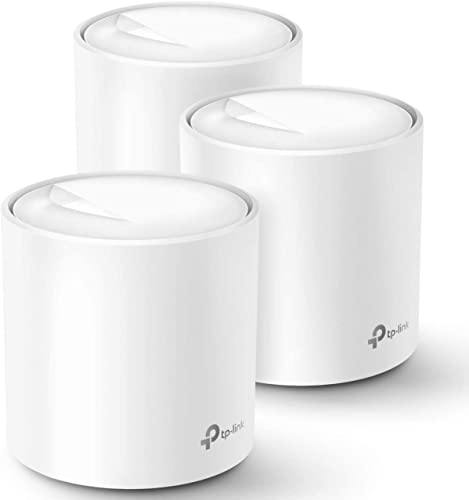
A mesh system has a router unit and one or more satellite units that share one network name. The TP-Link Deco 7 Pro comes as a 3-pack, and the NETGEAR Orbi 870 comes as a router plus 2 satellites. Your phone moves from one unit to the next without you changing networks, because the units pass the connection between them.
How an extender works
An extender plugs in between your router and the room with the weak signal, then repeats the router's signal so devices in that room can connect. It does not add new units that talk to each other, and it can show up as a different network name, so you switch networks when you walk into that room. One extender covers one weak spot, and adding another extender means managing separate repeaters.
Coverage and device counts
Compare the coverage figure each maker states for its own system. The TP-Link Deco 7 Pro is rated for up to 8,100 sq ft, the NETGEAR Orbi 870 for up to 9,000 sq ft, the Amazon eero Pro 7 for up to 6,000 sq ft and the Tenda AX3000 for up to 7,000 sq ft. Device counts differ too: the Deco 7 Pro lists over 200 devices, the Orbi 870 lists up to 150 devices, the eero Pro 7 lists 600+ devices and the Tenda AX3000 lists over 160 devices. Read the figure for the system you buy, and add a satellite when the maker's figure falls short of your home.
When to pick mesh
Pick mesh when the weak signal shows up in more than one room, or on more than one floor. A mesh system gives every room the same network name, so a phone call keeps going as you walk from the living room to a bedroom. The eero Pro 7 helps remove dead spots across different floors and rooms, and the Tenda AX3000 is built to replace an extender and a router with one mesh network. Start with a 3-pack, then add an Orbi satellite for a larger home.
When to pick an extender
Pick an extender when only one room has a weak signal and the rest of the house is fine. An extender plugs in where the signal fades. If the weak signal spreads to another room, or you want one network name through the house, a mesh system fits that house instead.
What you need
As an Amazon Associate I earn from qualifying purchases. Product details come from each Amazon listing; we do not test products in person.
-

TP-Link Deco 7 Pro Tri-Band BE14000 Wi-Fi
Its 3-pack is rated for up to 8,100 sq ft by the maker, its Wi-Fi 7 tri-band runs up to 14 Gbps, and the Deco app manages it.
View on Amazon -

NETGEAR Orbi 870 Series WiFi 7 Mesh
Its router plus 2 satellites are rated for up to 9,000 sq ft by the maker, with a 10 Gig port and Orbi app setup.
View on Amazon -

Amazon eero Pro 7 tri-band mesh Wi-Fi
Its 3-pack is rated for up to 6,000 sq ft by the maker for 600+ devices, supports internet plans up to 5 Gbps, and carries a three-year warranty.
View on Amazon -

Tenda AX3000 WiFi 6 Mesh System Nova
Its 3-pack is rated for up to 7,000 sq ft by the maker for over 160 devices on dual-band Wi-Fi 6, and the Tenda Wi-Fi app sets it up.
View on Amazon
These come from our ranked list Best Mesh WiFi System, which compares them spec by spec.
FAQ
Do I need a new router for a mesh system?
A mesh system replaces your router: the Deco 7 Pro, Orbi 870, eero Pro 7 and Tenda AX3000 each include a router unit in the pack, and you connect it to your modem. The Deco and Orbi work with any internet provider.
Can I add more units to a mesh system later?
Yes. You can add an Orbi 870 satellite for up to 3,000 sq ft of additional coverage, and a new node can be added to an existing Nova network with the push of the Mesh button.
Can a mesh system and an extender work together?
A mesh system is built to work as one network, and the Tenda AX3000 is built to replace an extender and a router with one mesh network. Use the mesh units on their own, and keep the extender for a spot outside the mesh coverage.