
How-to · Robotic Pool Cleaners
How Robotic Pool Cleaners Work
 By Laura Benning · Updated · How we pick
A robotic pool cleaner is a self-contained unit that moves around the pool on its own, scrubbing the floor and walls and pulling debris into an onboard filter. It runs on a battery or a power cord, follows a set path or a map of the pool, and returns to the waterline or the surface when its cycle ends. You then lift it out and empty the filter basket.
How the cleaner moves through the pool
You place the cleaner in the water and start a cycle from the unit or from a phone app. Wheels or caterpillar treads drive it across the floor, and it steers around steps and curves as it goes. Some models use a gyroscope to follow set cleaning patterns, while others use a camera to find debris and plan a route. The cleaner covers the floor in passes until the cycle ends.
How it scrubs and collects debris
Roller brushes turn against the pool floor and walls to loosen dirt, leaves and sand. Suction pulls the loosened debris into an onboard filter basket or filter layers that trap fine particles. The water passes back into the pool as the cleaner moves on. When the basket fills, suction drops, so a full basket is a sign the cycle is done or the basket needs emptying.
How it climbs walls and the waterline
Treads and drive motors let the cleaner climb the pool walls and reach the waterline, where dirt collects along the edge. It scrubs as it climbs and then moves back down to the floor to continue the cycle. Shallow areas and steps are covered by models built for them, and the cleaner steers around obstacles in its path.
Battery power and corded power
Cordless models run on a rechargeable battery and need a charge between cycles, often on a charging dock. Corded models plug into a power supply at the poolside and run from mains power while they clean. Battery run time changes with the cleaning mode, so a longer cycle uses more of the charge. Check the maker's stated run time for the mode you plan to use.
What happens when the cycle ends
Some models park at the waterline and send a notification to the phone app when they finish. Lift the cleaner out by its handle and let the water drain from it. Open the filter basket, empty the debris into a trash can, and rinse the basket if the manual allows it. Place the cleaner back on its dock or in storage until the next cycle.
What you need
As an Amazon Associate I earn from qualifying purchases. Product details come from each Amazon listing; we do not test products in person.
-

WYBOT C1 Cordless Robotic Pool Vacuum
It cleans the floor, walls, waterline and steps with a triple-motor system, runs for 160 minutes on a charge, and follows gyroscope-guided cleaning patterns through the phone app.
View on Amazon -
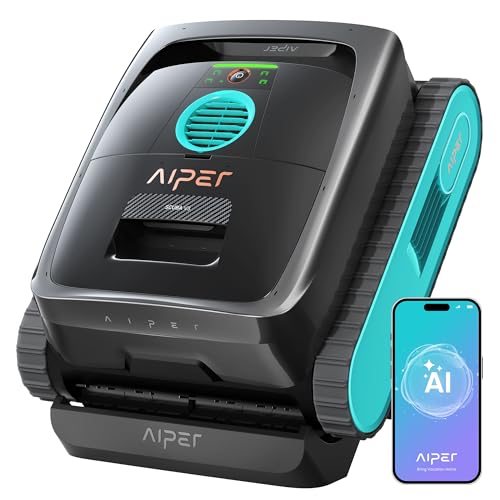
AIPER Scuba V3 AI Vision Cordless Pool
Its front-facing AI camera detects over 20 debris types, it runs for up to 240 minutes in Eco Mode, and it charges on a wireless dock.
View on Amazon -

Dolphin Automatic Robotic Pool Vacuum Cleaner
It plugs in and runs from mains power, climbs walls with an active scrubbing brush, and its top-load filter basket lifts out for emptying.
View on Amazon -

(2026 Upgrade) Gosvor Pool Vacuum LiteVac G1
It runs for up to 200 minutes, covers pools up to 2,153 sq ft per cycle, and weighs 15.2 lb with a 3.6L top-load filter basket.
View on Amazon
These come from our ranked list Best Pool Vacuum, which compares them spec by spec.
FAQ
Does a robotic pool cleaner need a hose?
No. It is a self-contained unit with its own motor, brushes and filter, so it runs on its own in the pool. Battery models run on a charge, and corded models plug into a power supply at the poolside.
How do I lift the cleaner out of the pool?
Wait for the cycle to end and for the cleaner to park at the waterline if your model does that. Lift it out by the handle, let the water drain, and empty the filter basket before you store it.
How often should I empty the filter basket?
Empty it after each cleaning cycle, or sooner if the basket looks full or the cleaner stops picking up debris. Rinse the basket only if the maker's manual allows it, and follow the schedule in the manual.


