How-to · Well Pumps
How Submersible Well Pumps Work
 By Laura Benning · Updated · How we pick
A submersible well pump sits underwater inside the well, and its motor drives impellers that push water up the pipe to the surface. The pump pushes water up instead of pulling it, which is how it lifts water from a deep well. A jet pump works the other way: it sits above ground and draws water up through suction.
The pump sits in the water
A submersible pump goes down into the well and sits below the water line, with the motor sealed inside the pump body. The motor turns a set of impellers, and each impeller adds lift as the water moves through the pump. The VEVOR pump uses 8-stage thermoplastic impellers, and its motor has built-in overload protection that stops it when it is stuck. The water leaves through the discharge pipe and rises to the surface.
How the water reaches the surface
The impellers push the water up through the discharge pipe, and a check valve keeps the water from flowing back down when the pump stops. The VEVOR pump has a built-in check valve, and the LEO pump has a built-in non-return valve. The water then flows to the pressure tank or the tap. The height the pump can lift is its head: 276 ft on the VEVOR, 170 ft on the LEO, and 164 ft on the jet pumps.
Submersible or jet pump
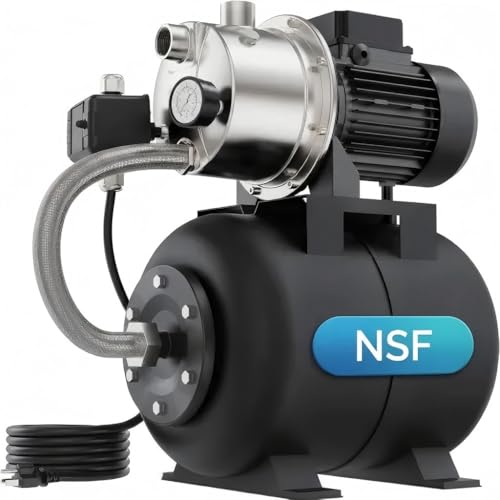
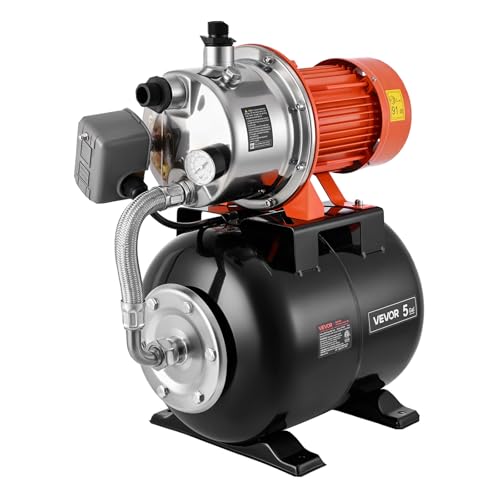
A submersible pump pushes water up from inside the well, while a jet pump sits above ground and draws water up through suction. The HoldwellS jet pump has a maximum suction depth of 26 ft and a maximum lift of 164 ft, and the FOTING jet pump has a suction capability of up to 23 ft with the same 164 ft lift. The jet pumps come with a 5-gallon pressure tank and a pressure switch that starts and stops the pump.
What to check before you choose
Compare the maximum head with the depth of your well, and the flow rate with the water you use. The VEVOR pump gives 37 GPM with a 276 ft head, the LEO gives 1,902 GPH with a 170 ft head, and the jet pumps give 1,320 GPH and 1,340 GPH with a 164 ft head. Check the cord length too: the VEVOR has a 33 ft cord and the LEO has a 72.2 ft cord. Follow the maker's installation manual, and hire a licensed electrician or plumber where the manual says so.
Keep the intake clear
The pump takes in water through a filter at its intake, so the water that reaches the impellers is clear of grit. The VEVOR pump has a stainless steel filtration mesh, and the LEO pump has a dirt sieve. The VEVOR pump must not run without water or at a low water level, to avoid idle running. Follow the schedule in the maker's manual for checks.
What you need
As an Amazon Associate I earn from qualifying purchases. Product details come from each Amazon listing; we do not test products in person.
-

VEVOR Deep Well Submersible Pump
A 1.5 HP submersible pump with 8-stage thermoplastic impellers, 37 GPM flow and a 276 ft head, with an external control box and a 33 ft cord.
View on Amazon -
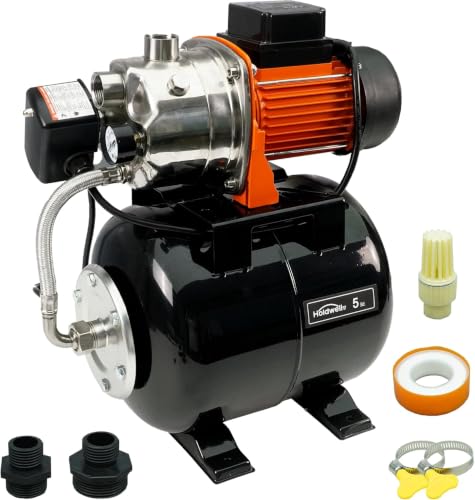
HoldwellS 115V Shallow Well Jet Pump
A 1.5 HP shallow well jet pump with a 5-gallon pressure tank, a pressure switch and gauge, 1,320 GPH flow and a 164 ft head.
View on Amazon -
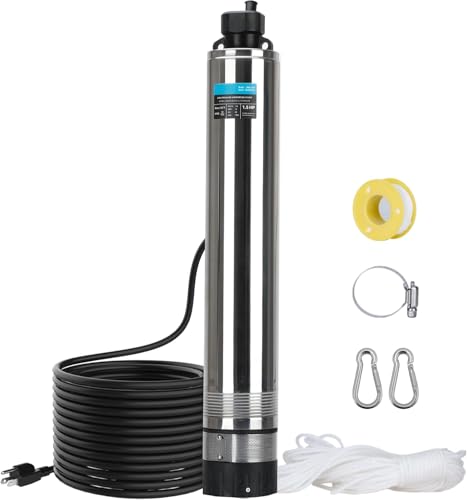
LEO 1.5HP Shallow Deep Well Pump 170FT
A 1.5 HP submersible pump with 1,902 GPH flow and a 170 ft head, a 72.2 ft power cord, a dirt sieve and a built-in non-return valve.
View on Amazon -
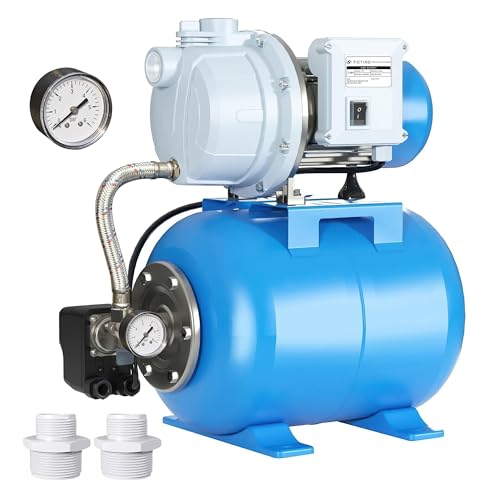
FOTING 1.5HP Shallow Well Pump with Pressure
A 1.5 HP shallow well jet pump with a 5-gallon pressure tank, a pressure switch and gauge, 1,340 GPH flow and a 164 ft head.
View on Amazon
These come from our ranked list Best Submersible Jet Pump, which compares them spec by spec.
FAQ
Can a submersible well pump run dry?
No. The VEVOR pump must not run without water or at a low water level, to avoid idle running. Keep the pump below the water line, and follow the maker's manual for the water level it needs.
What is the difference between a submersible pump and a jet pump?
A submersible pump sits underwater in the well and pushes water up, while a jet pump sits above ground and draws water up through suction. The VEVOR and LEO pumps here are submersible, and the HoldwellS and FOTING pumps are jet pumps.
What do head and flow rate mean on a well pump?
Head is the height the pump can lift water, and flow rate is how much water it moves. The VEVOR pump gives 37 GPM with a 276 ft head, and the LEO gives 1,902 GPH with a 170 ft head. Compare both figures with your well depth and your water use.